

Medieval Marriage: Love, Money and the Church
Arranged at birth, married at twelve, no love and no say in the matter: that’s how many people imagine medieval marriage. For a few royal children, it wasn’t far off. For most people, though, the reality was more surprising. In the eyes of the medieval Church, all it took to make a valid marriage was two people freely saying “I take you” to each other, no priest, no parents and no witnesses required. That simple rule produced secret weddings, scandalised families, court cases about who had said what to whom, and some of the first love letters in the English language. Here’s how medieval marriage really worked, from the first promise to the very rare way out.
Jump to a section:
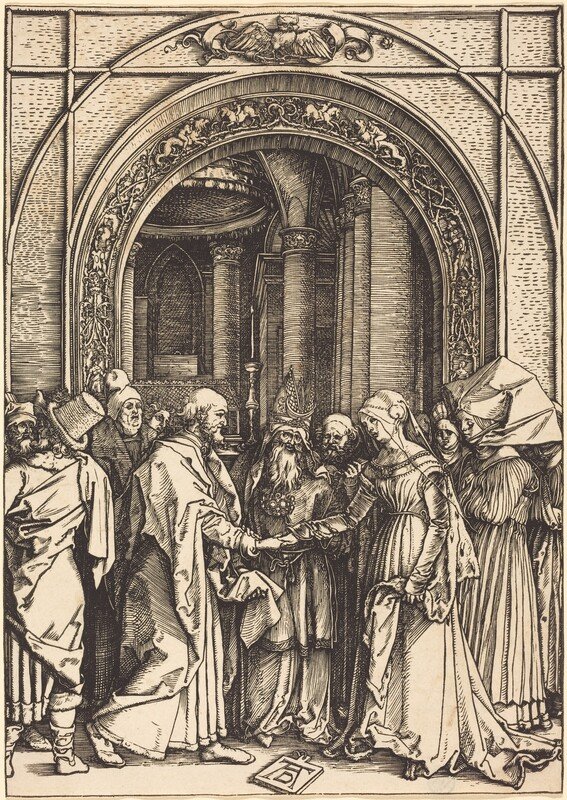
What made a medieval marriage valid?
In the early Middle Ages, customs varied across Europe, and families, not priests, usually controlled who married whom. During the 1100s, Church lawyers and theologians worked out a single set of rules. A Church synod at Verona in 1184 formally called marriage a sacrament, and by the later 1200s it was officially listed among the seven sacraments.
The key idea, backed by Pope Alexander III in the late 1100s, was consent. A marriage was made when a man and a woman freely agreed to take each other as husband and wife, using words in the present tense: “I take you as my wife,” “I take you as my husband.” A promise in the future tense, “I will take you,” was a betrothal, and it became a full marriage if the couple then slept together. Parents’ approval, a priest’s blessing and a church ceremony were all expected, but legally none of them was essential.
The Church was not entirely relaxed about this. The Fourth Lateran Council of 1215 required couples to have their marriage announced in church in advance, the banns, so that anyone who knew a reason why they couldn’t marry had a chance to speak. Secret marriages were forbidden and punished. But they still counted as marriages, which is exactly what made them so troublesome. For more on how the Church shaped everyday life, see the medieval Church.
How old were medieval brides and grooms?
Church law set the minimum age for marriage at twelve for girls and fourteen for boys, and children could be betrothed from the age of seven. Among kings and great nobles, early marriages did happen, because a marriage was really a treaty between families. Lands, alliances and inheritances were at stake, and young heirs were valuable pieces in the game.
Ordinary people were a different story. In England and much of north-western Europe, evidence from the later Middle Ages suggests that most peasants and townspeople married in their late teens or twenties, well above the minimum age. A couple needed land, a workshop or savings before they could set up a household, and many young people first spent years working as servants or apprentices. Waiting that long made more sense than you might expect, because adults who got through childhood often lived for decades, as the numbers on medieval life expectancy show. How children grew up before they reached that point is told in our article on medieval childhood.
Love, money and family pressure
Money mattered at every level. A bride usually brought a dowry, money, goods or land, into the marriage. In return, the husband promised her a dower, a share of his property to support her if she was widowed; in England this was commonly a third of his lands. Widows could be wealthy and independent, and one clause of Magna Carta in 1215 stated that no widow should be forced to remarry while she wished to live without a husband.
Unfree peasants faced an extra cost. Many owed the lord of the manor a charge known as merchet, especially when a daughter married, a charge explored in our article on the medieval serf. Later writers twisted these fees into a legend about lords claiming the bride’s wedding night, a story unpicked in droit du seigneur.
That doesn’t mean love didn’t count. The letters of the Paston family, landowners in Norfolk in the 1400s, are full of it. In 1477, a young woman named Margery Brews wrote to her suitor, John Paston, calling him her “right well-beloved Valentine”, in what is often described as the oldest surviving Valentine letter in English. Their families haggled over money for months, but the two of them got their way and married.
The secret marriage that shocked the Pastons
Another Paston daughter was less lucky with her family, but not with the law. By 1469, Margery Paston had secretly exchanged marriage vows with Richard Calle, the family’s bailiff, a trusted employee but far below her in social status. Her mother and brothers were furious. The Bishop of Norwich questioned the couple separately to see whether the words they had spoken really made a marriage. They did. The bishop had to accept it, Margery’s family shut her out, and the couple stayed married.
Church court records are full of similar cases, from couples trying to prove a promise had been made to people trying to prove it hadn’t. Because a marriage needed no witnesses, it was often one person’s word against another’s.
What happened at a medieval wedding?
A typical church wedding in late medieval England began not inside the church, but at the church door. There, in front of the priest and their neighbours, the couple exchanged their vows, the groom named his bride’s dower, the share of his property she would have if widowed, and gave her a ring. Then everyone went inside for a nuptial Mass. Geoffrey Chaucer jokes that his Wife of Bath had married five husbands “at chirche dore”.
The ring was usually placed on the fourth finger of the left hand, a custom with roots in Roman times, and some rings were engraved with short messages of love. Afterwards came a feast, as lavish as the family could afford. You may have read online that brides carried flowers, or married in June, because everyone had taken their once-a-year bath in May and still smelled fairly fresh. It’s a modern internet tale with no medieval evidence behind it; for how often people really washed, see did medieval people bathe?
Could medieval couples get divorced?
Not in the modern sense. A valid marriage lasted until one partner died. There were two ways around this. The first was a separation “from bed and board”, granted by a Church court in cases such as cruelty or adultery, which allowed a couple to live apart but not to remarry.
The second was an annulment: a ruling that the marriage had never been valid in the first place, for example because one partner had been forced into it or was already married, or because the couple were too closely related. The rules on kinship were strict, and powerful couples could use them. In 1152, the marriage of Louis VII of France and Eleanor of Aquitaine was annulled on the grounds that they were related, and within weeks Eleanor married the future Henry II of England.
A dowry chest that survived the Middle Ages
While researching this article, I came across a Romanian tradition that echoes the medieval dowry. In many villages, well into the 20th century, girls began preparing for marriage from a young age. They gathered clothes, pillows, woven cloths and embroidered towels in a lada de zestre, a dowry chest, ready for the day they married. In some families, the bride’s side almost had to “buy” the groom: as part of the dowry, they would give animals and a piece of land to the groom’s family.
I think a bit of help from both families is a nice gesture for the newlyweds, but I don’t think the bride’s family should carry the whole responsibility. Both sides could, and perhaps should, contribute. And what happened if the bride’s family didn’t have much to give? Where was the love in all of this?
So, was medieval marriage loveless?
For many people, especially at the top of society, marriage was a family business deal first and a romance second. But the Church’s insistence on consent gave individuals, women included, a legal voice that families couldn’t easily override, and the surviving letters and court records show plenty of affection, longing and stubborn determination to marry the right person. Medieval marriage was about love and money and the Church, all at once, which perhaps isn’t so different from marriage today. For the bigger picture of ordinary life in the period, explore daily life in the Middle Ages.
Frequently asked questions
What was the legal age of marriage in the Middle Ages?
Under Church law, twelve for girls and fourteen for boys. Most ordinary people married much later, usually in their late teens or twenties.
Did medieval people marry for love?
Sometimes. Families, money and status mattered a great deal, but a marriage required the free consent of both partners, and surviving letters show many couples who chose each other.
Did you need a priest to get married in the Middle Ages?
Not for the marriage to be valid. The couple’s own words of consent made the marriage, although the Church required banns and a church wedding and punished secret marriages.
Could a medieval marriage be ended?
Only by an annulment, which declared that the marriage had never been valid, or by a separation that didn’t allow remarriage. Divorce in the modern sense didn’t exist.
Sources
- Wikipedia, Marriage in the Catholic Church
- Wikipedia, Paston Letters
- Catholic Encyclopedia (New Advent), Clandestinity
- Wikipedia, Dower
- Encyclopaedia Britannica, Marriage