Daily Life in the Middle Ages: How Ordinary People Lived
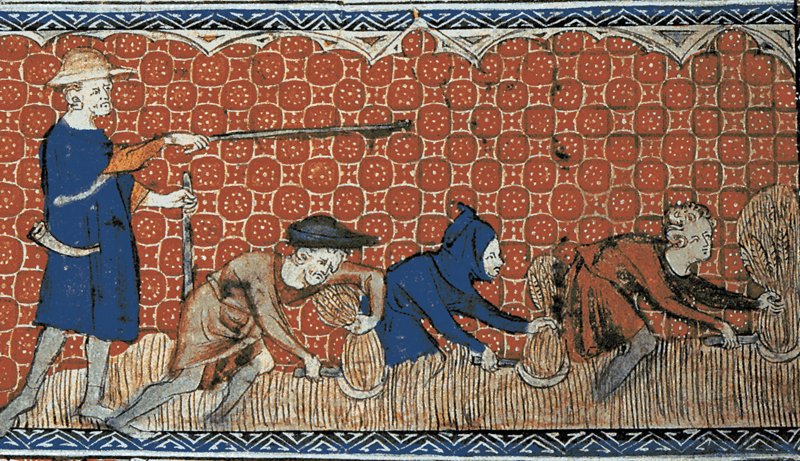
Most of what we picture when we think of the medieval world involves kings, knights and castles. Yet the great majority of people never wore a crown or carried a sword. They ploughed, baked, spun, brewed and traded. Daily life in the Middle Ages followed the seasons, the village and the Church, and modern archaeology now shows it in surprising detail, right down to what was cooking in the pot.
Who were the ordinary people?
They were, overwhelmingly, farmers. By one widely used estimate, about three out of every four people in medieval Europe were serfs: peasants tied to an estate and to the lord who owned it.
A serf was not a slave. The lord had a claim on his labour, not ownership of his body. In practice that claim was heavy. A serf typically spent two or three days of every week working the lord’s own fields, known as the demesne, which could take up more than a third of the estate. On the remaining days he farmed a holding of perhaps twelve acres to feed his own family. From that harvest he owed a share to the lord and a tenth, the tithe, to the parish church.
The arrangement cut both ways. The law did not allow a serf to walk away from the estate, but it also meant he could not simply be turned off the land. He had a right to stay.
Above the village stood the lord, and above the lords stood the king. If you want to know how that end of society worked, see our guide to medieval kings.
A working day on the land
Historians have pieced together the routine of one such family from the records of a monastery in the age of Charlemagne. The husband, a farmer named Bodo, got up early and went with the other villagers to work on the monks’ land, which was the main duty he owed. His wife, Ermentrude, spent her day in a workshop alongside other women, spinning thread, dyeing cloth and sewing clothes.
When the work was over the family ate their evening meal and went straight to bed, because the labour left them worn out. Real rest came only now and then, at the great festivals and holy days of the Church.
Home and village
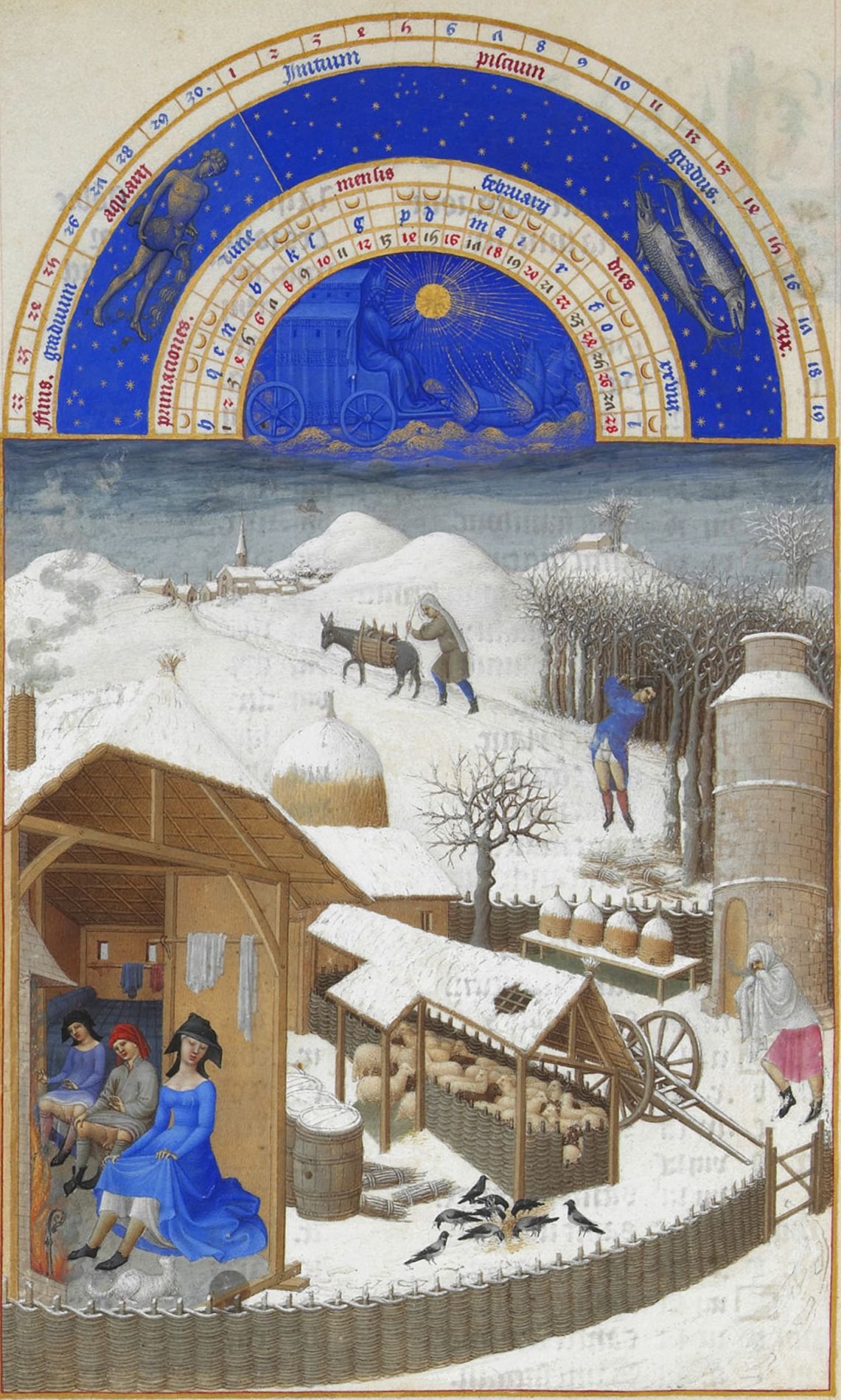
A peasant family’s house was small and plain. It had a single storey, walls of timber and mud, and a roof of thatch, all of them materials that were cheap and close at hand.
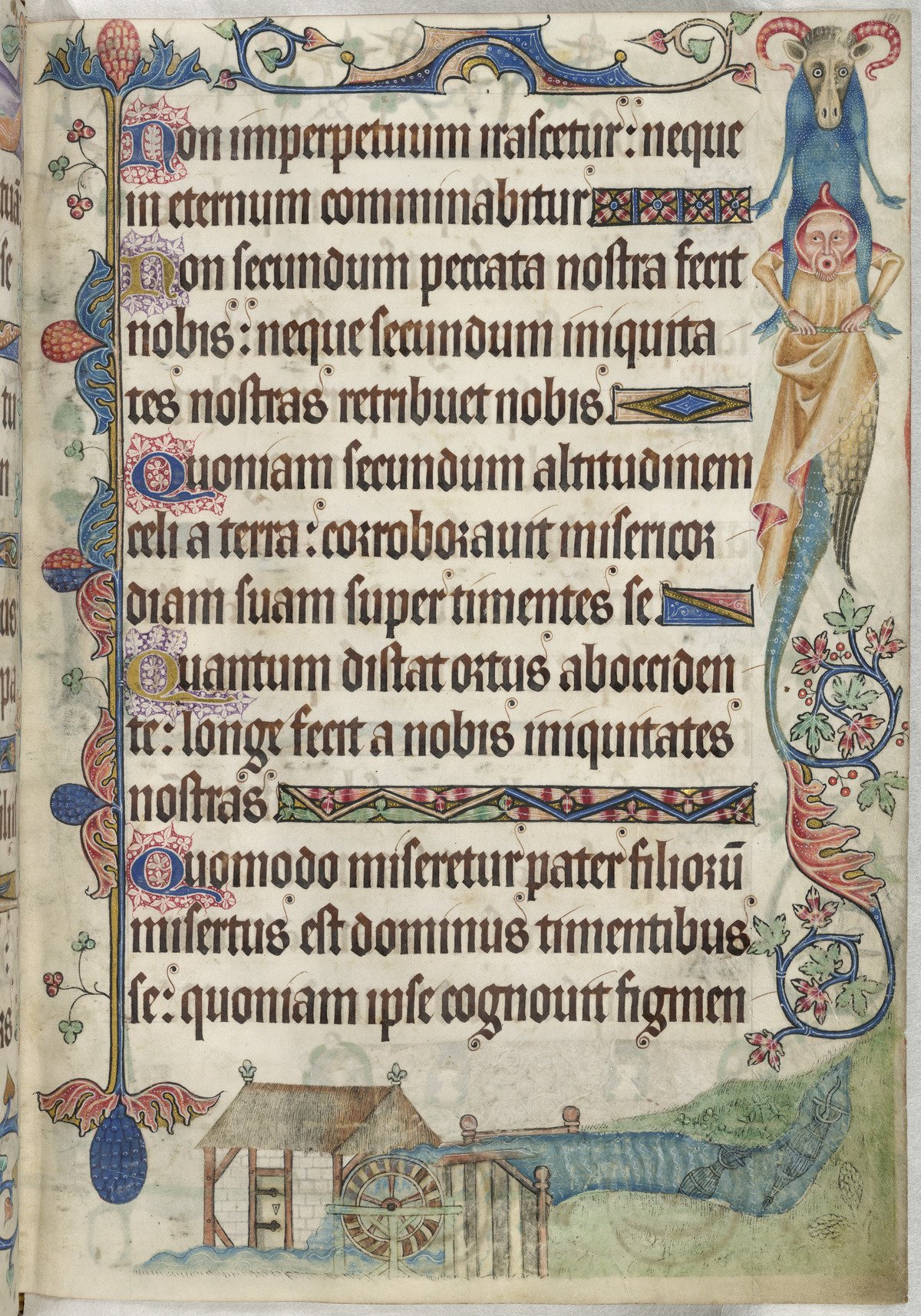
These houses stood together in villages. One of the best studied is Wharram Percy, in the Yorkshire Wolds in northern England, where people lived without a break for about 600 years. At its largest it had around forty peasant houses with their outbuildings and roughly 200 inhabitants. The village had mills, and its millponds earned extra money from fishing.
What people ate and drank
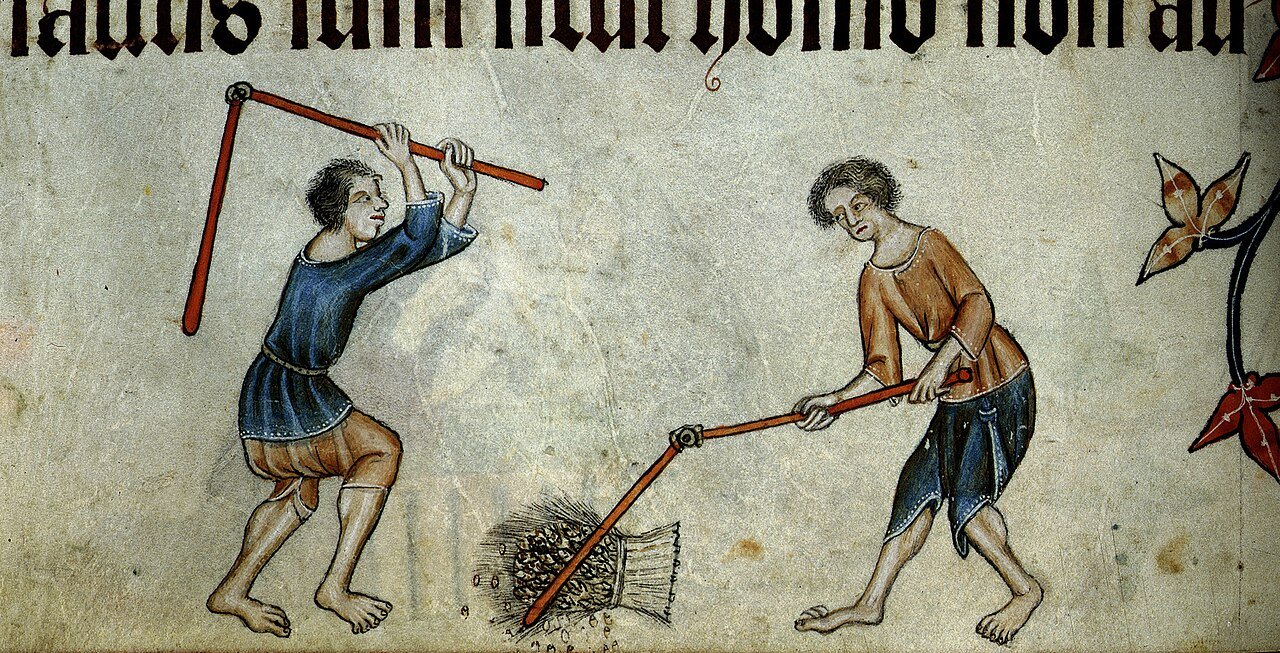
The basic foods were bread, porridge and soup. The bread was coarse and dark, baked from a mix of grains: rye with wheat, or rye with barley. Porridge came from the same rye and barley. To drink there was weak ale, or water sweetened with honey.
Thanks to modern science, we know more than the written records alone can tell us. In 2019 researchers at the University of Bristol published a chemical study of cooking pots from West Cotton, a village in Northamptonshire that was lived in from about 950 to 1450. They tested 123 fragments of pottery for traces of the food once cooked in them.
The results were clear. Six pots in ten had been used to cook meat from cattle or sheep, and the team concluded that stews, known as pottages, were the heart of the peasant diet. Cabbage and leek went into the pot with the meat. About a quarter of the vessels had held dairy foods, known at the time as the poor man’s “white meats”. One surprise was what was missing: fish played very little part, even though written sources mention it often.
Daily life in the Middle Ages was cleaner than you think
Films like to show medieval peasants caked in dirt. The evidence points the other way. Washing the hands and face first thing in the morning was normal for nearly everyone, and so was washing the hands both before a meal and after it.
People sometimes used soap. They washed their hair with an alkaline mixture made from lime and salt, and they cleaned their teeth with twigs, hazel being a favourite, and with small pieces of woollen cloth. Towns could also have public bathhouses. Nuremberg, a city known for its cleanliness, had fourteen of them.
Toilets were simple: a hole with a shaft that carried the waste down to a cesspit. In a castle this could be a weak point as well as a convenience. During the siege of Château Gaillard, which fell in 1204, French soldiers got inside by climbing in through the latrines, a story told in our guide to medieval siege warfare.
Sickness and medicine
Medieval medicine rested on an idea inherited from the ancient Greeks. The body was thought to contain four fluids, or humours: blood, phlegm, yellow bile and black bile. Illness meant they had fallen out of balance, and treatment aimed to put that right. This is why doctors so often drew blood, whether by opening a vein, by cupping or with leeches.
Who treated you depended on who you were and where you lived. Trained physicians specialised in diagnosis. The barber did the bloodletting. Midwives looked after childbirth and the illnesses of small children, and there were local healers too. Monasteries mattered a great deal: every monastic garden grew medicinal plants, and the sick went to the monks for herbs. Large monasteries had hospitals attached, and many communities ran hospitals of their own.
Women’s work
Women worked at almost everything. Most farmed beside their husbands and children, and women were also bakers, brewers, milkmaids, weavers and craftworkers. In towns a wife often worked in the family trade and, if her husband died, took charge of the business.
Their legal position was weaker than their economic one. A serf’s daughter could not choose freely whom to marry, because that decision belonged to the lord, and once married she came under her husband’s authority.
Town life and the guilds
Not everyone lived by farming. In the towns, merchants and craftsmen organised themselves into guilds, associations set up so that members could support one another. A craft guild set wages, checked quality and laid down the terms on which goods were sold. A guild master who judged a baker’s loaves substandard could confiscate the rest of the batch. Members were forbidden to undercut each other’s prices, and in some trades nobody was allowed to work after dark.
A young worker started as an apprentice in a master’s workshop and then went on working under a master. To become a master himself, he had to submit a “masterpiece” to the leaders of the guild as proof of his skill. In return for its rules, the guild looked after its own. It organised festivals, paid for members’ funerals and gave money to their widows and orphans.
Telling the time
Mechanical clocks came late to the medieval world. The oldest one anywhere that still works is at Salisbury Cathedral in England, and it was built in 1386. For the centuries before that, the working day was measured by daylight, not by the hour.
The plague that changed everything
Between 1347 and 1351 the Black Death swept across Europe. Measured against the size of the population, it killed more people than any epidemic or war known up to that time, and medicine had no cure to offer.
For the survivors, the world looked different. Workers were suddenly scarce, and scarce labour is expensive labour. Serfs could bargain for better terms and, in time, buy their freedom. Women gained too: widows now regularly ran the businesses and held the land their husbands had left, with more independence than before.
The countryside itself was reshaped. As the price of wool climbed in the later Middle Ages, many landowners turned their ploughland into sheep pasture. At Wharram Percy the last strips of arable were converted in 1527, and the village that had lasted six centuries emptied out.
Frequently asked questions
What was daily life in the Middle Ages like for most people?
It was a farming life. Most people were peasants who worked the land from early morning, lived in small thatched houses, ate bread and stew, and rested mainly on Church festivals.
What did medieval peasants eat?
Mostly coarse bread, porridge and thick stews called pottages. Chemical analysis of medieval cooking pots shows that the stews contained beef or mutton with cabbage and leek, and that dairy foods were common.
Did people in the Middle Ages wash?
Yes. A morning wash of the hands and face was routine, hands were washed around meals, and many towns had public bathhouses.
Were serfs slaves?
No. A lord was entitled to a serf’s labour but did not own him as a person. A serf could not leave the estate, yet he also had the right to remain on it.
How much did a serf have to work for his lord?
Usually two or three days in every week, spent on the lord’s own fields. The rest of the time went on the family’s own holding.
What did medieval people drink?
The everyday drinks were weak ale and water sweetened with honey.
Sources
- Mark Cartwright, “Serf”, World History Encyclopedia
- “Peasant Life in a Medieval Manor: The Family of Bodo, Carolingian Farmers”, World History Encyclopedia
- English Heritage, “History of Wharram Percy Deserted Medieval Village”
- J. Dunne, A. Chapman, P. Blinkhorn and R. Evershed, “Diet and the medieval peasant at West Cotton, Raunds, Northamptonshire”, Journal of Archaeological Science 107 (2019)
- Mark Cartwright, “Medieval Hygiene”, World History Encyclopedia
- Encyclopaedia Britannica, “Château Gaillard”
- The Metropolitan Museum of Art, “Medicine in the Middle Ages”
- Joshua J. Mark, “Women in the Middle Ages”, World History Encyclopedia
- Mark Cartwright, “Medieval Guilds”, World History Encyclopedia
- Salisbury Cathedral, “What to see”
- Encyclopaedia Britannica, “Black Death”