
Dante’s Divine Comedy Explained: Hell, Purgatory and Paradise
Few poems have a better opening: a middle-aged man gets lost in a dark forest, bumps into the ghost of his favourite poet and is taken on a guided tour of Hell. That’s how Dante’s Divine Comedy begins. It was written in the early 1300s, and seven centuries later people are still reading it, quoting it, painting it and turning it into video games. It is long, it is packed with Florentine gossip, and its author used it to settle scores with people he couldn’t stand, a sitting pope included. Here is the Divine Comedy explained without the footnote headache: who Dante was, what happens and why anyone still cares.
Jump to a section:
Who was Dante Alighieri?
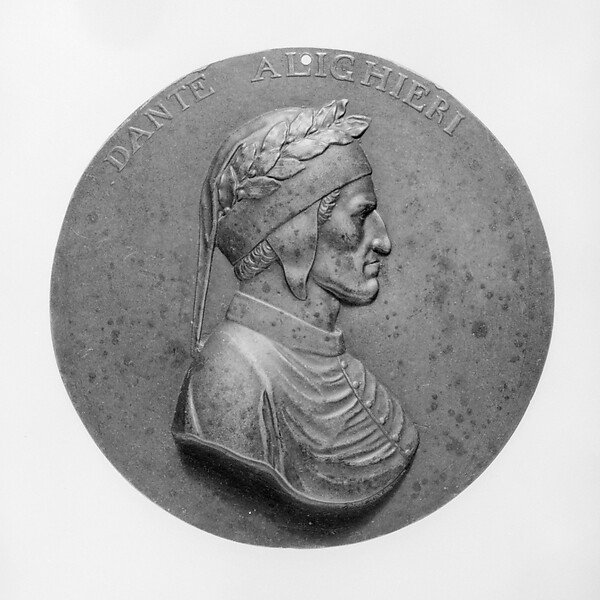
Dante was born in Florence in 1265 into a family that claimed old noble roots but had little money. The Florence of his youth was rich, crowded and permanently quarrelling. Its ruling party, the Guelphs, had split into two factions, the Whites and the Blacks, and Dante threw himself into politics on the White side. In 1300 he served a term as one of the city’s priors, its highest officials.
It ended badly. In 1301 he went to Rome with an embassy to Pope Boniface VIII, and while he was away, probably still in Rome, the Blacks took over Florence with the pope’s support. In 1302 Dante was fined and banished, and a later sentence said he would be burned alive if he ever came back. He never did. He spent the rest of his life moving from one Italian court to another and died in exile in Ravenna in 1321. In 2008 Florence’s city council finally passed a symbolic motion to revoke the sentence, a kind gesture, if one that came 687 years after his death.
What is the Divine Comedy about?
The story takes place over Easter week in the year 1300. Dante, “midway upon the journey of our life” (he was 35, half of the seventy years the Bible allots to a lifetime), finds himself lost in a gloomy wood. Three wild beasts, a leopard, a lion and a she-wolf, block his way up a hill. Like the creatures of the medieval bestiary, each is usually read as a symbol, in this case of a sin. Then the Roman poet Virgil appears and offers him another route: down through Hell, up the mountain of Purgatory and on to Heaven.
So the poem comes in three parts. Inferno is Hell, where sinners are punished forever. Purgatorio is the mountain where souls who are bound for Heaven work off their sins first. Paradiso carries Dante up through the heavens to a vision of God.
Virgil leads him through the first two. For the last stage Dante needs a Christian guide, and that turns out to be Beatrice, a Florentine woman he had loved from a distance since they were both children and who had died in 1290. Right at the end, Saint Bernard of Clairvaux takes over for the final step.
Why is it called a “comedy”?
Don’t go looking for many jokes. Dante simply called his poem the Commedia. In medieval terms a comedy was a story that begins in trouble and ends happily, told in a fairly plain style, and a tragedy went the other way. A journey that starts in a dark wood and finishes in Heaven fits the bill. The word “Divine” was added later. Giovanni Boccaccio, a great admirer, called the poem divine in the 1300s, and a Venetian edition of 1555 printed La Divina Comedia (the old spelling) on its title page. The name stuck.
The nine circles of Hell
Dante’s Hell is a vast funnel that narrows all the way down to the centre of the Earth. It is divided into nine circles, and the deeper you go, the worse the sin. Over the entrance is the most famous warning in literature: “Abandon all hope, ye who enter here” (in Italian, Lasciate ogne speranza, voi ch’intrate).
The first circle, Limbo, holds good people who lived before Christ or were never baptised. It is oddly pleasant, and the company is excellent: Homer, Horace, Ovid, Aristotle and, from later times, the Muslim scholars Avicenna and Averroes and the sultan Saladin. Their only punishment is that they live in longing, with no hope of ever seeing God.
After that, things go downhill in every sense. The lustful are blown about forever by a howling storm. Gluttons lie in cold, filthy rain. Further down come the greedy and the wasteful, the wrathful, heretics in burning tombs and the violent, some of them in a river of boiling blood. Then come the fraudsters, sorted into ditches: flatterers, churchmen who sold holy offices, fortune-tellers, corrupt officials, hypocrites, thieves and plenty more.
The bottom is the real surprise, because it is ice. Traitors are frozen into a lake, and in the middle stands Satan, a gigantic three-faced figure with a sinner in each mouth: Judas, who betrayed Christ, and Brutus and Cassius, who murdered Julius Caesar. Notice the geography, too. Hell sits inside a round globe, and Purgatory is on the other side of it. Like most educated people of his time, Dante took a spherical Earth for granted, which does rather spoil the myth that medieval people believed in a flat Earth.
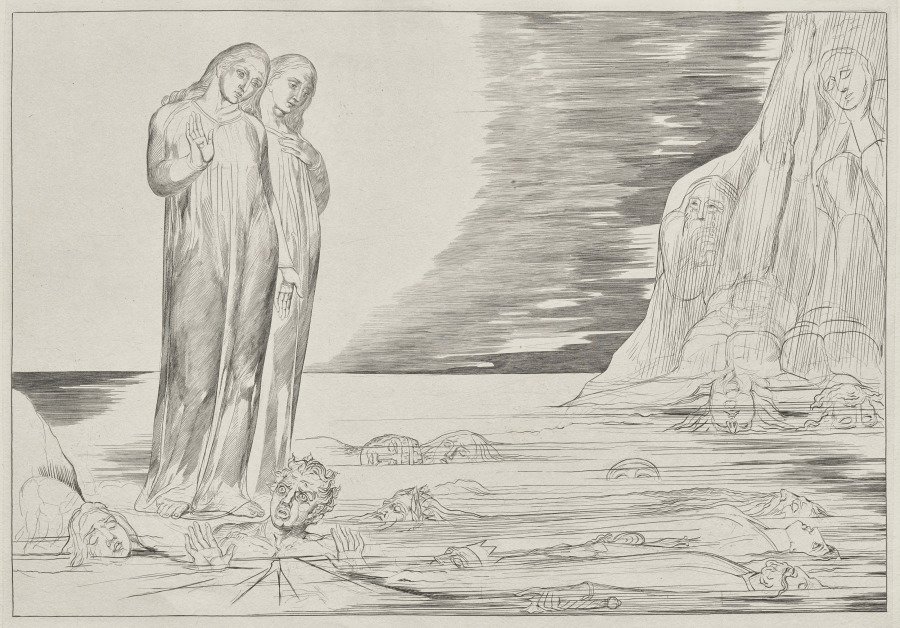
Many punishments are cruelly fitting. Fortune-tellers, who tried to peer into the future, have their heads twisted round so that they can only shuffle backwards. Scholars call this matching of sin and sentence the contrapasso, a word Dante himself uses.
Dante’s revenge list
Part of the fun of the Divine Comedy, then and now, is that Dante filled Hell with real people, many of whom he had known or dealt with. Florentine politicians, rival families, popes: in they go. His boldest move concerned Boniface VIII, the pope he blamed for his exile. Because the poem is set in 1300, Boniface was still alive and couldn’t technically be in Hell yet. Dante solved that neatly. Among the churchmen who sold holy offices, a dead pope, Nicholas III, is stuck head-down in a hole with flames dancing on the soles of his feet. When Dante speaks to him, Nicholas mistakes him for Boniface, arriving early, and makes it clear that a place is being kept warm. For why churchmen of the age made such easy targets, see how the medieval Church shaped everyday life.
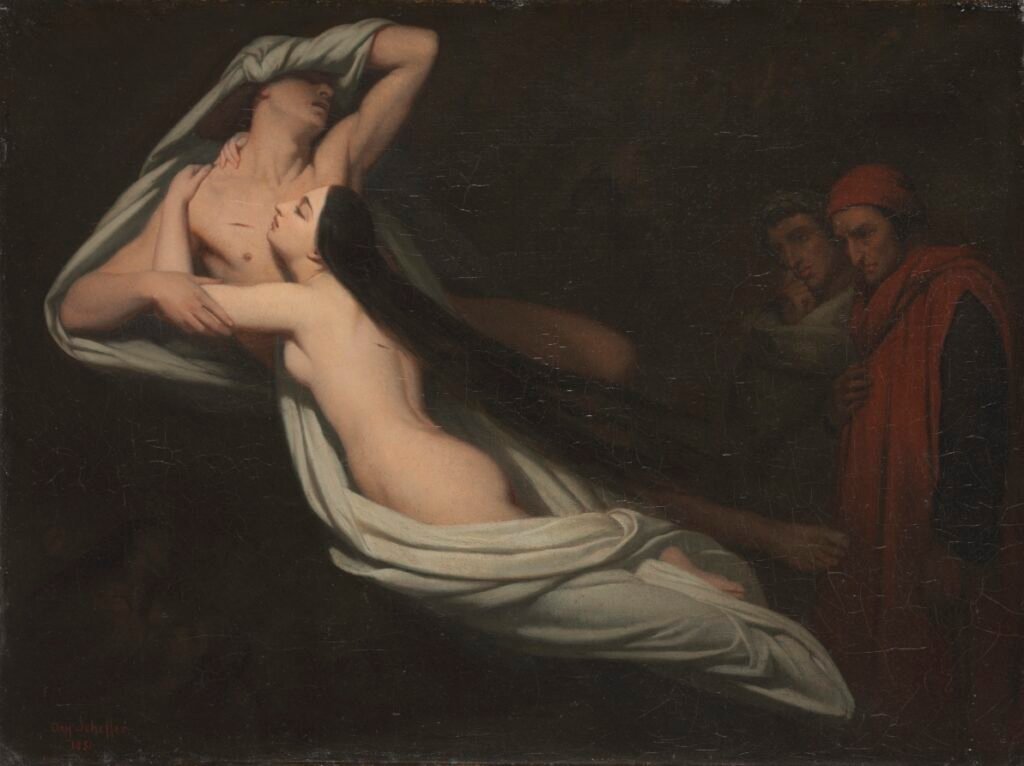
He could be tender as well as savage. In the second circle he meets Francesca da Rimini, who fell in love with her husband’s brother Paolo while the two of them were reading a romance about Lancelot. Her husband killed them both. Dante is so overcome by her story that he faints.
Up the mountain and into the stars
After climbing down Satan’s shaggy body and through the centre of the Earth, Dante and Virgil come out on the far side of the world, on an island in the southern ocean. Here rises the mountain of Purgatory. Its seven terraces match the seven deadly sins: pride, envy, wrath, sloth, greed, gluttony and lust. The suffering is temporary here and the mood is hopeful, so the souls sing hymns as they go. At the summit lies the Garden of Eden, where Beatrice appears and Virgil quietly vanishes.
Paradiso then lifts Dante through nine heavenly spheres: one each for the Moon, the Sun and the five planets known at the time, then the sphere of the fixed stars, then the outermost sphere that keeps everything turning. Beyond them all is the Empyrean, the home of God, where the blessed sit arranged like the petals of an enormous white rose. The poem ends with “the love that moves the sun and the other stars”. All three parts, in fact, finish on the same word, stelle, “stars”.
How the Divine Comedy is written
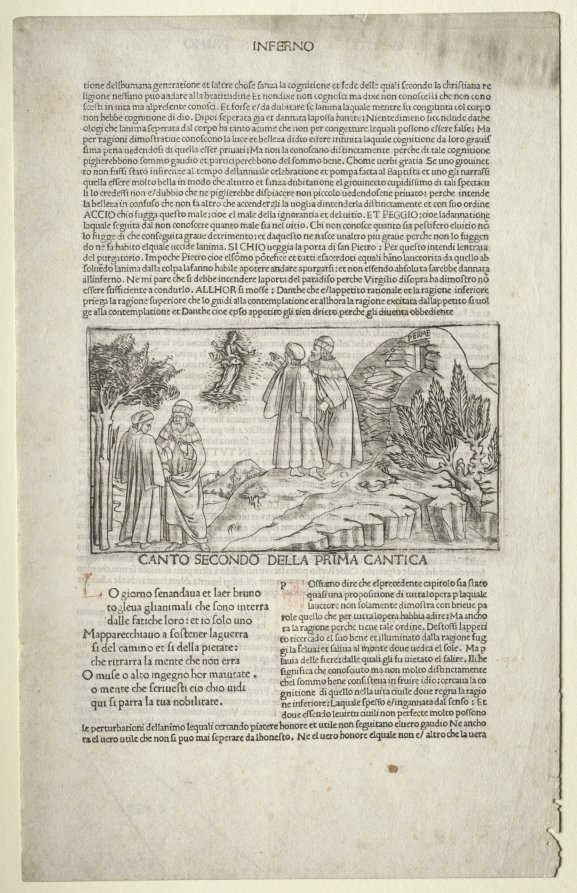
There are 100 cantos, or chapters: 34 in Inferno and 33 in each of the other two parts, roughly 14,000 lines in all. Dante wrote them in a rhyme scheme he invented, terza rima. The lines come in groups of three, and the middle line of each group sets the rhyme for the next (ABA, BCB, CDC and so on), so the verse keeps tugging you forward like the journey itself. If three seems to turn up everywhere, that is deliberate. It was the number of the Trinity.
Just as bold was the language. Serious writing in Dante’s day was normally done in Latin. He wrote in the Tuscan speech of Florence, the language people actually used at home and in the market, and the poem’s success helped make that dialect the basis of modern Italian. That is why Italians often call him the father of their language. Within about half a century the English poet Geoffrey Chaucer was reading him. In “The Monk’s Tale”, one of the Canterbury Tales, Chaucer retells the grim story of Count Ugolino from the Inferno and points readers to “the grete poete of Ytaille That highte Dant”.
Dante’s bones: one last escape
Dante was buried in Ravenna, and Florence, having thrown him out, spent centuries trying to get him back. In 1519 Pope Leo X, himself a Florentine Medici, approved moving the remains. When the delegation opened the tomb, it was empty. The Franciscan friars of Ravenna had quietly taken the bones and hidden them. They stayed hidden until 1865, when building work at the monastery turned up a box hidden inside a wall, with an inscription saying whose bones they were. Florence does have an impressive tomb for Dante in the church of Santa Croce, finished in 1829. It is empty.
Why the Divine Comedy still matters
Few medieval books have had a longer afterlife than the Divine Comedy. Around 800 handwritten copies survive, though not a single page in Dante’s own hand, and the first printed edition came out in 1472. Artists have illustrated it again and again: Botticelli drew it, William Blake was still working on his Dante pictures when he died in 1827, and Gustave Doré’s engravings shaped the way many of us picture Hell. As a young man Galileo even gave lectures in Florence on the size and shape of Dante’s Inferno.
So is it worth reading? Honestly, yes, as long as you pick a good modern translation with notes and start with Inferno, where most of the drama is. You’ll meet monsters, cheats, doomed lovers and a surprising number of politicians, and you will see how an exiled poet’s grudges became one of the great books of the world. For the paintings, glass and manuscripts made by Dante’s contemporaries, wander through medieval art.
Frequently asked questions
Is Dante’s Inferno the same thing as the Divine Comedy?
No. Inferno is only the first of the poem’s three parts. Purgatorio and Paradiso complete the journey.
How long did it take Dante to write the poem?
Most of it seems to have been written during his exile, from around 1308 until shortly before his death in 1321, although scholars still argue about the exact dates.
Was Beatrice a real woman?
She is traditionally identified with Beatrice Portinari, a Florentine who died in 1290, in her mid-twenties. Dante had already written about his love for her in an earlier work, La Vita Nuova.
Who ends up in the lowest part of Dante’s Hell?
Traitors. They are frozen in ice, and Satan chews on the three Dante considered worst: Judas, Brutus and Cassius.
Sources
- Wikipedia, Divine Comedy
- Wikipedia, Dante Alighieri
- Wikipedia, Inferno (Dante)
- The Cleveland Museum of Art, The Circle of the Traitors, William Blake
- Encyclopaedia Britannica, The Divine Comedy