
How Did Medieval People Stay Warm in Winter?
Let’s imagine what a medieval winter might look like. We can compare it to our own winters, if any of you went to a rural town to your grandparents. In the rural towns of our childhood, some of us may have found the houses to be a lot colder than in the cities, with the fire being made in a chimney or a potbelly stove. Something similar happened with houses in medieval times. You have no central heating, no electric blankets. There is also the problem of supplies: there are no supermarkets nearby, the nearest one is centuries away. Outside, the snow is piling up and the wind is blowing through every crack in the walls. The question is, how did medieval people survive the cold months? Well, here the answer depends on your position on the social scale, like if you were a lord in a stone castle, a monk in a monastery or a peasant in a one-room house.
Jump to a section:
Was a medieval winter colder than ours?
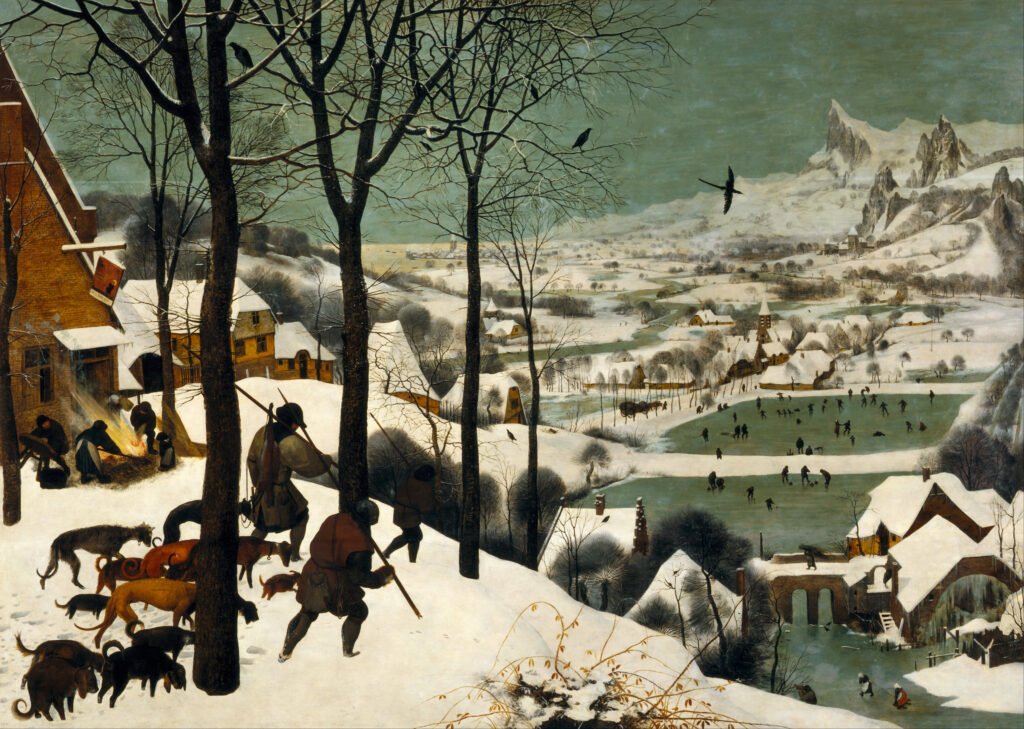
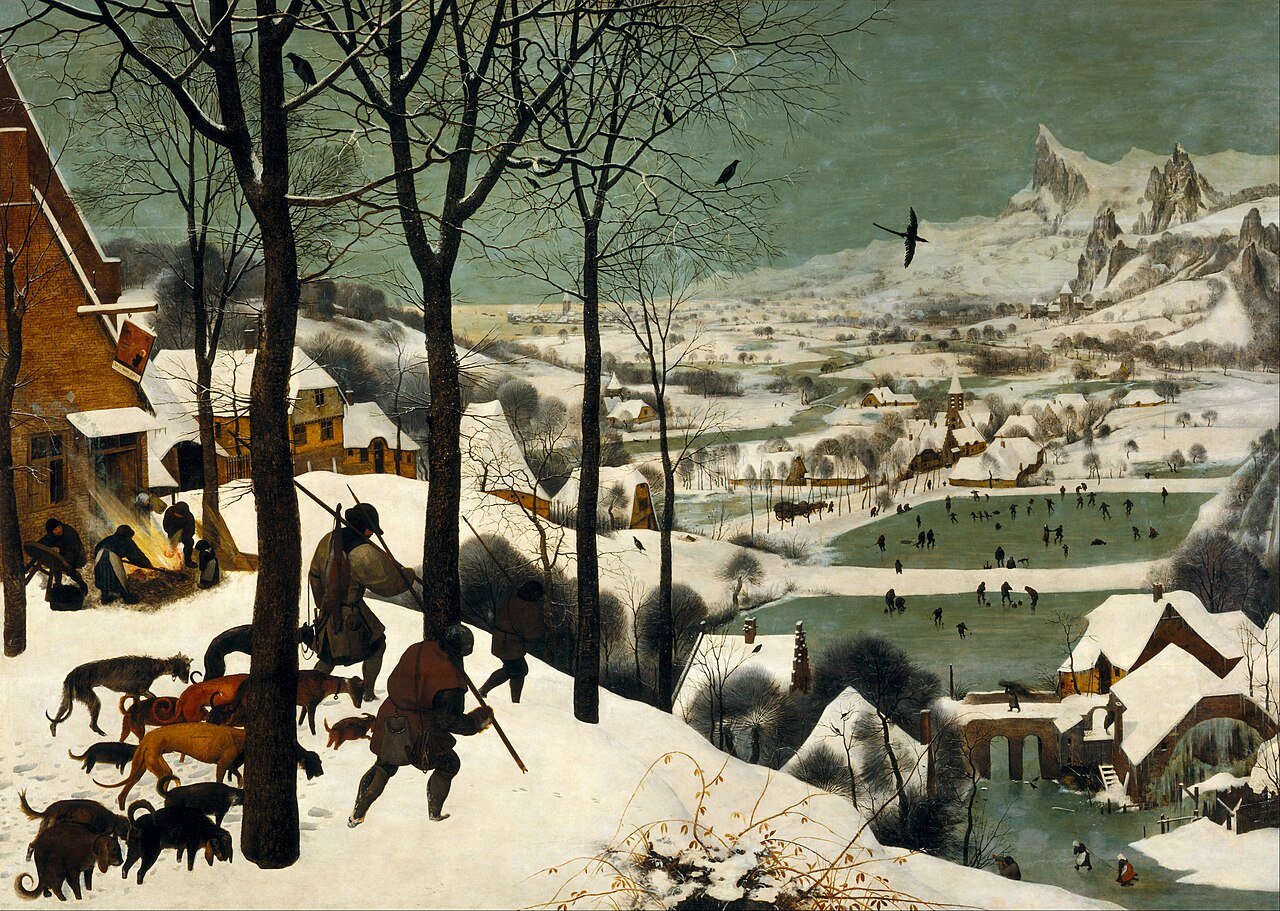
According to Ed Hawkins, the climate scientist of the University of Reading, the so-called Little Ice Age is usually dated roughly from 1400 to 1850, although historians use a range of dates. Well, not good for the people of the late Middle Ages. I can’t even imagine having this bad luck, not having the heating technology and living in some of the coldest climates of the last thousand years. Even before the timeframe mentioned above, records also mention the River Thames freezing in 1150 and 1309.
The fire in the middle of the room
The image I can give you of medieval homes is this: in most houses there was an open fire in the middle of the living space. This is according to the building historian Edmund Simons, who says that halls usually had a central fire, and that the smoke escaped through the thatch or through louvres, which are basically small openings in the roof. The good things are that the smoke could escape through the roof and the fire could help you cook the food and give some light. The bad thing is that most of the heat went straight up into the roof, and no more warm room for you, sadly. You can read more about these homes in our article on medieval houses.
The fireplace: a medieval luxury
Chimneys and wall fireplaces existed, but they were a luxury. According to Simons, chimneys survive from at least the 12th century, but at first they were limited to kitchens and to the private rooms of high-status buildings. At Rochester Castle in Kent, decorated 12th-century fireplaces still survive. English Heritage explains that they heated “the stones as well as the chamber”, which made castle life more comfortable. For ordinary families, chimneys only became common in the 16th century.
Windows without glass
Let me tell you something: glass in medieval times was another luxury. According to the NBS, most medieval windows didn’t have a layer of glass between inside and outside. They were very simple openings in stone or timber, covered with oiled cloth, paper, wooden shutters or even thin sheets of horn. Imagine the wind of a medieval winter coming into the house where you slept. Horrible, very horrible indeed.
Keeping warm in a castle
Castles were among the hardest places to heat. English Heritage describes them as having “thick stone walls, tiny unglazed windows and inefficient open fires”. Heavy tapestries on the walls of the private chambers were “not purely decorative”, because they added insulation. Lords and ladies could retreat to smaller private rooms with their own fireplaces, while servants and soldiers had far fewer comforts. You can see who slept where in our article on life in a medieval castle.
Peasants: sharing the house with the cows
For many peasants, the best source of heat was their own animals. The cattle were too valuable to leave out in the cold, so in some regions peasants shared the house with the animals. They probably used the body heat of the animals to warm the house, and it also kept the animals from dying in the freezing winter.
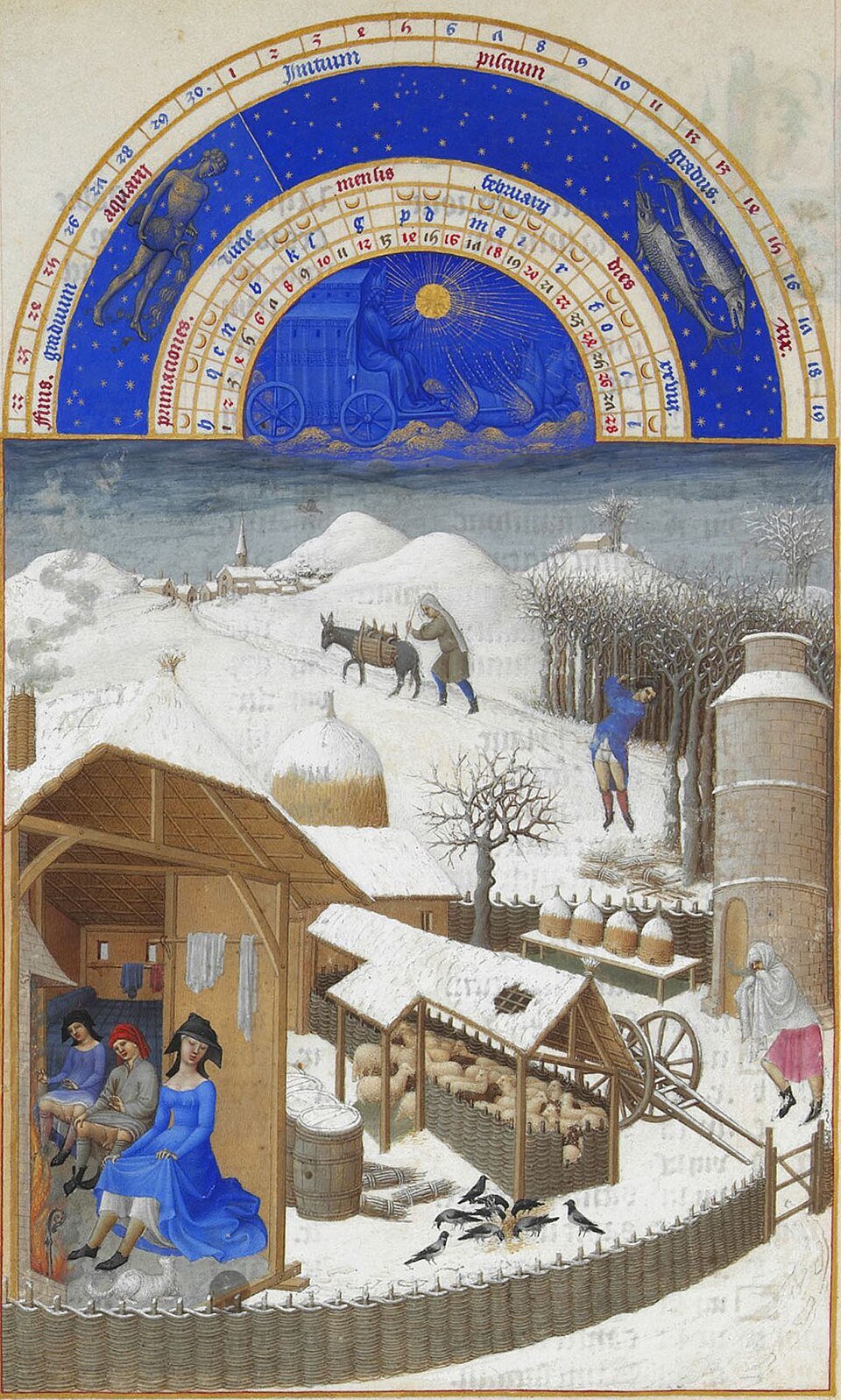
The February page of the Très Riches Heures, painted in 1413–16, shows another thing that medieval people did to warm up. According to Smarthistory, peasants warm themselves in a small wooden house, with their tunics pulled up high so the fire can warm their legs. Well, that is a clever way to warm up. I would have done anything to stay warm and cozy inside the house, so I would probably put on more layers of clothes as well.
Layers of wool and fur
Clothing was the other great defence against the cold. Most clothes were made of wool, which is warm even when damp, worn in several layers over a linen shirt or shift. In cold weather people added an extra layer, and those who could afford it had garments lined with fur. Fur was a sign of wealth, so the warmest and finest furs were worn by the rich. More about these layers is in our article on medieval clothing.
Monks and the warming house
Monks had an especially hard time in a medieval winter. Their first church service began in the middle of the night, in a cold stone church, as you can read in our article on medieval monastery life. Many monasteries had a special “warming house” for them. At Rievaulx Abbey in Yorkshire, English Heritage notes, it was the only place where monks could warm up in winter, and its large double fireplace was “kept lit from 1 November to Good Friday”.
Medieval winter food and an early bedtime
Winter food was mostly preserved food: salted meat and fish, dried peas and beans, and bread. Hot pottage, a thick stew kept warm over the fire, helped people get through the day. You can see what ordinary people ate in our article on what medieval peasants ate. With little light and expensive fuel, many people simply went to bed early, and families and servants often shared beds, which also meant sharing body heat.
Could I have survived a medieval winter?
I am honestly not sure, because I like my warm, cozy house with central heating. As much as I like the Middle Ages, I don’t think I would trade modern comforts for cold times. Sitting by a smoky fire with my legs warming up, like the peasants in the Très Riches Heures, sounds cozy for an evening, but not for four months. As for sharing my house with a cow, it would definitely be a new experience, but I would not be so happy to do so.
So, how did medieval people stay warm?
They really put a lot of effort into it. Living in a medieval winter meant open fires, smoky rooms, windows covered with shutters or oiled cloth, many layers of wool and, for some, animals sleeping under the same roof. This doesn’t sound like a lot of fun and coziness, right? I like to stay in a warm house with my cat on my lap, writing articles on my laptop. To see how the seasons shaped every part of life, start with our overview of daily life in the Middle Ages.
Frequently asked questions
How did medieval people heat their homes?
Most homes had an open fire on a hearth in the middle of the main room, with the smoke escaping through the roof. Chimneys and wall fireplaces existed from at least the 12th century, but only in rich buildings.
Did medieval houses have glass windows?
Only the most important buildings did. Most windows were covered with wooden shutters, oiled cloth, paper or thin sheets of horn.
Did medieval people sleep with their animals?
In some regions, yes. In longhouses such as those on Dartmoor, people and cattle lived under the same roof, with the animals at one end of the building.
Was a medieval winter colder than today?
Often they were, especially during the Little Ice Age, which is usually dated from about 1400 to 1850. The River Thames is recorded as frozen in 1150 and 1309.
How did monks stay warm in winter?
Many monasteries had a warming house with a large fire. At Rievaulx Abbey, the fire was kept lit from 1 November to Good Friday.
Sources
- English Heritage, 10 Ways of Keeping Warm Through History
- Edmund Simons, Fireplaces, Stoves and Chimneys, The Building Conservation Directory (2007)
- NBS, Windows, Glass, Glazing: A Brief History
- Ed Hawkins, Frost Fairs and the Little Ice Age, Climate Lab Book (2017)
- Dartmoor National Park Authority, Higher Uppacott
- Smarthistory, Limbourg Brothers, Très Riches Heures du Duc de Berry