
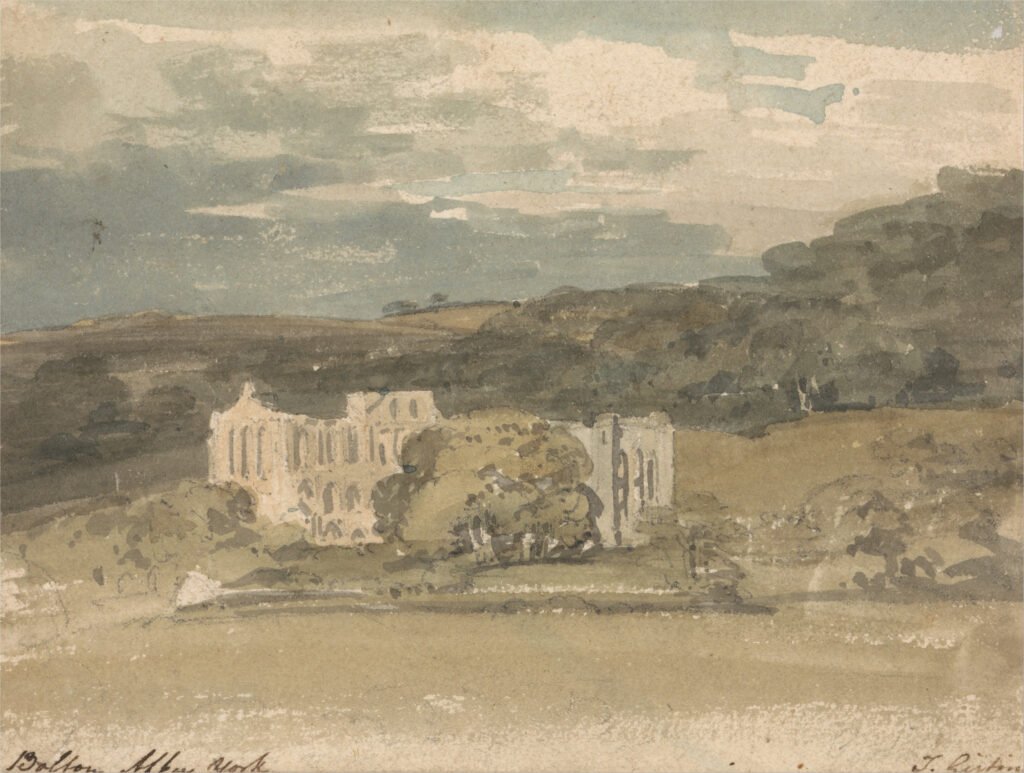
A Day in the Life of a Medieval Monk
If you think your alarm goes off too early, spare a thought for the medieval monk. His first church service of the day started at around two or three in the morning, in the dark, in a cold stone church, and nobody was allowed to grumble about it out loud, because talking was mostly banned too. So what was medieval monastery life actually like, hour by hour? Was it all prayer and porridge, or was there more to it? Pull up your hood, keep your voice down, and follow me into the cloister.
Jump to a section:
Medieval monastery life in a nutshell
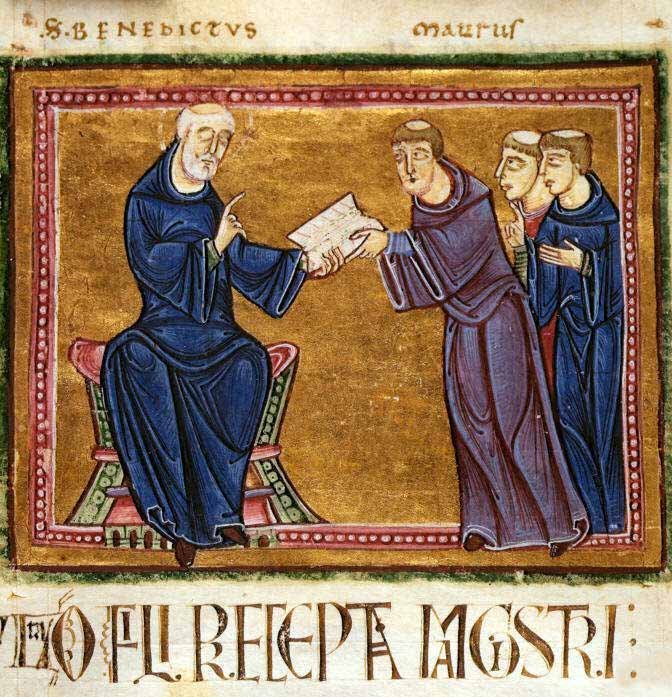
A monk was a man who had left ordinary life behind to live in a religious community, praying, working and following a strict set of rules. In western Europe, most of those rules came from one source: the Rule of Saint Benedict, written in the sixth century. It covered pretty much everything, from how much bread a monk got to how he should sleep.
Monks were never a huge crowd. Mark Cartwright of World History Encyclopedia estimates there was only about one monk for every hundred people in medieval Europe. A small monastery might hold a dozen monks and a large one around a hundred, while the famous abbey of Cluny, in France, had 460 at its height in the mid-1100s. That’s a lot of people trying very hard not to talk to each other.
How did you become a monk?
For many, it wasn’t exactly a career choice. Cartwright explains that some children were handed to monasteries before they reached their teens, occasionally as young as five. These child members were known as oblates, from a Latin word meaning “offered”. Noble families often steered their second or third sons towards the Church, and the monastery usually expected a generous gift when a new recruit arrived.
Recruits aged 15 and up began as novices, a kind of trainee. According to Cartwright, a novice who lasted twelve months could make his vows and join the community for good. Oblates and novices were never left on their own without a monk watching them. Medieval monastery life came with built-in babysitters.
A day that starts in the middle of the night
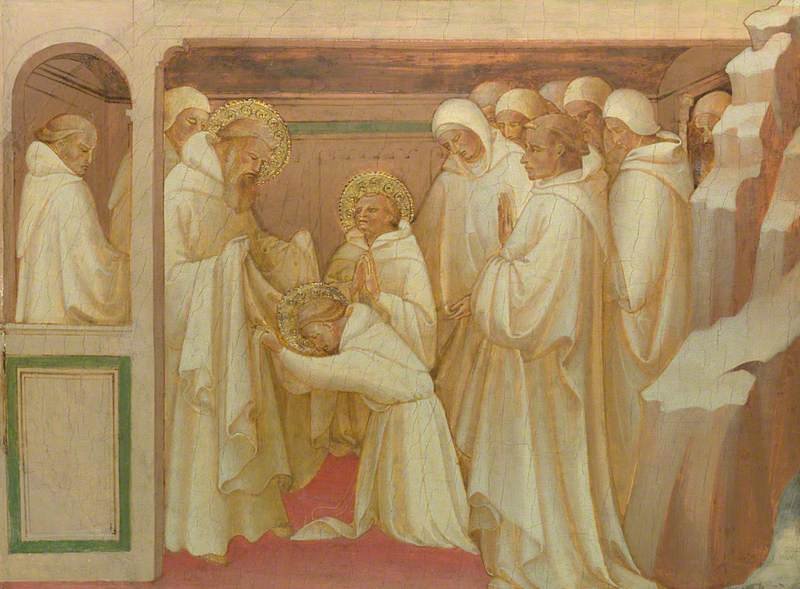
Here’s roughly how a monk’s day ran, based on Cartwright’s account. The night service, sung around 2 or 3 a.m., came first. One brother walked round the choir with a lamp to catch anyone who had nodded off. Imagine being the monk whose job was to wake up the sleepers. Popular, I bet.
The day proper began at sunrise, which meant about 4.30 a.m. on summer mornings and 7.30 a.m. in the depths of winter. After a wash, the monks had roughly an hour of quiet work, such as prayer, reading or copying books. Then came morning Mass, a daily meeting of the community, more work, High Mass at midday and the main meal. Afternoons were for more work. Bedtime was shortly after 6 p.m. in winter and around 8 p.m. in summer.
Even sleep had rules. The Rule of Saint Benedict told monks to go to bed fully dressed, with a belt or cord round their waist, so that they were always ready to get up for prayers, but to take off their knives in case they cut themselves in their sleep. Pyjamas, it seems, were not part of medieval monastery life.
Shh! Silence and secret sign language
If medieval monastery life had a soundtrack, it would mostly be silence. Talking was strictly limited. Cartwright lists the places where monks were generally expected to stay silent: in church, in the kitchen, at meals in the refectory and in the dormitories. A short chat in the cloister after the daily meeting was allowed, but only about Church business or genuine everyday needs. Monks were not supposed to talk to lay brothers, novices or visitors either.
So how did you ask someone to pass the salt? With your hands. The historian Scott G. Bruce, now of Fordham University, has shown that the monks of Cluny were the first to use a silent language of hand signs with specific meanings, and that other abbeys across Europe copied the idea. Cartwright adds that some monks even whistled.
The signs for food are delightful. As ScienceNorway reports, drawing on a list put together by the art historian Kirk Ambrose, the sign for fish was a hand wiggling like a tail in the water. For pike, a famously quick fish, you made the same sign but faster. For eel, you held your hands together as if gripping a slippery one. There were signs for honey, beans and eggs too. According to Ambrose, a few of these signs are still used by Cistercian monks today.
What was on the menu?
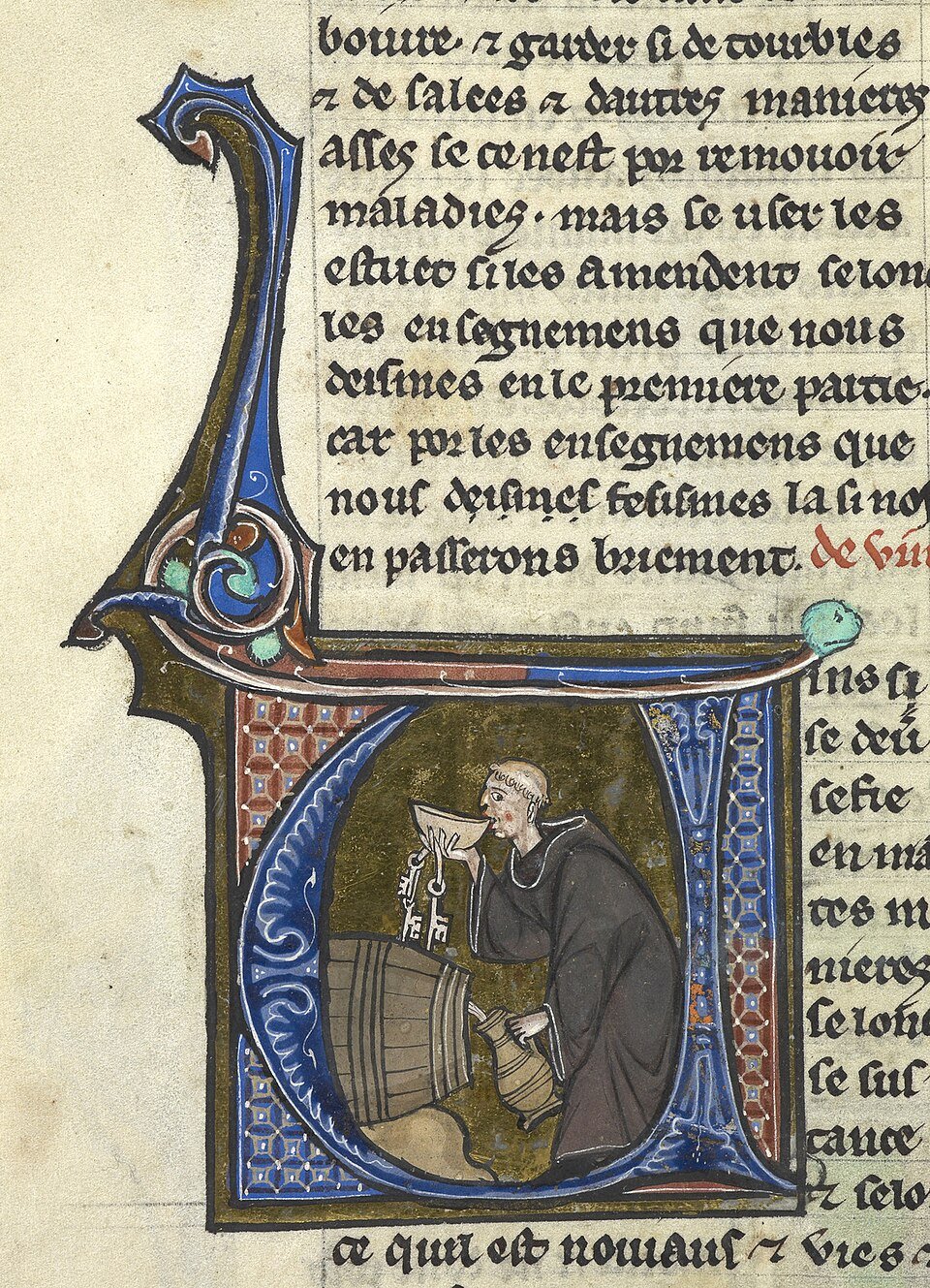
Benedict was surprisingly generous on paper. His Rule allowed two cooked dishes at the main meal, a whole pound of bread for the day, and a measure of wine called a hemina, a little under half a litre. What it did not allow, except for the weak and the sick, was the meat of four-legged animals.
Cartwright notes that monks sat down to eat once a day in winter but twice in summer. The University of Sheffield’s research site on the Cistercians in Yorkshire describes their usual food as coarse bread, vegetables, herbs and beans, washed down with a daily ration of ale or wine. On special days there were extra treats called pittances, such as fish or eggs, though the Cistercians’ leaders ruled that pittances should never be served three days in a row. No getting carried away.
Of course, rules have a way of bending. English Heritage explains that in 1336 a papal decree let the monks of Muchelney Abbey in Somerset eat meat twice a week, as long as it wasn’t in the main dining hall. New research suggests they ate it in a separate room that was most likely the misericord, a name that comes from the Latin for mercy. A meat room called “mercy”. You have to admire the branding.
Did the monks put on weight? A study by Pip Patrick of skeletons from three monasteries in medieval London, summarised by Medievalists.net, found that monks were far more likely than other Londoners of the time to suffer from joint conditions linked to obesity. She stresses that it was a small study from one area. Still, the jolly, round monk of legend may not be pure fiction.
Work, books and an awful lot of sheep
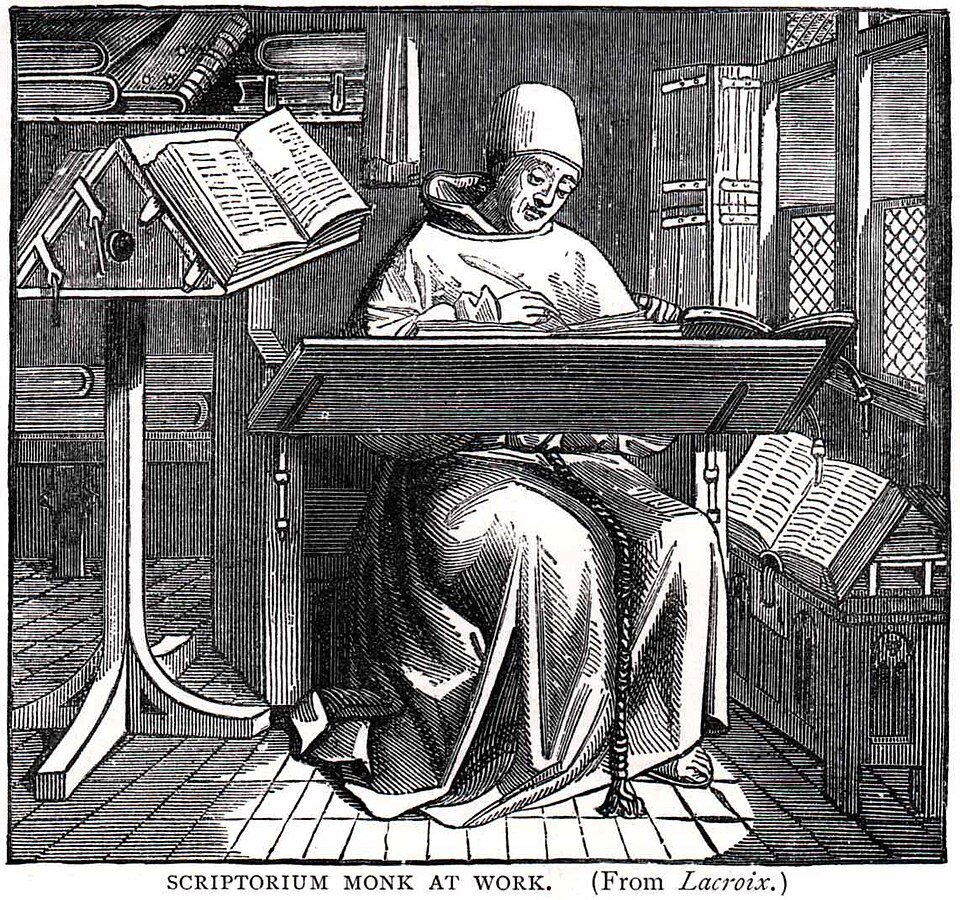
Monks were expected to stay busy. Reading, copying books and studying filled many hours. Much of the heavy work, though, was done by lay brothers, who lived separately from the monks and handled farming, cooking and laundry.
Some monasteries became huge operations. English Heritage says that by 1167, Rievaulx Abbey in Yorkshire housed 140 monks, plus roughly 500 lay brothers. Its lay brothers tended about 12,000 sheep, whose wool was sold as far away as Italy. Medieval monastery life, it turns out, could also be big business.
The monks themselves owned almost nothing. Cartwright lists a typical monk’s personal kit as a pen, a knife, a handkerchief, a comb and a small sewing set. Clothes were limited to about two of each item, with a fresh robe and hood handed out every Christmas. Minimalism, a thousand years before it was cool.
Rules, snitches and punishments
Like any organisation, medieval monastery life had a boss. Every monastery was run by an abbot, who held absolute authority and normally kept the job for life. Monks bowed deeply to him and kissed his hand. His deputy, the prior, had inspectors who checked on the brothers every day.
Breaking the rules was risky. Cartwright explains that monks were expected to report a brother’s misbehaviour to the abbot. Telling tales wasn’t just allowed, it was a duty. Punishments ranged from a beating to being shut out of community life for a while, or even being locked up inside the monastery. And don’t expect to laugh it off: the Rule of Saint Benedict was not a fan of jokes or laughter either.
Leaving was not simple. Monks generally needed the abbot’s permission to step outside the walls. From the 13th century, Cartwright notes, rules did allow young people who had been placed in a monastery as children to leave once they came of age.
The end of an era
In England, the story ended abruptly. Between 1536 and 1540, Henry VIII closed the monasteries and took their wealth. English Heritage records that Rievaulx, once home to hundreds, was down to just 23 monks when it was shut on 3 December 1538. Today its roofless ruins are among the most beautiful in Britain.
So, would you have survived medieval monastery life? If you like early nights, simple food, a lot of singing and very little chat, you might have thrived. If you can’t go an hour without saying something, maybe not. Either way, monks were only one part of a much bigger picture. To see how they fitted in alongside popes, bishops and parish priests, head to the main article on the medieval Church. And for one religious order that swapped the quiet life for armour and swords, meet the Knights Templar.
Frequently asked questions
What time did medieval monks wake up?
Monks got up around 2 or 3 a.m. for the night service, then started the working day at sunrise: around 4.30 a.m. (summer) or 7.30 a.m. (winter).
What did medieval monks eat?
Mostly bread, vegetables, beans, fish, eggs and cheese, with ale or wine. The Rule of Saint Benedict banned the meat of four-legged animals except for the sick, although many monasteries relaxed this rule in the later Middle Ages.
Were medieval monks allowed to talk?
Only at limited times and places. Silence was the rule in church, at meals, in the kitchen and in the sleeping quarters, so monks developed hand signs to communicate.
How old were people when they became monks?
Some children, called oblates, entered monasteries as young as five. Older recruits, from 15 upwards, began as novices and could make their vows after twelve months.
Sources
- Mark Cartwright, World History Encyclopedia, The Daily Life of Medieval Monks (2018)
- The Rule of Saint Benedict, chapters 22, 39 and 40, via Fordham University’s Internet Medieval Sourcebook
- Scott G. Bruce, Silence and Sign Language in Medieval Monasticism, Cambridge University Press (2007)
- Ingrid Schou, ScienceNorway, Monks had to remain silent whilst they ate, so they invented a sign language (2022)
- University of Sheffield, The Cistercians in Yorkshire, Food and drink
- English Heritage, Kitchen renovations and gastric woes at Muchelney Abbey (2021)
- English Heritage, History of Rievaulx Abbey
- English Heritage, Medieval monasteries: interview with a monk
- Medievalists.net, Were medieval monks obese? (2014)