
Was the Iron Maiden Real?
Every torture museum has one. A tall iron cabinet shaped like a woman, with a painted face, two doors and rows of long spikes inside, waiting for some poor victim to be shut in. The iron maiden is probably the most famous instrument of medieval cruelty. There’s just one problem: there’s no good evidence that anyone in the Middle Ages ever used it. The real story of iron maiden torture is a tale of a dubious 18th-century local history, Victorian showmen and Second World War bombs. It’s grim, but it’s also oddly funny. Let’s open the doors and look inside.
What is an iron maiden supposed to be?
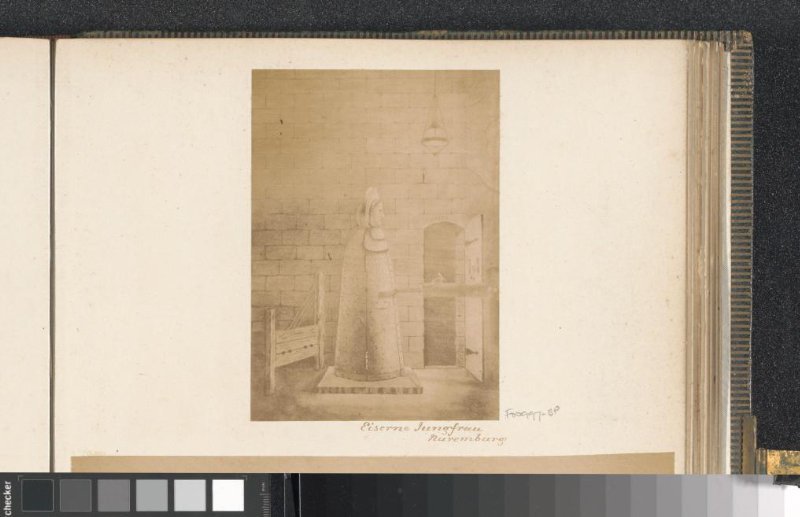
The classic iron maiden is an upright, coffin-like case big enough for a person, often topped with a woman’s face. Its hinged doors are lined with spikes. According to the legend, the victim was locked inside and the spikes pierced the body as the doors closed. In the most famous version, from Nuremberg in Germany, History UK notes that the spikes were arranged around the eyes, the chest and the back.
It sounds horrifyingly efficient, and that’s the first clue that something is wrong. Real medieval torture, as Live Science points out, was usually far less elaborate. Interrogators mostly used simple methods such as binding people with rope. Nobody needed a custom-built iron lady.
Where did the iron maiden torture story begin?
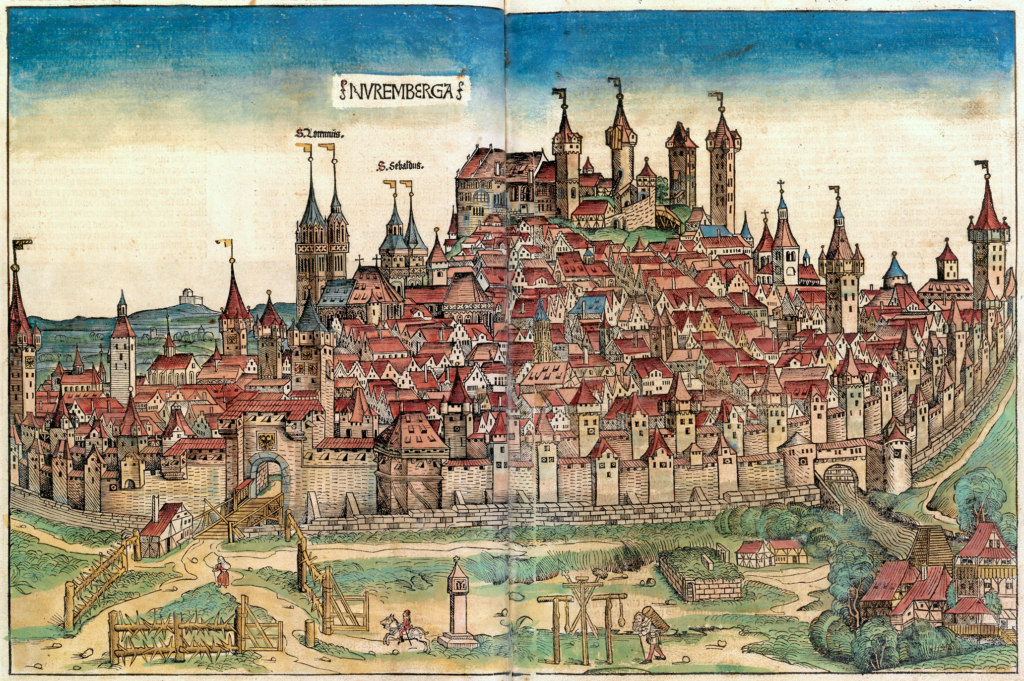
Not in the Middle Ages. The earliest claims about iron maiden torture date from the 18th century, long after the period they describe. The trail leads to a collection of material on Nuremberg’s past, the Materialien zur Nürnbergischen Geschichte, published in the early 1790s and edited by Johann Christian Siebenkees, a law professor at nearby Altdorf. (Popular accounts usually credit his cousin, the philosopher Johann Philipp Siebenkees.) It describes the execution of a coin forger in the city on 14 August 1515, supposedly inside an iron maiden.
That was nearly three centuries after the supposed execution. History UK says historians have found no record of it from the time, and nothing to show the city owned such a device in 1515. It’s impossible to say whether the story was invented or simply believed.
Interestingly, rumours about “iron maidens” were already floating around a little earlier. The word historian Pascal Tréguer has traced an English translation of a German travel book, first published in 1740, whose author grumbled that a great many idle stories were told about iron maidens at Plassenburg castle, the White Tower in Prague and elsewhere, and noted that the ones once said to be in Rome’s Castel Sant’Angelo could no longer be seen.
The famous Iron Maiden of Nuremberg
The legend needed a real object, and soon it had one. The famous Iron Maiden of Nuremberg, Live Science reports, was built in the early 1800s. According to the historian Spencer McDaniel, a “medieval” iron maiden was already on show in Nuremberg by 1802. It was a crowd-pleaser: a ticket-selling monster for curious tourists.
Iron maidens travelled, too. In 1893 a New York printer published an illustrated catalogue of torture instruments from Nuremberg Castle, bought for the Earl of Shrewsbury and sent on tour in the United States. It advertised its star exhibit as “the celebrated original iron maiden”. Historians are not convinced: no surviving iron maiden has been dated earlier than the 1800s. Still, Victorian audiences loved a good shudder, and the iron maiden delivered.
The Nuremberg maiden itself no longer exists. It was lost when Allied bombers hit the city as the Second World War drew to a close; Live Science dates its destruction to 1944. Copies and imitations survive in museums around the world, and many of them were put together in the 19th century from old metal bits and pieces, which is one reason they look so convincingly ancient.
Borrowed nightmares: the roots of the legend
Like many good myths, the tale of iron maiden torture borrows from older stories. Three are often mentioned.
- A Spartan robot wife. The Greek historian Polybius, writing in the 2nd century BC, says the Spartan ruler Nabis built a lifelike figure of his wife, Apega, dressed in fine clothes. Hidden under the dress were iron nails. When a rich citizen refused to hand over money, Nabis had him embrace “Apega”, and hidden springs pulled the man onto the nails until he would say anything. Polybius claims a good number of people died this way.
- A Roman general in a box. St Augustine, writing in the early 400s, retells the story that the Carthaginians shut the Roman commander Regulus in a narrow box lined with sharp nails, so that he couldn’t lean on any side without pain, and killed him by keeping him awake.
- A cloak of shame. In German towns, offenders could be made to wear a heavy wood-and-metal “cloak of shame”, the Schandmantel, and parade in public. It was humiliating but, as the writer Jason Colavito points out, it had no spikes.
Mix a Greek horror story, a Roman martyr legend and a German shame barrel, add a local history and a showman, and you get something very like the iron maiden torture of popular imagination.
What did a real “iron maiden” do?
Here’s a twist. Some of these objects may once have been real punishment devices, just not for killing. The Medieval Crime Museum in Rothenburg ob der Tauber, which owns a famous iron maiden, says its example was never used for torture or murder. Instead, it was used for punishments of honour, meaning public shaming. The museum also says the deadly nails were added later. The legal historian Wolfgang Schild, who wrote the museum’s booklet on the subject, even gave it the telling subtitle “poetry and truth”.
That fits what we know about real medieval justice. Alongside fines, whipping and execution, towns loved public shaming: the pillory, the stocks, shame masks and humiliating costumes. The point was to make an example of someone in front of their neighbours, not to build an elaborate machine.
Why the myth won’t die
The idea of iron maiden torture is simply too good a story. It’s visual, it’s terrifying and it confirms what many people already believe about the Middle Ages: that it was a time of dungeons and cruelty. Peter Konieczny, editor of Medieval Warfare magazine, told Live Science that many of these myths took shape in the 1700s and 1800s, adding drily: “It’s so much easier to pick on people who have been dead for 500 years.”
Iron maiden torture belongs to the same family as horned Viking helmets and chastity belts: dramatic inventions that reveal more about their believers than about the Middle Ages. So next time you see one in a museum, check the label. If it says “medieval”, ask how they know.
If you enjoy watching legends fall apart, explore more medieval myths. Then discover whether chastity belts were real, find out whether Vikings wore horned helmets, and learn whether medieval people really thought the Earth was flat.
Frequently asked questions
Has anyone found an iron maiden from the Middle Ages?
No. Every known example dates from the early 1800s or later, often put together from older parts. There’s no medieval record of one being used.
Why is it called an “iron maiden”?
The name translates the German Eiserne Jungfrau, “iron virgin”. Many examples have a woman’s face on top, and some writers think the Nuremberg one may have reused an old iron bust of Mary.
Were medieval people tortured at all?
Yes. Courts in many places allowed torture to extract confessions, especially in serious cases. But the methods were usually simple and grim, such as ropes and beatings, not elaborate spiked machines.
Can you still see an iron maiden today?
Yes, in several museums, including the Medieval Crime Museum in Rothenburg ob der Tauber. Just remember that they’re relics of a later legend, not of medieval executions.
Sources
- Stephanie Pappas, Live Science, Are Iron Maidens Really Torture Devices? (2016)
- History UK, The Iron Maiden: Medieval Torture Device or Modern Myth?
- Spencer McDaniel, Tales of Times Forgotten, Why Most So-Called “Medieval Torture Devices” Are Fake (2019)
- Pascal Tréguer, word histories, ‘iron maiden’: meaning and origin (2021)
- J. D. Ichenhäuser (compiler), Illustrated catalogue of the historical and world-renowned collection of torture instruments… from the Royal Castle of Nuremberg (New York, 1893), Project Gutenberg
- Polybius, Histories, book 13, LacusCurtius (Loeb translation)
- Augustine, The City of God, book 1, chapter 15, Christian Classics Ethereal Library
- Jason Colavito, Fabricating History: The Case of the Iron Maiden
- Rothenburg ob der Tauber, Medieval Crime Museum
- Wolfgang Schild, Die Eiserne Jungfrau: Dichtung und Wahrheit, library record