
Were Chastity Belts Real?
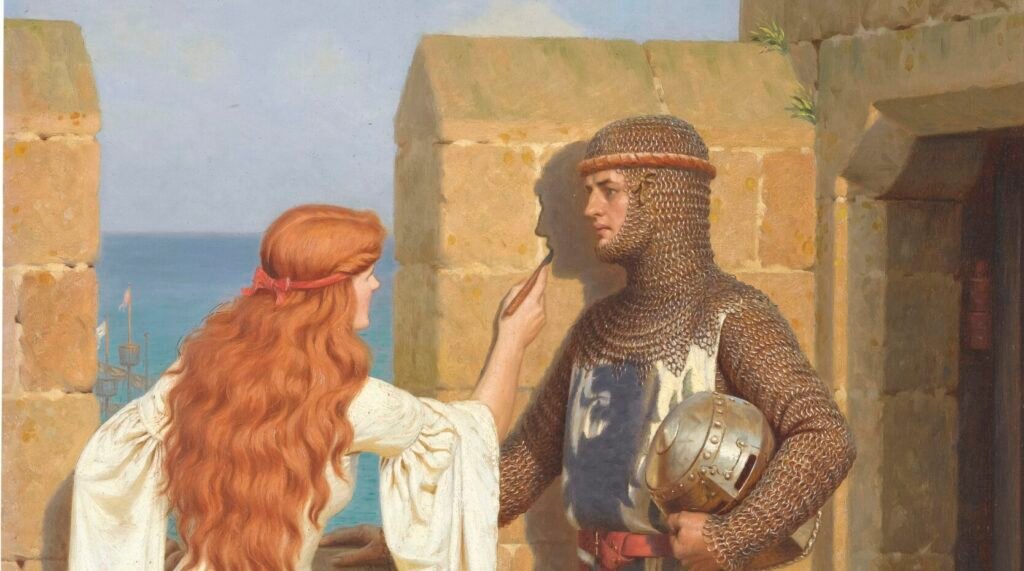
You probably know the story. A knight rides off on crusade, but before he goes he locks his wife into a pair of iron underwear, pockets the key and gallops away for several years, feeling very pleased with himself. It has become a classic picture of medieval life, and it turns up in films, cartoons and museum gift shops. There is just one problem. Medieval chastity belts almost certainly never existed. So where did the idea come from, and why do so many museums own one? Let’s unlock the truth. Gently.
Jump to a section:
The story everybody knows
The legend says that knights heading for the Holy Land locked up their wives to keep them faithful. The writer Massimo Polidoro, in a 2011 article for the Skeptical Inquirer, calls this tradition a legend and points out the practical problems. Wearing a metal belt for months or years would have caused serious hygiene trouble, painful wounds and infections. And even if a jealous husband had tried it, medieval locks could be picked quickly. A determined wife, or a determined locksmith, would not have been held up for long.
There is also a bigger problem: the evidence. Not a single genuine medieval example has turned up, and, as the medievalist Albrecht Classen notes, the belt never appears in serious medieval texts.
Where the idea really started
The phrase is old, but at first it meant something else entirely. Polidoro explains that the Latin expression cingulum castitatis, the “belt of chastity”, appears in the writings of churchmen such as Pope Gregory the Great, the scholar Alcuin of York and Bernard of Clairvaux. For them it stood for a pure life, not for something you could order from a blacksmith. Atlas Obscura agrees that, before the 1100s, references to chastity belts were theological metaphors.
In other words, a medieval preacher who urged you to put on your belt of chastity was talking about your soul, not your underwear.
The first drawing: a joke in a war manual
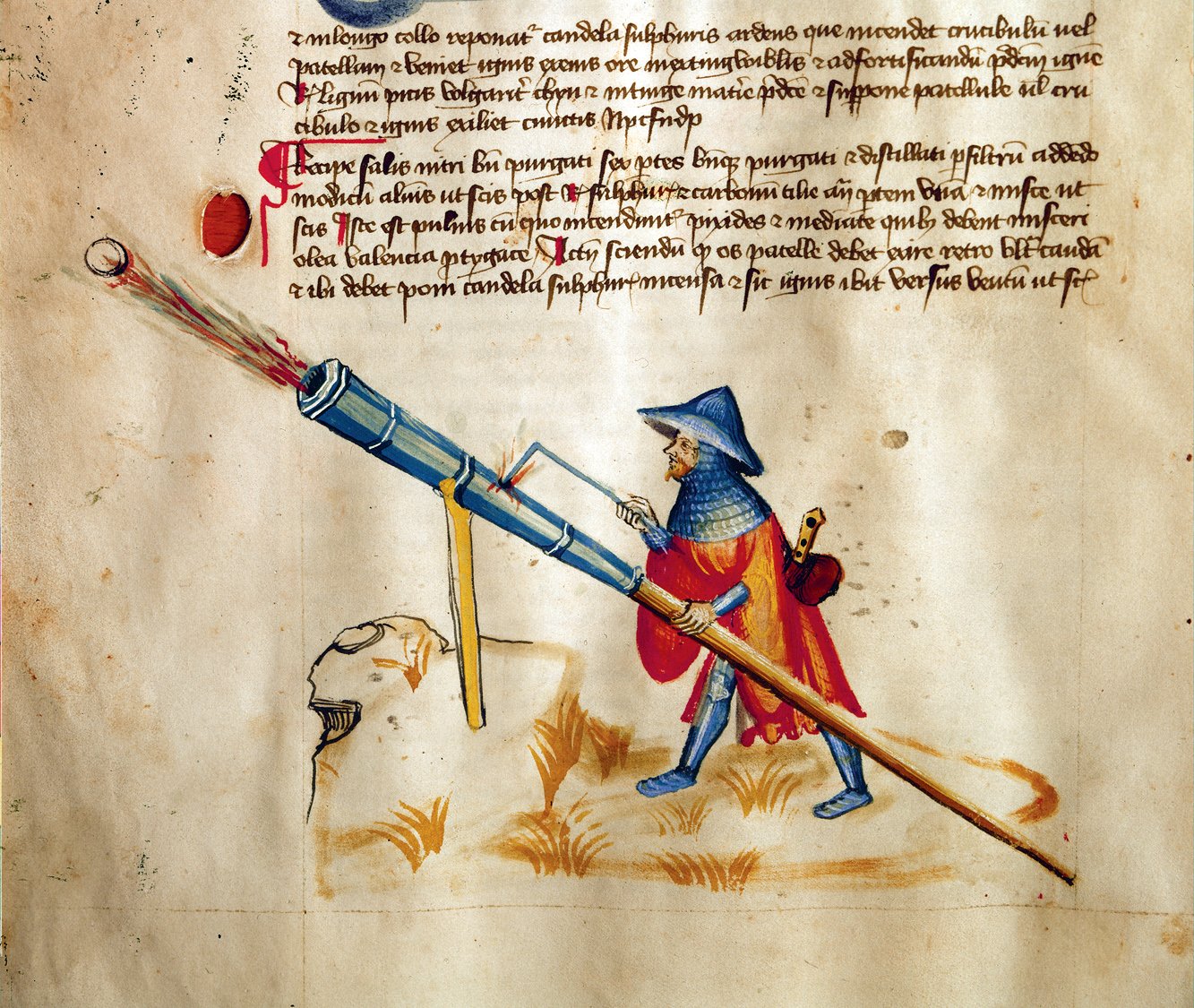
The first known picture of a chastity belt comes from a very unlikely place. Between 1402 and 1405, a German physician and military engineer named Konrad Kyeser, living in exile in Eichstätt, put together an illustrated book on warfare called Bellifortis, which roughly means “strong in war”. According to HistoryofInformation.com, he dedicated it to Rupert III of Germany. Its pages are full of trebuchets, battering rams, cannons, rockets, portable bridges and instruments of torture, with a generous helping of magic and astrology.
And then, among all the siege engines, there is a drawing of iron breeches, with a caption linking them to the women of Florence. Was Kyeser serious? Most historians think not. Atlas Obscura notes that the book also contains what Classen calls “highly fanciful objects”, such as devices for making people invisible, and even a couple of fart jokes. Classen, who wrote a whole book on the subject, goes further and calls the chastity belt “a hoax already in the fifteenth century”.
A Renaissance punchline
Over the next century, the chastity belt became a favourite gag. Sixteenth-century prints love the same joke: the husband sets off on his travels, the wife is locked into her belt, and the lover waits nearby with a copy of the key. Smithsonian Magazine describes a satirical German print from the late 1500s in the British Museum, in which a woman hands her husband the key to the belt around her waist. You can guess how that story ends.
Classen points out that whenever chastity belts turn up in literature, it is as satire. Serious medieval writing, such as sermons, legal records and books of moral advice, does not mention them. If chastity belts had been a real part of medieval marriage, you would expect at least one priest or lawyer to have something to say about them.
So what about the belts in museums?
Here is where it gets awkward for some famous institutions. Several museums did once display “medieval” chastity belts. But as experts looked more closely, the dates kept getting later.
- The British Museum now says, in a note quoted by Smithsonian Magazine, that “the great majority of examples now existing were made in the eighteenth and nineteenth centuries”. Polidoro adds that one of its belts, first thought to be from the 1500s, turned out to come from the 1840s and was taken off display.
- The Cluny museum in Paris owned a belt said to have belonged to Catherine de’ Medici. According to Polidoro, experts concluded in 1990 that it was most likely a fake made in the 1800s.
- London’s Science Museum still lists an iron belt that came with paperwork suggesting a sixteenth-century date. Its own catalogue now says it was more likely made in the 1800s.
Polidoro sums it up neatly: the earliest known real chastity belts date from around 1840. That is roughly four centuries after Kyeser’s joke and long after the last crusader had come home.
How a joke became “history”
So why did everyone believe it? Classen explains that the chastity belt only gained real importance in the nineteenth century, when writers began presenting it as a genuine tool of jealous husbands and torture museums put examples on show. The Victorians were fascinated by the Middle Ages, and they liked their medieval past dark, dramatic and a little shocking.
The myth got another push in 1931, when the researcher Eric John Dingwall published a book called The Girdle of Chastity. Polidoro notes that Dingwall relied on museum pieces that had not yet been accurately dated, which helped give the legend a respectable look. And Classen has his own theory about why the story refuses to die. According to Classen, quoted in Atlas Obscura, it comes down to two words: “Male fear.”
So, were medieval chastity belts real?
No, not in the way the legend claims. The idea began as a religious metaphor, appeared as a joke in a fifteenth-century war manual, became a punchline in Renaissance prints and only turned into real metal objects much later. The so-called medieval chastity belts in museum stores are mostly curiosities and fakes from the 1700s and 1800s. Medieval husbands had plenty of ways to make their wives’ lives difficult, but locking them in iron underwear was not one of them.
More stubborn legends are waiting in medieval myths. Or discover the truth about Viking horned helmets, and meet the real siege engines of Kyeser’s world in the story of the medieval battering ram.
Frequently asked questions
When does a chastity belt first appear in a picture?
In Konrad Kyeser’s Bellifortis, a German book on warfare completed around 1405. Most historians think the drawing was meant as a joke.
Did crusaders really lock up their wives before leaving?
There is no reliable evidence that they did. No medieval belt has ever been found, and the idea would have caused serious health problems for anyone who wore one for long.
Are the old belts shown in museums fakes?
Most of them were made long after the medieval period ended. The British Museum believes nearly all the surviving ones were produced in the 1700s and 1800s, and several famous pieces have been re-dated or removed from display.
Who did the most to spread the myth?
Nineteenth-century writers and collectors, and later Eric John Dingwall’s 1931 book The Girdle of Chastity, which relied on museum objects that had been wrongly dated.
Were chastity belts ever made for real?
Yes, but much later. According to the writer Massimo Polidoro, the earliest known real chastity belts date from around 1840.
Sources
- Sarah Laskow, Atlas Obscura, Everything You’ve Heard About Chastity Belts Is a Lie (2015)
- Maris Fessenden, Smithsonian Magazine, Medieval Chastity Belts Are a Myth (2015)
- Massimo Polidoro, Skeptical Inquirer, The Myth of Chastity Belts (2011, PDF)
- Albrecht Classen, via Brewminate, The Medieval Chastity Belt – Myth or Reality? (2016)
- Wikipedia, Bellifortis
- Kate Goldbaum, Live Science, What Are Chastity Belts, Really? (2016)
- Science Museum Group, Iron chastity belt, Europe, 1501–1600
- HistoryofInformation.com, Kyeser’s Bellifortis, the First 15th Century Illustrated Treatise on Technology