How Were Illuminated Manuscripts Made?
We are all accustomed to the idea that if we want a book, all we need to do is go to a bookstore or go to a library. Things were a bit different in the Middle Ages. In order to have a book, somebody had to make it by hand. I am not talking just about writing it, but making it, crafting it from scratch. Somebody had to turn a dead animal into a page and brew the ink from a growth on an oak tree. Besides that, they needed to grind a semi-precious stone into paint and hammer gold so thin it would float away if you sneezed. Better stay away from gold if you had the flu! After all this hard work, the result was illuminated manuscripts, which were some of the most dazzling objects of the Middle Ages. Now lay back and let me tell you the story of how people actually made them. Roll up your sleeves, this is not a job for people who want their hands clean, and it all starts with a sheep.
Jump to a section:
Illuminated manuscripts: who made them?
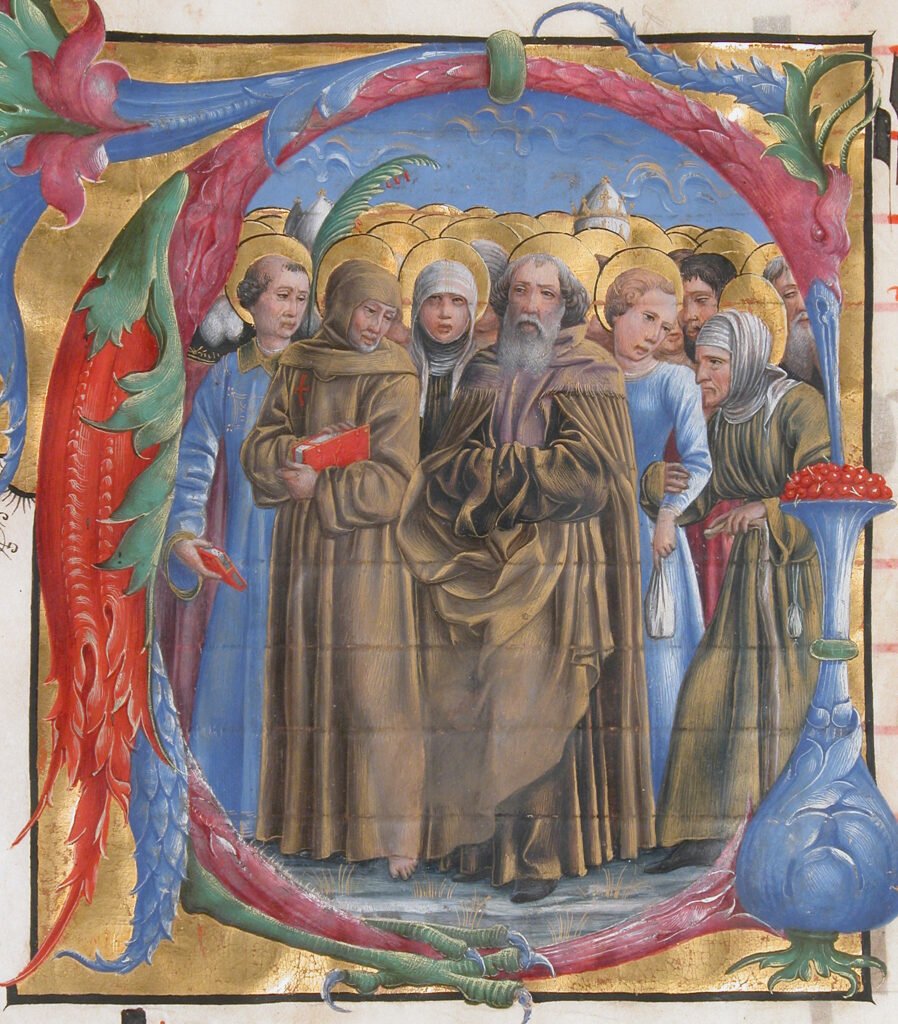
A “manuscript” is simply a book written by hand. “Illuminated” means it was decorated with colour and, very often, gold, so that the pages seem to glow as you turn them. The Getty Museum notes that books like this were produced across Europe and the Mediterranean world for around a millennium, between roughly AD 500 and 1500.
One book usually meant a whole team. According to the Getty, the parchment maker prepared the pages, the scribe wrote the text, the illuminator added the pictures and decoration, and the bookbinder put it all together. Annoyingly for historians, we rarely know these craftspeople’s names. Countless masterpieces, and hardly a name attached to any of them. Modesty level: medieval.
Step 1: Turn a sheep into a page
Medieval books weren’t written on paper but on parchment, made from animal skin. The Getty explains that it was usually sheepskin, goatskin or calfskin. Here’s the recipe, if you’re feeling brave:
- Leave the fresh hide in a bath of limewater for a few days, until the hair starts to come loose.
- Stretch it tight on a wooden frame and scrape away the hair and any remaining flesh.
- Thin it down with a curved blade called a lunar knife.
- Smooth the surface with pumice and dust it with a fine powder so it will take ink and paint.
The process often left traces. Look closely at a medieval page and you may still see tiny dots where hairs once grew. Tuija Ainonen of the Parker Library at Corpus Christi College, Cambridge, points out another quirk: a little insect bite in the living animal could stretch into a big hole once the skin was pulled tight on the frame. Holes like these often meant cheaper parchment, though Ainonen notes the writing on such pages could still be excellent.
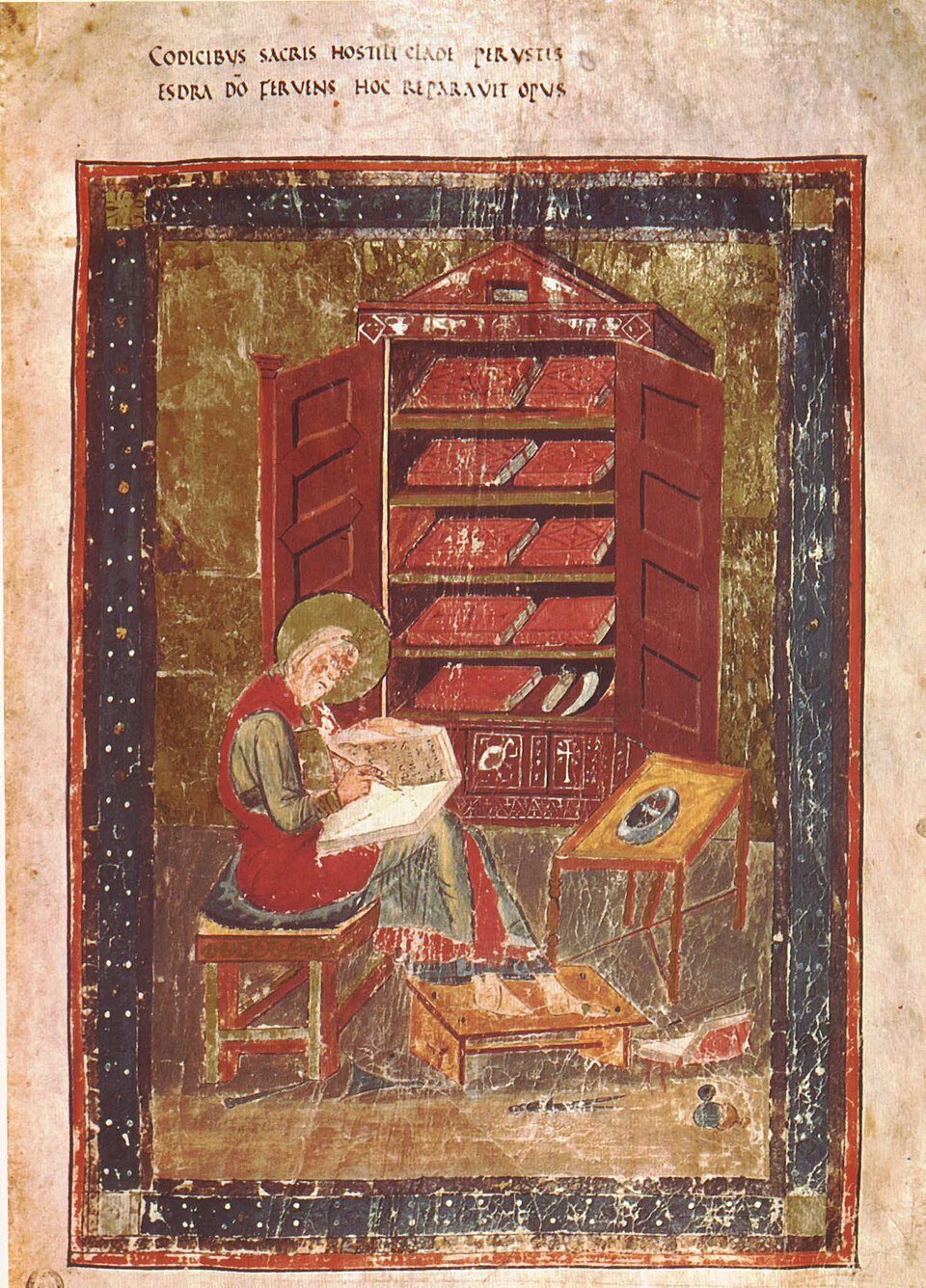
Big books needed a lot of animals. Take the Codex Amiatinus, a giant Bible made by the monks of Wearmouth-Jarrow, in northern England, in 716. Smithsonian Magazine reports that it used the hides of over a thousand animals, weighs around 75 pounds and was about a foot thick when finished. Its abbot, Ceolfrith, set off to carry it to the pope in Rome as a gift, but died before he got to Italy. The book ended up in Florence, and only came back to England in 2018, for a British Library exhibition, after 1,302 years away. Talk about an overdue library book.
Step 2: Plan the page
Before anyone wrote a word, the page had to be laid out. Ainonen explains that the parchment was cut to size, then marked with tiny pricked holes and ruled lines, so the text and pictures would sit neatly in place. Those faint guidelines are still visible in many illuminated manuscripts today, like the pencil lines on a child’s homework.
Step 3: Write it all out by hand
Today we are used to pencils and pens, but back then a scribe’s tools were much simpler. The pen was a quill, made from a goose feather or, maybe sometimes, they switched the bird and chose a swan. If that was not enough, the scribe kept a knife close by. If you ask why a feather and a knife were present at the same time near a scribe, well, that knife had three jobs: sharpening the quill, holding the parchment flat and scraping away mistakes. Yes, the medieval eraser was a blade, not the modern gummy-like object.
The best thing to mention when it comes to writing is the ink. In Europe, the most common kind was iron gall ink. According to a blog post from the University of Illinois Rare Book and Manuscript Library, the ink comes from oak galls, which are lumps that grow on oak trees around the larva of a tiny gall wasp. To create the ink you were supposed to soak the galls in water, or use vinegar or wine to draw out their tannins, then add some iron salt called copperas and a little gum arabic in order to thicken it. The result was a dark black ink, which was so corrosive, the blog adds, that it was no good for the metal pen nibs that came later.
About the writing itself, laying ink on a piece of parchment was hard on the body, the scribes said. The scholar Thijs Porck has collected their grumbles from some early medieval English books. One popular saying, copied by several scribes, translates as: “Three fingers write, the whole body labours.” No pain, no gain, one might say! Another scribe, Æthelberht, compared finishing a book to sailors reaching a harbour. Another example comes from an 11th-century copyist who ended his work with a short line: “God help my hands.” In modern times some of us can relate, if we worked in an office, or maybe wrote after dictation at school and had a sore wrist.
Step 4: Gold goes first
Did someone say gold? Where? Where? Leaving the joke aside, here’s a detail most people don’t expect. Ainonen explains that the gold was applied before any of the other colours.
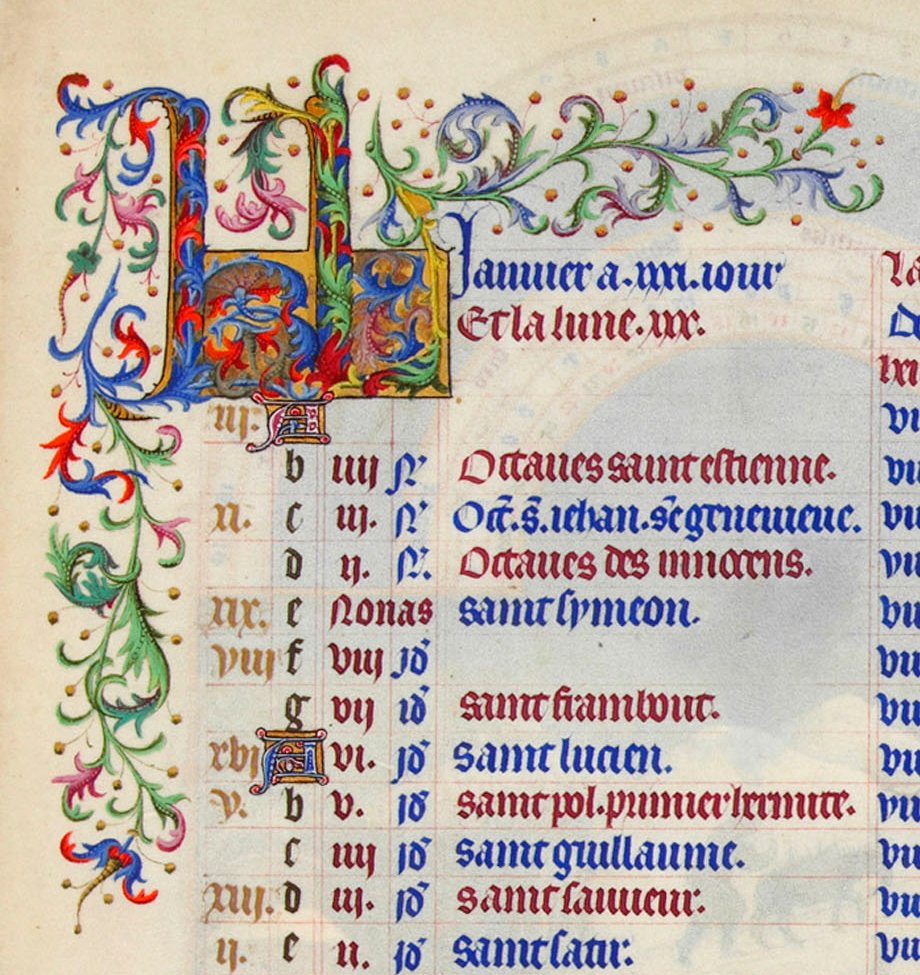
Firstly, as we may see in the making of a tattoo, or in the making of a comic book, the medieval artist sketched the design. Next came a raised layer called gesso, a mixture of gums, glue, plaster and a red clay known as bole, painted where the gold would go. Then a sheet of gold leaf was pressed on top and polished with a burnisher until it shone like metal. Some artists even scratched patterns into the gesso while it was still soft, for extra sparkle. That’s what I call a dedicated artist!
Step 5: Colours worth more than gold
As you might expect, medieval painters didn’t buy paint in tubes like we do at a paint shop. They crafted the colours. Some colours came from fairly ordinary materials. Ainonen lists woad for blue, madder for a light pink and verdigris, a green made from copper, among the colours almost anyone with the know-how could prepare.
Other colours were considered at that time luxury goods. The finest blue, ultramarine, was made from lapis lazuli, a stone that, according to the Fitzwilliam Museum, was mined in Afghanistan. Its name means “beyond the sea”, which tells you how far it travelled and how much it cost. The process of turning a stone into pure pigment took a very long time, and the result cost a fortune. Better be a rich guy before buying a book, am I right? Even so, the Fitzwilliam notes, medieval illuminators used it generously, no room for saving there.
That blue led to one of the best discoveries in recent manuscript research. In 2019, a team led by scientists including Anita Radini of the University of York and Christina Warinner of the Max Planck Institute studied the teeth of a woman buried at a women’s monastery in Dalheim, Germany. She had died, aged around 45 to 60, sometime between about 1000 and 1200. Trapped in the hardened plaque on her teeth were hundreds of tiny particles of lapis lazuli. As ScienceDaily reports, the researchers’ best explanation is that she was painting with the precious pigment and licking the tip of her brush. Since only the most skilled artists were trusted with ultramarine, she was probably a highly skilled painter of illuminated manuscripts whose name is lost. It’s a lovely reminder that women made these books too, not just monks.
Step 6: Bind it, protect it, chain it up
Finally, we are at the last stage, where the pages went to the bookbinder. The Getty describes how luxury books were bound between wooden boards covered in leather, sometimes with metal fittings and clasps to keep the pages flat. Considering the fact that some of these books cost a fortune, some owners felt the need to protect them by adding a little layer of fabric curtains sewn in to protect the most precious pictures.
And because books were so valuable, some libraries chained them to the shelf. The Getty points to bindings with an iron hook that once held a chain, the medieval version of an anti-theft tag. You could read the book, but you certainly weren’t taking it home.
Bindings got hard use, though. Ainonen notes that they were replaced when they fell apart or when owners wanted to update their books, and the old covers were usually thrown away. That’s why very few original medieval bindings survive, even when the pages inside do.
Could I have been a medieval scribe?
Let me put myself in a medieval scribe’s shoes and imagine how it would feel. Well, of course I would find it exhausting, and my hands would hurt. At the same time, I think I would want to be a church scribe; at least I would have the satisfaction that I wrote down the word of God, and that I had a mission as a human being. So yeah, I think I would do the job!
Why were illuminated manuscripts worth all the effort?
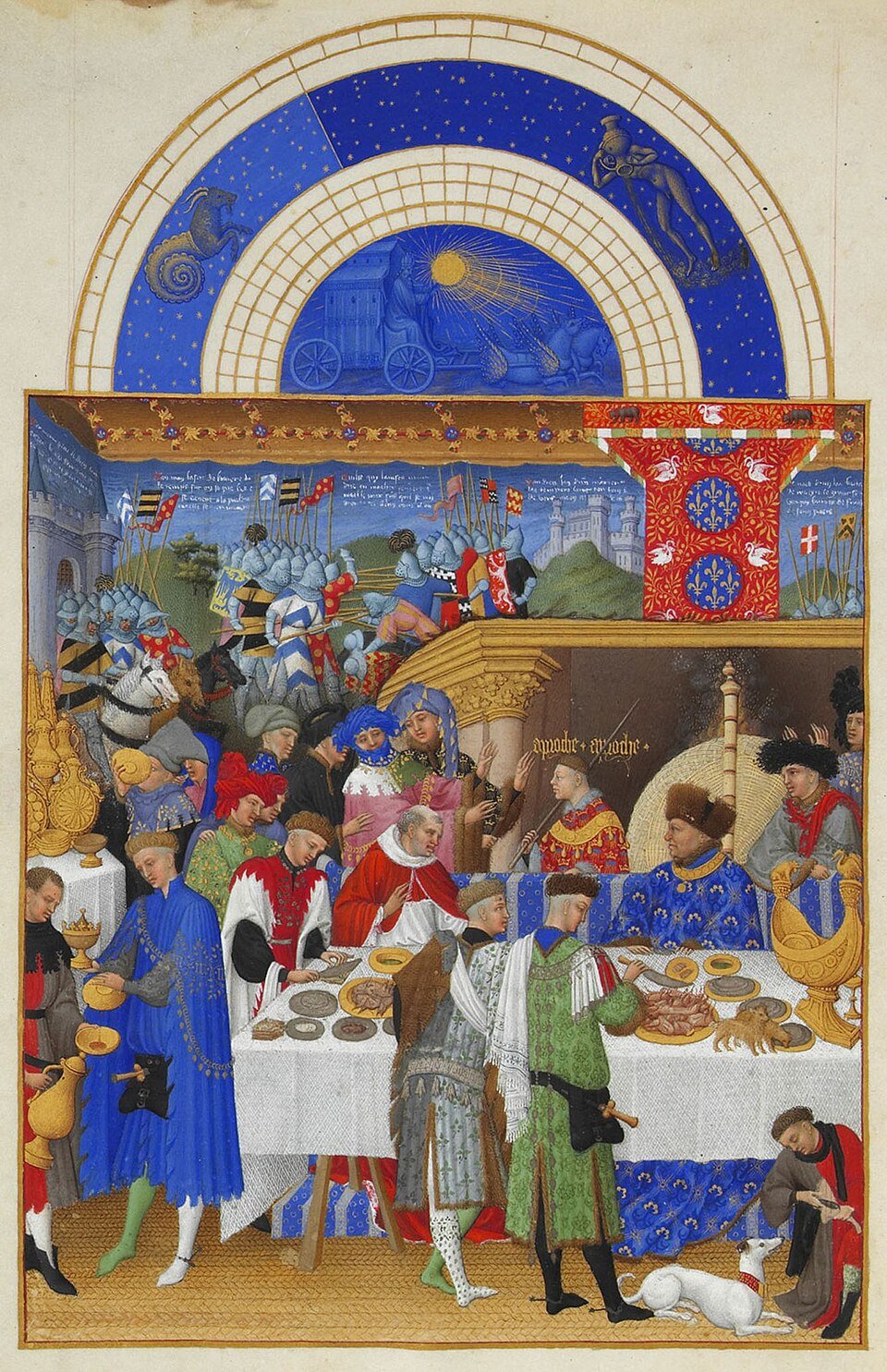
Because a book was more than words. A beautifully decorated Bible honoured God and His words, so it was worth all the money. A glittering prayer book showed off its owner’s wealth and taste, and his interest in religion and reading. And a richly painted chronicle made a story feel important. Illuminated manuscripts were part holy object, part status symbol and part work of art.
The age of the hand-made book faded after the printing press arrived in the mid-1400s, but it never quite disappeared. If you want to see where these books fit into the wider story of medieval painting, sculpture and architecture, the big overview of medieval art is the place to go. And if you’d rather see what bored or mischievous artists painted in the edges of the page, from knights fighting snails to rabbits with axes, take a look at our piece on medieval marginalia. Trust us: once you’ve seen a rabbit with an axe, you can’t unsee it.
Frequently asked questions
What are illuminated manuscripts?
They are hand-written books decorated with colour and often gold, produced in Europe and around the Mediterranean from roughly AD 500 to 1500. Famous examples include the Book of Kells, the Très Riches Heures and the beautifully painted medieval bestiaries.
What were illuminated manuscripts written on?
Mostly on parchment: sheepskin, goatskin or calfskin that had been soaked, stretched, scraped and smoothed.
What ink did medieval scribes use?
Most commonly iron gall ink, made from oak galls, an iron salt called copperas and gum arabic, written with a goose or swan quill.
Why was blue so expensive in medieval manuscripts?
The best blue, ultramarine, was made from lapis lazuli mined in Afghanistan. Getting the pure pigment out of the stone took a long and costly process.
Sources
- Xin Yue (Sylvia) Wang, Getty, Making a Medieval Manuscript, from Raw Materials to Illuminated Masterpiece (2026)
- Tuija Ainonen, Corpus Christi College, Cambridge, Making medieval manuscripts
- Katie Hartman, University of Illinois Rare Book and Manuscript Library, Iron Gall Ink (2021)
- Thijs Porck, Scribal complaints: Early medieval English copyists and their colophons (2017)
- Fitzwilliam Museum, Ultramarine
- ScienceDaily, Illuminating women’s role in the creation of medieval manuscripts (2019)
- Brigit Katz, Smithsonian Magazine, After 1,300 years abroad, earliest complete Latin Bible returns to England (2017)