

How to Become a Knight: From Page to Squire to Knight
Every boy dreamed when he was a child, including myself, of becoming a knight one day, of fighting in wars, saving a beautiful princess or fighting and killing a dragon. Adventure it is! I will tell you now exactly the road to becoming a knight in medieval times. Bear with me for a second and let’s do an exercise together. Now, close your eyes and imagine being seven years old and waving goodbye to your parents, knowing you might not live at home or play with your friends again. For a lot of boys from noble families in the Middle Ages, that was the road to knighthood. It was not an easy path, nor a glorious one, some may say, because ahead lay years of serving at someone else’s table, polishing armour, mucking out horses and finally, drum roll… learning how to fight. All of this for a chance to kneel one day in front of a lord and stand up as a knight. Mission accomplished! So what did it really take? Was it easy? Let’s enjoy together the story of how to become a knight in the Middle Ages, step by step: how long the journey took and what exactly it cost. Spoiler alert! It was not free! And finally, why so many squires never made it.
Jump to a section:
Who could become a knight?
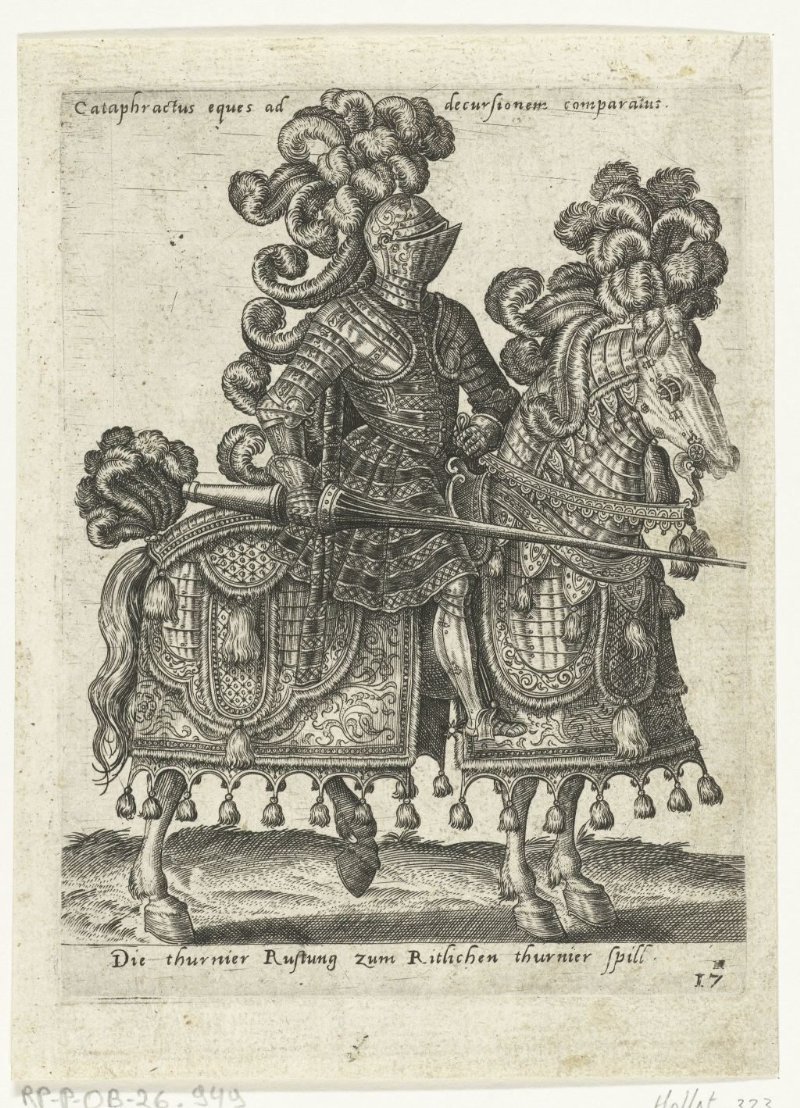
Knights began as mounted warriors, men who could afford a horse and armour and fought for a lord in return for land or pay. Over the 12th and 13th centuries, knighthood turned into something more: a rank with its own ceremony, its own ideals and a lot of social prestige. In practice, that meant most knights were the sons of knights and nobles.
The reason was mostly money. A warhorse, a mail shirt, a helmet, a sword and a lance cost a fortune, and a knight was expected to keep servants and spare horses too. A clever or lucky young man could rise through service to a great lord, but a peasant boy dreaming of a sword usually stayed a dreamer. To see where knights fitted into the bigger picture, look at how feudalism worked.
Step one: a page at seven
As I mentioned at the beginning of the article, most boys who wanted to become knights usually left their parents around the age of seven. They were sent to live in the household of a lord, which was often a relative or his father’s own lord. You can see what such a household looked like in our article on life in a medieval castle. The boys started as pages at the lord’s disposal. The page waited at table, carried messages, looked after guests and learned the manners expected of a well-born young man. The age was not random. Medieval writers saw the age of seven as the end of infancy, and the age of fourteen as the next big turning point in the life of a boy, a pattern explained in our article on medieval childhood.
Well, it was not all just errands and education. Pages learned to ride, to hunt and to handle small weapons. Some of them even learned how to read. The point of this whole training was to shape a boy into a man who could fight, serve and behave properly in a great hall, a true knight.
Step two: a squire at fourteen
The next big “promotion” for a page came at around the age of fourteen, when he would become a squire. The word squire comes from the Old French escuier, which means “shield-bearer”, and that was literally part of the job. A squire served one particular knight, and his main duties were to look after his horses, clean and repair his equipment and help him into his armour. The last part was not that easy and took a lot of practice. A full harness was heavier and more complicated than most people imagine today, as you can see in how heavy medieval armour was.
A squire also followed his knight to tournaments and to war. On campaign he carried spare weapons, led the horses and, if things went badly, helped drag his master out of trouble. It was dangerous, and squires sometimes ended up fighting themselves.
A squire’s never-ending to-do list
If you think your corporate job is busy, have a look at a squire’s day. It could include:
- feeding, grooming and exercising the horses;
- scrubbing rust off mail and armour;
- helping the knight dress and arm;
- carving meat and serving at his lord’s table;
- practising with sword, lance and shield whenever there was time left.
In other words, he was a servant, a stable hand, a mechanic and a student, all in one. And he did it for years, but all of his hard struggle was meant to help him finally become a knight and save little princesses. Leaving the joke aside, this was an honourable path to learn and to forge a character.
Many of us think today that working in a cubicle, building up skills and being successful is the way to go in life. Well, that was the way back then in the Middle Ages too.
Training: the quintain and the tournament
The classic training tool was the quintain, a target on a post that a rider struck with his lance at full gallop. Some versions had a swinging arm, so a clumsy rider could get a smack on the back of the neck as he passed. Squires also wrestled, fenced, hunted and rode for hours to build the strength and balance they’d need in battle.
The final school was the tournament, a mock battle that could be almost as dangerous as the real thing. One of the most famous champions was William Marshal, a younger son with no inheritance, who made his fortune capturing opponents and claiming their horses and armour as ransom. On his deathbed, according to the biography his family commissioned, he claimed to have beaten 500 knights in tournaments. In 1168, early in his career, he was wounded and captured while escorting Eleanor of Aquitaine, and the queen herself paid his ransom.
The big day: how a knight was dubbed
A squire turned into a knight through a ceremony called dubbing. One of the earliest detailed accounts describes the knighting of the young Geoffrey of Anjou, a future count, by King Henry I of England in 1128. A chronicler wrote it down some decades later. Geoffrey took a bath, dressed in fine linen and rich robes, and received a fine horse, armour, gold spurs, a sword and a shield decorated with little golden lions.
Later ceremonies could include a night of prayer in a church and a blessing of the sword. The key moment was the accolade: at first an embrace or a blow to the neck or shoulder, later a light touch with the flat of a sword. Gilded spurs became the symbol of a knight. Many young men were knighted in their late teens or early twenties, but there was no fixed age.
Knighted on the battlefield
Not every knight got a quiet ceremony. Commanders sometimes knighted squires just before a battle, to give them courage, or just after it, as a reward. In 1346, when Edward III of England landed in Normandy at the start of the campaign that led to the Battle of Crécy, as soon as he landed he knighted his sixteen-year-old son Edward, later known as the Black Prince, in a nearby village church. More than fifty other men were knighted with him.
Fighting on foot or on horseback, these knights were expected to live up to the ideals of chivalry: courage, loyalty, generosity and protection of the Church. Storytellers gave the same ideals to the legendary knights of the Round Table, though whether King Arthur was real is another question. Some went further and took religious vows, like the Knights Templar.
Too expensive to be a knight
Knowing how to become a knight was one thing; paying for it was another. By the 1200s, being a knight had become so expensive that many squires never took the final step. They stayed squires all their lives, which was perfectly respectable. English kings didn’t like that, because they needed knights for war and for local government. So from the 1220s the Crown began ordering men who owned enough land, at first land worth £20 a year, to get themselves knighted, or pay a fine for avoiding it. The practice is known as distraint of knighthood.
Many landowners simply paid. Centuries later, King Charles I revived distraint of knighthood in the 1630s, as a way to raise money without asking Parliament. It became one of the many grievances against him, and Parliament banned the practice in 1641. It’s one of history’s odder ironies: an honour that boys once spent years chasing had turned into a tax people tried to dodge.
Would I have made it as a squire?
Leaving home at the age of seven might sound like a traumatic event today, and I think many therapists would agree with me. In my opinion, it was hard for a little boy to stop acting like a child, actually “work” and start to progress towards adulthood. I had a very slow progression as a boy, and I think I stopped being a kid and had real responsibilities only after college. To be honest, I don’t think I would have made it as a squire, but for sure I would have given it a try.
Can you still become a knight today?
In a way, yes. If you’re wondering how to become a knight today, the answer is not a sword and a horse. In the United Kingdom, knighthood survives as an honour given by the monarch for service to the country. A man who is made a Knight Bachelor still kneels and is touched on each shoulder with a sword, and is then called “Sir”. Women can be made Dames, though they are not touched with the sword. No quintain, no horses to groom and no armour to scrub, though.
The medieval road was very different: years of training starting as a small boy, a fortune in equipment and real danger on the battlefield. This does not sound so encouraging at all! But all of this hard work and cost produced the knights who fought at battles like Agincourt and who still gallop through films and novels today. I think in the end it was worth it! Many of those films get the details wrong anyway, of course, as we show in our list of medieval myths.
Frequently asked questions
At what age did you become a knight?
There was no fixed age. A boy typically became a page at about seven and a squire at about fourteen, and many were knighted in their late teens or early twenties. Some were knighted much later, and some never were.
What is the difference between a squire and a knight?
A squire was a knight in training, or a man of similar background who had not been knighted. He served a knight, looked after his horses and equipment and followed him to war. A knight had been formally dubbed and held a higher rank.
Could a peasant become a knight?
Rarely. Knighthood required expensive horses and equipment and years of training in a noble household. A few men of humble origins rose through military service, but most knights came from knightly or noble families.
How to become a knight today?
In the UK, knighthoods are honours awarded by the monarch, usually on the advice of the government, for outstanding service or achievement. Anyone can nominate someone, but you can’t nominate yourself.
Sources
- Wikipedia, Knight
- Wikipedia, Squire
- Wikipedia, Accolade
- Wikipedia, William Marshal, 1st Earl of Pembroke
- Wikipedia, Distraint of knighthood
- Encyclopaedia Britannica, Knight