

Were Witches Burned in the Middle Ages?
Ask most people when witches were burned at the stake and they’ll say the Middle Ages, probably with a mental picture of a muddy village, a hysterical mob and a monk with a torch. It’s one of the most firmly held ideas about the period. It’s also mostly wrong. The great witch hunts that killed tens of thousands of people in Europe happened after the Middle Ages, mainly between about 1560 and 1630, in the age of printing presses, Shakespeare and early science. The most famous witch trials of all, at Salem in 1692, didn’t burn anyone. So were witches burned in the Middle Ages? Let’s sort out medieval witch trials from the myths, just in time for Halloween.
Jump to a section:
What did the medieval Church think about witches?
Here’s the surprise. For most of the medieval period, the official view of the Church was that a lot of witchcraft wasn’t real at all. Around the year 906, the abbot Regino of Prüm included in his handbook for bishops a text later known as the Canon Episcopi. It dealt with women who claimed to fly by night in the company of Diana, the old Roman goddess. According to the canon, these women had been tricked by the devil and their night flights happened only in their dreams. Believing such things, it said, was the real error.
Some early medieval rulers went even further. In the 780s, Charlemagne issued laws for the newly conquered Saxons that ordered the death penalty for anyone who, believing a man or woman to be a witch who ate people, burned them for it. In other words, it was the witch-burners who faced execution. For more about how the Church shaped ordinary beliefs, see how the medieval Church ran daily life.
That doesn’t mean medieval people didn’t believe in magic. They certainly did. Charms, love potions, curses and healers who mixed prayers with herbs were all part of everyday life, and people could be fined or punished for harmful sorcery. But there was no organised, Europe-wide panic about secret societies of devil-worshipping witches. That idea came later.
So who was burned in the Middle Ages?
Burning at the stake was a real medieval punishment, but it was mostly used against heretics: people the Church judged to have rejected its teachings and refused to recant. The Czech reformer Jan Hus was burned at the Council of Constance in 1415. Many members of the Cathar movement in southern France died the same way in the 1200s.
The most famous person burned in the Middle Ages is often remembered as a witch, but she wasn’t condemned as one. Joan of Arc was burned at Rouen in 1431. The pro-English French churchmen who tried her accused her of many things, including sorcery, but the final sentence was for relapsed heresy, partly over her wearing men’s clothing. She was later cleared at a retrial in 1456 and, much later, made a saint.
When did the witch hunts really start?
Things changed in the last century of the medieval period. From the 1420s and 1430s, trials in the western Alps, in places such as Valais in what is now Switzerland, started to describe witches in a new way: not just as individuals casting spells, but as members of a secret sect who flew to night-time meetings, worshipped the devil and harmed their neighbours. This “diabolical witch” was something new.
In 1484, Pope Innocent VIII issued a bull, or official letter, backing the work of two inquisitors in Germany who were hunting witches. One of them, Heinrich Kramer, then published the Malleus Maleficarum, “The Hammer of Witches”, in 1486–87. It was a guide to identifying, interrogating and punishing witches, and it was particularly hostile towards women. Thanks to the new printing press, it spread across Europe. Ironically, not all churchmen approved: the local bishop had thrown Kramer out of Innsbruck after a failed witch trial there, and theologians at Cologne later condemned the book.
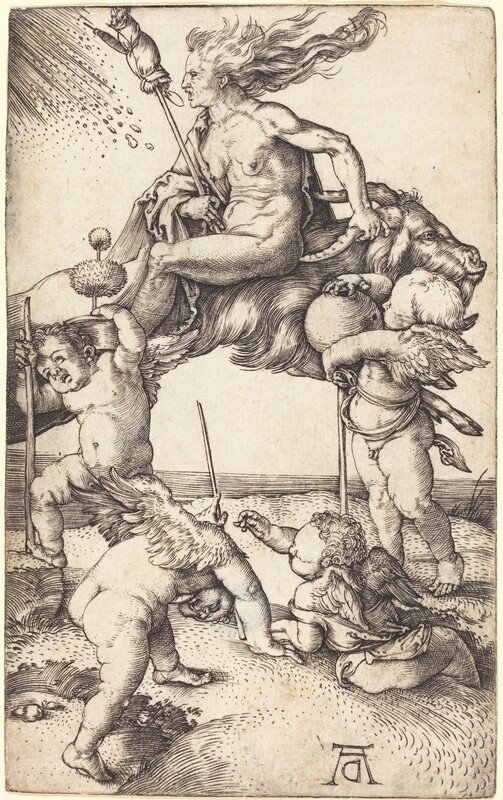
The real age of the witch hunts
The worst of the persecution came between roughly 1560 and 1630. Wars of religion, plague, bad harvests and the cold years of the Little Ice Age left communities looking for someone to blame. Both Catholic and Protestant authorities prosecuted witches. Historians today estimate that somewhere around 40,000 to 60,000 people were put to death as witches in Europe and its colonies between the 1400s and the 1700s. Roughly three quarters or more of them were women.
The killings were very uneven. Some regions, particularly German lands within the Holy Roman Empire, saw terrible mass trials, where torture produced confessions that named more “witches”, who were then tortured in turn. Other places had very few. The Spanish Inquisition, despite its fearsome reputation, became notably sceptical: after a huge Basque witch panic in the early 1600s, one of its own inquisitors, Alonso de Salazar Frías, concluded that he had found no real evidence of witchcraft at all.
Burned or hanged? It depended on where you lived
Even in the great age of witch trials, not every convicted witch was burned. On the Continent, in places such as Germany, France and Switzerland, burning was common, often after the victim had been strangled first. In Scotland, convicted witches were usually strangled and then burned. In England, however, witchcraft was treated as a felony under the law of the land, and the punishment was hanging. English witches were normally hanged, not burned. The rare exceptions, such as Mary Lakeland in 1645, were burned for petty treason: killing a husband by witchcraft.
Salem, 1692: the famous one
The witch trials most Americans have heard of happened in Salem, Massachusetts, in 1692, almost two centuries after the Middle Ages ended. Over 200 people faced accusations. Nineteen were hanged, one man, Giles Corey, was crushed to death under heavy stones for refusing to enter a plea, and several more died in jail. Nobody at Salem was burned. Within a few years, many people involved admitted the trials had been a terrible mistake: in 1697 a judge and twelve jurors publicly apologised, and in 1711 the colony reversed convictions and paid compensation to some of the families.
Salem came near the end of the witch-hunting era, not the beginning. The last execution for witchcraft in Europe is often said to be that of Anna Göldi in Switzerland in 1782 (officially for “poisoning”), by which time the Middle Ages were nearly three centuries in the past.
Why do we blame the Middle Ages?
Partly because “medieval” has become a handy word for anything cruel or irrational. Writers in the 1700s and 1800s, keen to show how far reason had come, lumped the witch hunts in with everything else they disliked about the past. The image of a medieval mob burning witches fits so neatly into the story of the “Dark Ages” that it’s rarely questioned. It sits alongside many of the medieval myths we still believe, and the whole idea of a gloomy, ignorant era is unpicked in our look at whether the Dark Ages were really dark.
The truth is uncomfortable in a different way. The great witch hunts were a product of the early modern world, of an age that was becoming more educated, more literate and more organised. Printed books spread the fear, courts organised the trials, and ordinary neighbours did much of the accusing. That’s worth remembering this Halloween, when the witches on the doorstep are only children in pointy hats.
Frequently asked questions
Were witches burned in the Middle Ages?
Very rarely. Organised witch hunts only began to appear in the 1400s, in the final decades of the period. The mass witch hunts came later, mostly between about 1560 and 1630.
Were the Salem witches burned at the stake?
No. Nineteen of the accused were hanged in 1692, one man was pressed to death with stones and several others died in prison.
How many people were executed for witchcraft in Europe?
Most historians estimate roughly 40,000 to 60,000 executions between the 1400s and the 1700s, around three quarters or more of them women.
Was Joan of Arc burned as a witch?
Not officially. She was condemned and burned in 1431 for relapsed heresy, although her enemies had also accused her of sorcery. A later retrial overturned the verdict.
Sources
- Wikipedia, Witch trials in the early modern period
- Wikipedia, Canon Episcopi
- Wikipedia, Malleus Maleficarum
- Wikipedia, Salem witch trials
- Encyclopaedia Britannica, Witchcraft