

Greek Fire: The Secret Weapon of the Byzantine Empire
Imagine a weapon that sprayed liquid flame across the sea, clung to ships and sailors, and kept burning on the surface of the water. Now imagine that its recipe was so well guarded that, a few centuries later, nobody could make it any more, and to this day nobody knows exactly what was in it. That’s Greek fire, the secret weapon that helped the Byzantine Empire survive two great Arab sieges of Constantinople and terrified the fleets that came after. Here’s what we know about where it came from, how it worked and how a state secret managed to vanish completely.
Jump to a section:
Who invented Greek fire?
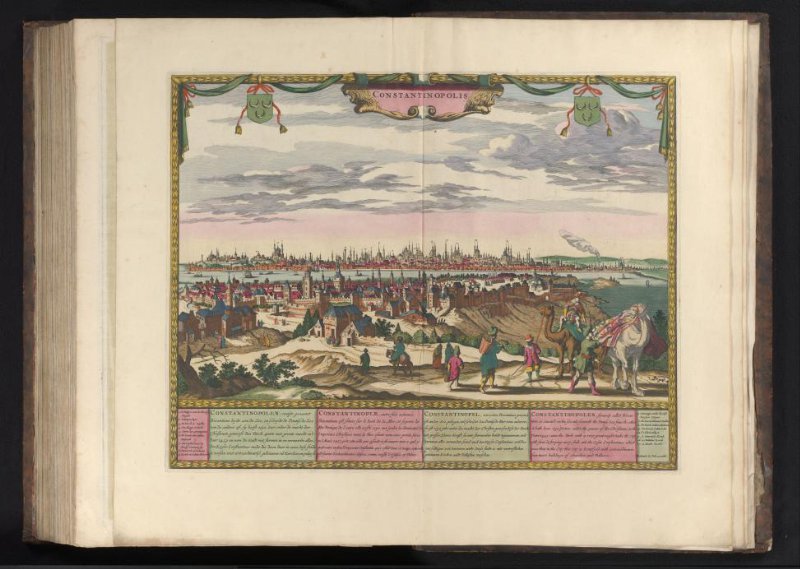
According to the Byzantine chronicler Theophanes the Confessor, writing in the early 800s, Greek fire was introduced around 672 by a man called Kallinikos, an architect who had fled from Heliopolis in Syria, a region conquered by the Arabs a generation earlier. He brought the formula, or at least a crucial improvement on older incendiary weapons, to Constantinople, and he could hardly have arrived at a better moment.
Fire weapons were nothing new. Armies had thrown burning pitch, sulphur and oil-soaked arrows at each other for centuries. What made the Byzantine invention different was the combination of a liquid fuel that was extremely hard to put out and a way of pumping it out through a tube, like a primitive flamethrower.
The name is also a later label. The Byzantines thought of themselves as Romans, and they called their weapon “sea fire”, “liquid fire”, “prepared fire” or “Roman fire”. “Greek fire” is what western Europeans called it, especially in the era of the Crusades, when they met it, or weapons like it, for themselves.
Saving Constantinople from the Arab fleets
In the 670s, the armies of the Umayyad Caliphate pushed deep into Byzantine territory, and an Arab fleet set up base near Constantinople. In the traditional account, they returned each campaigning season for several years, roughly 674 to 678, blockading and attacking the city. Byzantine ships armed with the new fire are said to have destroyed much of the Arab fleet, and the campaign ended in failure. Some modern historians think the events were smaller than the traditional “siege”, and one recent study dates the main attack a few years earlier, to 667–669. Byzantine tradition, at least, credits the new weapon with its first great victory here.
The fire came back into action during the second Arab siege of 717–718, when a huge Umayyad army and fleet besieged the capital by land and sea. The new emperor, Leo III, sent out fire-ships against the Arab fleet, and the fire played an important part, along with the famous Theodosian walls, a terrible winter and the help of the Bulgarians, in forcing the attackers to retreat. Holding out for over a year was a real achievement; for how sieges were usually won and lost, see how long medieval sieges lasted.
How did Greek fire work?
The most famous delivery system was the siphon. Byzantine warships called dromons carried a bronze tube, usually in the bow, connected to a tank of the fuel. The princess and historian Anna Komnene describes some shaped like lions’ heads, with the fire pouring from their mouths. The liquid seems to have been heated, pressurised with a pump and then shot out through the tube, where it was set alight. The result was a stream of fire that could be aimed at enemy ships at fairly close range.
Byzantine military manuals mention other forms too. The Tactica of Emperor Leo VI, written around 900, describes small hand-held siphons for use by individual soldiers, and clay pots filled with the mixture that could be thrown by hand or by machines. The mixture was also used on land, poured from walls or sprayed at siege towers, those great wooden targets that were always vulnerable to flame.
It wasn’t a magic weapon. The siphons were bulky, needed calm seas and skilled crews, and only worked at short range. But in the right conditions, against wooden ships packed with men, it was devastating, and its psychological effect was huge.
What was in it?
This is the big mystery. No Byzantine source gives the recipe, because the recipe was a state secret. In the 900s, Emperor Constantine VII wrote a book of advice for his son in which he warned that the fire must never be handed over to foreigners. To make the point, he claimed it had been revealed by an angel to Constantine the Great, the first Christian emperor, and that anyone who gave it away would be cursed.
Modern historians mostly agree that the main ingredient was probably petroleum, crude oil of the kind that seeps to the surface around the Black Sea and in parts of the Near East. It may have been distilled or mixed with resins to make it thicker and stickier. Older theories that it contained quicklime, which reacts with water, or saltpetre, a key ingredient of gunpowder, are now widely doubted. Saltpetre in particular doesn’t seem to have been known in the Mediterranean at that early date.
Medieval writers repeated that the fire burned on water and could only be put out with sand, strong vinegar or old urine. Those stories are part fact and part legend, but an oil-based fire floating on the sea would certainly have kept burning, and water alone would have spread it rather than put it out.

The Rus’ attack of 941
One of the most dramatic uses of the weapon came in 941, when Prince Igor of Kiev attacked the Byzantine coast with a large fleet. Most of the imperial navy was away fighting the Arabs, so the Byzantines patched up around fifteen old ships, fitted them with fire siphons and sent them out under a commander named Theophanes. The fire destroyed many of the Rus’ boats. The Italian diplomat Liudprand of Cremona later reported that some Rus’ sailors threw themselves into the sea to escape the flames: some sank, weighed down by their breastplates and helmets, while others burned even in the water.
How the secret was lost
The secrecy that protected the weapon also doomed it. The knowledge was apparently kept by a small group of specialists, and as the empire’s fortunes changed, the chain was broken. Byzantine fleets still used fire weapons around 1100, but when the armies of the Fourth Crusade attacked Constantinople in 1204, there’s no sign of the fire saving the city. By then, it seems, the original weapon had been lost. When the city finally fell in 1453, it was to Ottoman cannon, not ships: that story is told in the fall of Constantinople.
Its name lived on, though. Western crusaders used “Greek fire” for almost any incendiary weapon they faced. During the Seventh Crusade’s campaign near Mansurah in Egypt in 1249–50, the French knight Jean de Joinville described burning projectiles thrown by the enemy’s siege machines, which he called by the same name, roaring through the night and lighting up the camp. Those were most likely Muslim naphtha weapons rather than the Byzantine original. Within another century, gunpowder was beginning to change warfare altogether, as shown in how gunpowder ended the age of castles.
What Greek fire teaches us about secrets
We have all kept a secret at some point: something naughty we did as children and hid from our parents, or an embarrassing story a best friend told us after making us promise not to tell anybody. If you are a person of honour, you take that kind of secret to your grave. But what if you were a high-ranking commander or an architect in the Middle Ages, one of the few people who knew the recipe for this weapon, and you died without passing it on? Something like that seems to have happened in Byzantium. The secret was lost, generation after generation kept talking about the weapon, and none of them managed to recreate it. Maybe even the best-guarded secrets sometimes need to be shared, not just to preserve them, but so they can be improved as time goes by.
Could we make it today?
Not with certainty, since we don’t have the recipe. Historians and engineers have built experimental siphons using a heated, pressurised oil-based fuel, and in one full-scale test led by the historian John Haldon in 2002, a mix of crude oil and wood resin produced a jet of flame reaching up to about 15 metres, burning at over 1,000 °C. That shows the idea was practical. It doesn’t prove what the Byzantines actually used. It remains one of the great unsolved puzzles of medieval technology, and a reminder that some secrets can be kept a little too well. For more on how fortresses were attacked and defended, explore medieval siege warfare.
Frequently asked questions
Why is it called Greek fire?
Because western Europeans called the Byzantines “Greeks”. The Byzantines themselves called it “sea fire”, “liquid fire” or “Roman fire”.
When was it invented?
Around 672, according to Byzantine tradition, by an architect from Syria called Kallinikos. It was first used soon afterwards against the Arab fleets attacking Constantinople.
Could it really burn on water?
Medieval sources say so, and if it was based on petroleum, it would have floated and kept burning. Water alone would not have put it out.
Why don’t we know the recipe?
It was a closely guarded state secret, known only to a few people. When that knowledge was lost, probably by the 1200s, the exact formula disappeared with it.
Sources
- Wikipedia, Greek fire
- Wikipedia, Siege of Constantinople (717–718)
- Wikipedia, Rus’–Byzantine War (941–944)
- Encyclopaedia Britannica, Greek fire
- World History Encyclopedia, Greek Fire