
The Crusades Explained: 200 Years of Holy War in Plain English
Few words from the Middle Ages still pack as much punch as “crusade”. Politicians use it, films love it, and arguments about it can get heated in about four seconds. But ask most people what actually happened and you get a fuzzy picture of knights, sand and a lot of shouting. So let’s slow down. Here are the Crusades explained from the start: who went, why they went, what they won, what they lost, and why a war that began in 1095 still echoes today. Fair warning: this story has heroes on both sides, villains on both sides and one entirely unexpected trip to Constantinople.
Jump to a section:
The Crusades explained in one minute
In short, the Crusades were holy wars, called by popes and fought by Christian rulers and knights from Western Europe. Their main target was the Holy Land, the region around Jerusalem, which had been under Muslim rule for centuries.
How many were there? That depends on who is counting. History.com lists eight major expeditions between 1096 and 1291. World History Encyclopedia also counts eight official ones, plus a long tail of unofficial campaigns. Historians number them because the medieval participants certainly did not. To them, there was just “the journey” or “the passage”.
The headline dates are easy to remember. It started with a speech in 1095 and ended, in the Holy Land at least, when the last big Crusader city fell in 1291. Two centuries. Plenty of time for things to go very right and very wrong.
Why did the Crusades start?
Picture the Byzantine Empire around 1090. It is the Christian empire of the East, ruled from Constantinople, and it is having a terrible decade. The Seljuk Turks have taken huge chunks of its territory. So in 1095 the emperor, Alexios I Komnenos, did what any sensible ruler in trouble does. He wrote to the pope and asked for soldiers.
He was hoping for mercenaries. He got something rather bigger.
In November 1095, in the French town of Clermont, Pope Urban II gave a sermon urging the knights of the West to arm themselves and march east. The Metropolitan Museum of Art calls it the spark that most historians see as the start of the whole movement. The key promise was spiritual: those who went would have their sins forgiven. To a medieval Christian worried about the afterlife, that was the deal of the century.
Not everyone signed up for purely holy reasons, of course. World History Encyclopedia lists the full range. Some men wanted to defend fellow Christians. Others hoped for land, titles or loot. A few were dodging debts or the law. And some, it seems, just wanted steady work with regular meals included. Medieval people were complicated. So are we.
The Church’s power to launch a war on this scale tells you a lot about how far its reach extended. There is more on that power in our article on the medieval Church.
The First Crusade: against all odds
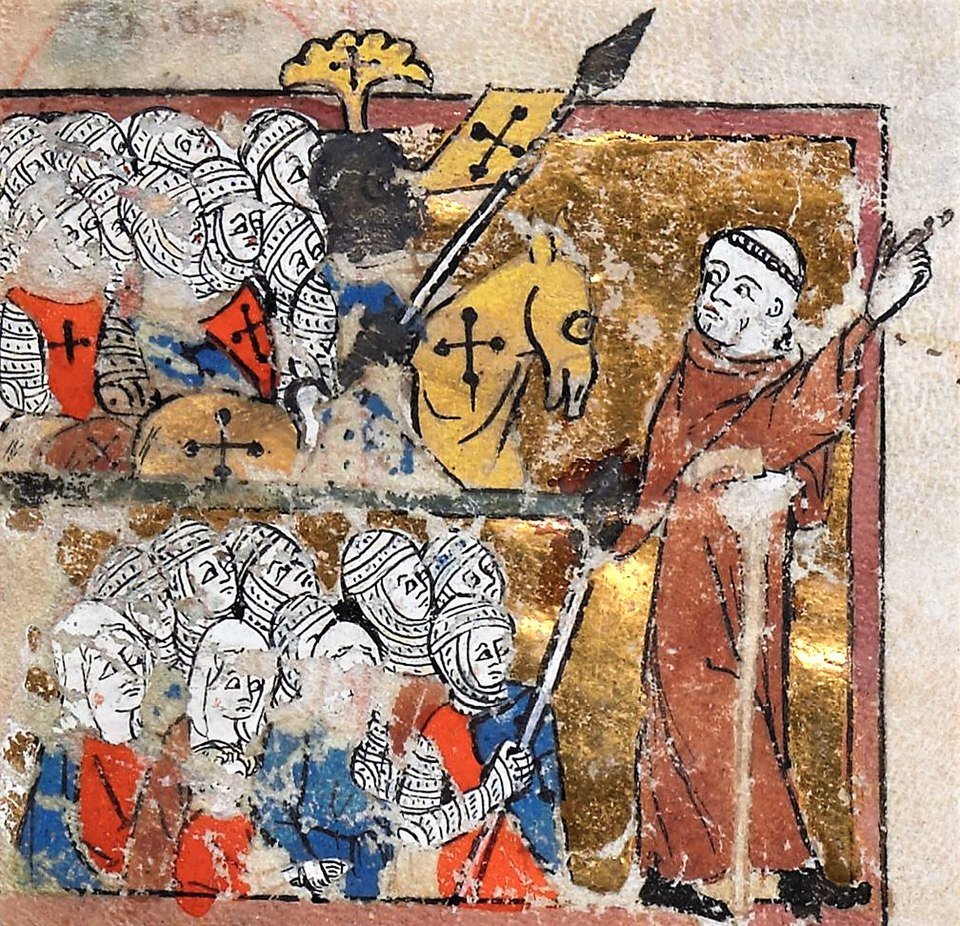
Before the professional armies got moving, an eager crowd went first. Remembered as the People’s Crusade, it was a loosely organised mass of knights and ordinary people led by a popular preacher called Peter the Hermit. Enthusiasm, it turns out, is not a military strategy. Turkish forces destroyed them in Anatolia.
The main armies did far better. Four forces from different parts of Western Europe marched east, and in June 1099 they reached Jerusalem. After a siege of about five weeks the city fell on 15 July 1099. How armies of the time actually broke into a walled city is explained in our look at medieval siege warfare.
What came next was a massacre. History.com records that the Crusaders slaughtered hundreds of men, women and children, in spite of a promise of protection from one of their own commanders, Tancred. It was remembered with horror in the Muslim world for centuries, and it is worth remembering here too.
To hold their gains, the Crusaders created four states along the eastern Mediterranean, known together as Outremer, French for “overseas”. They were always short of soldiers and always arguing among themselves. Neither habit helped.
Saladin and the fight for Jerusalem
The Second Crusade, in 1147 to 1149, was a flop. The Muslim powers had regrouped, and the Crusader armies were beaten badly in Anatolia and Syria.
Then came the man who would become the most famous name on either side. Salah al-Din, known in Europe as Saladin, united much of Egypt and Syria under his rule. In 1187 he wiped out the Crusader field army at Hattin, near the Sea of Galilee, and took Jerusalem back in October of that year. According to the Met, he let European pilgrims keep visiting the holy places and invited Jews to return and settle in the city.
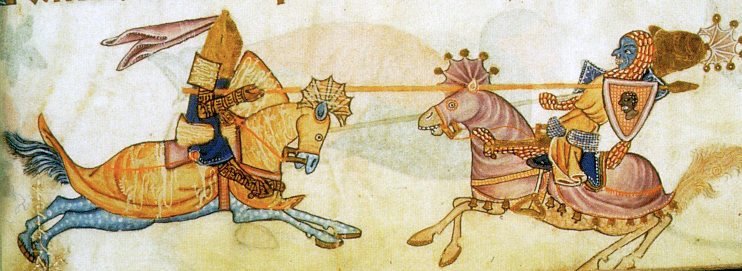
Europe’s answer was the Third Crusade, from 1189 to 1192, led by some very big names: Emperor Frederick Barbarossa, King Philip II of France and King Richard I of England, better known as the Lionheart. Richard beat Saladin at Arsuf in 1191, but he never took Jerusalem. In 1192 the two men signed a treaty instead. Richard, by the way, was the older brother of King John, the ruler later forced to accept Magna Carta. Royal families of the time had a lot going on.
Medieval people loved the idea of a duel between the two great leaders, and English artists happily painted one. It never happened. As far as the records show, Richard and Saladin never even met face to face; they dealt with each other through envoys. And the question of what medieval kings did actually do is a story of its own.
The Fourth Crusade: wrong city, wrong enemy
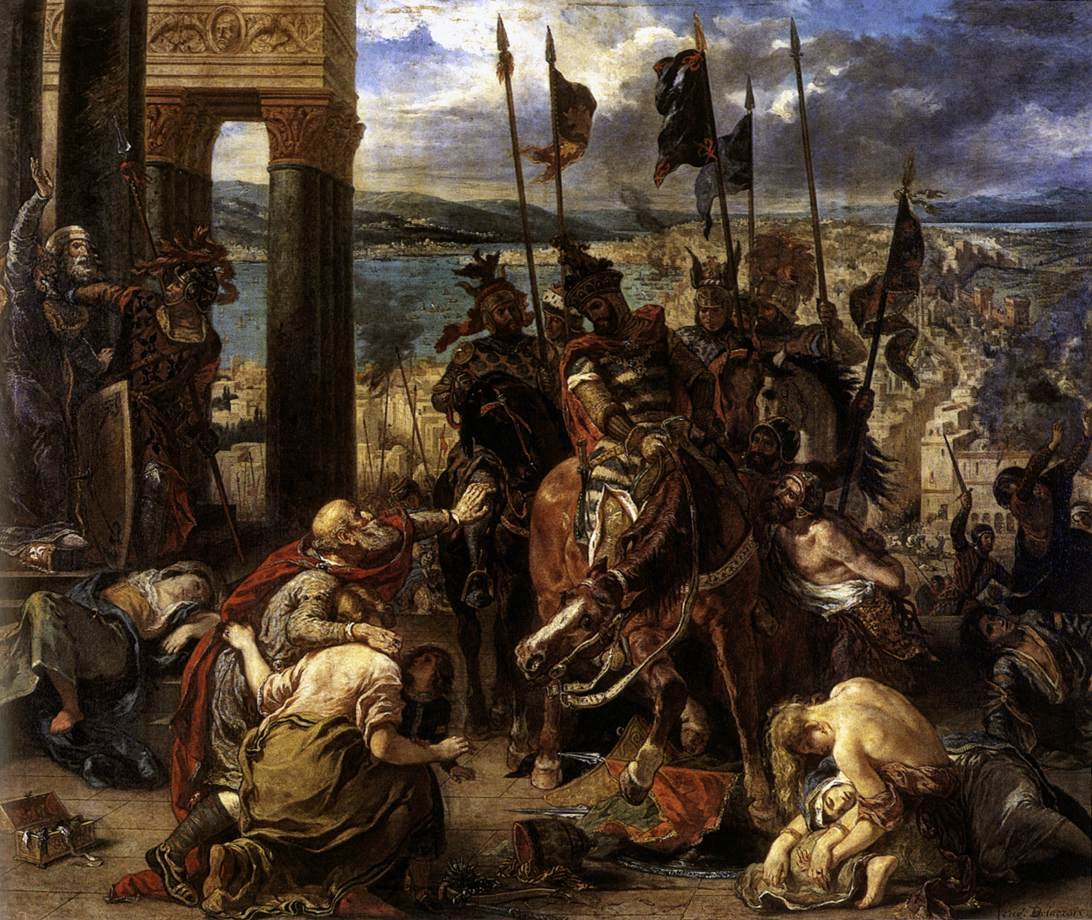
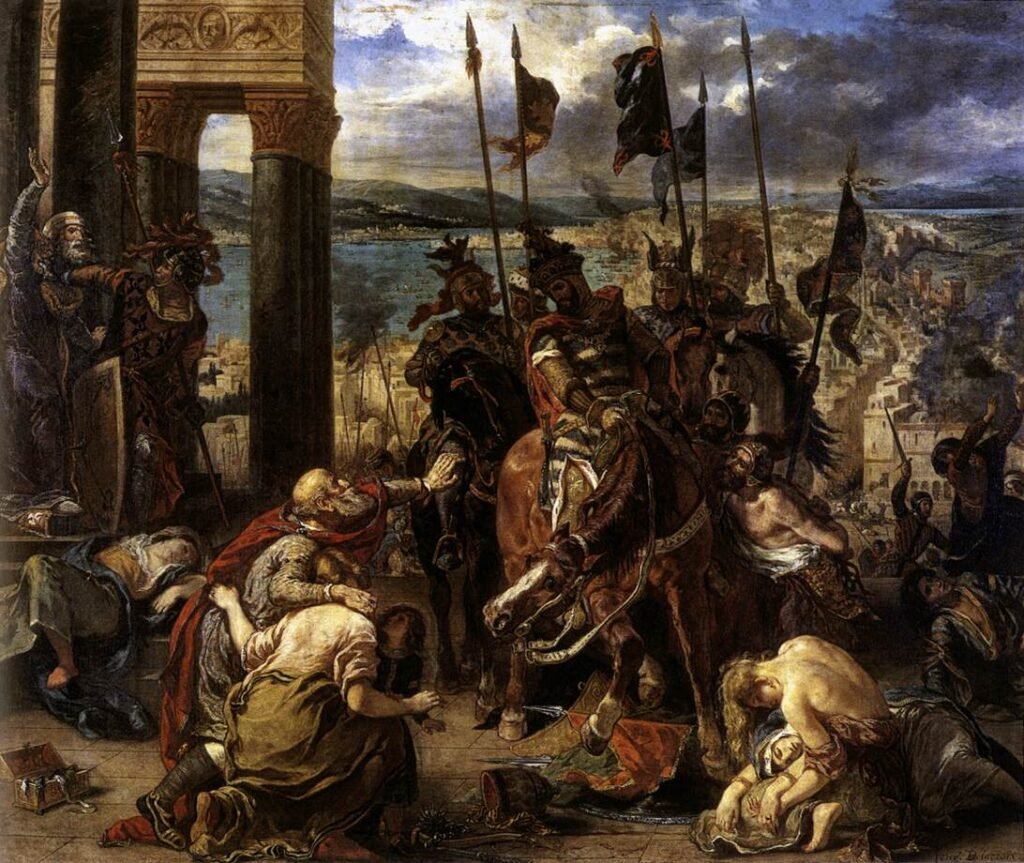
Now for the strangest chapter. The Fourth Crusade set off in 1202 aiming for Egypt. It never got there. Deep in debt to Venice, which had built its fleet, and dragged into Byzantine politics, the Crusaders turned on Constantinople instead, the greatest Christian city in the world.
Yes, you read that right. A Christian army, sent to fight Muslim powers, sacked a Christian capital. In 1204 the city was looted and its treasures divided up, with Venice taking a large share. The Byzantine Empire limped on, but World History Encyclopedia argues it was left so weak that it could put up little fight when the Ottoman Turks came for it in 1453.
Children, kings and the long goodbye
You may have heard of the Children’s Crusade of 1212, in which thousands of children marched off to free Jerusalem and were sold into slavery. The real story is murkier. The chroniclers called the marchers pueri, a Latin word that could mean children, teenagers or simply poor young people. Most were rural, penniless and outside the usual social order. They reached the coast, found no ships willing to take them, and many died or drifted home. The slavery part is probably later legend. Stories like this one grow in the telling, as do many of the myths about the Middle Ages.
Later crusades kept coming, with mixed results. King Louis IX of France led a campaign against Egypt from 1248 to 1254. Meanwhile, a new power had risen there: the Mamluks, a dynasty of former slave soldiers. Under Sultan Baybars they took one Crusader stronghold after another. In 1291 Acre, the last major Crusader city, fell. The age of the Crusader states was over.
What did the Crusades change?
Quite a lot, and not all of it on the battlefield.
- Trade boomed. Italian ports like Venice, Genoa and Pisa made fortunes from the traffic between East and West. More exotic goods reached Europe, including pepper, cinnamon, sugar, dates and lemons.
- Kings grew stronger. Paying for crusades meant new taxes, and collecting taxes made royal governments more powerful.
- Warrior monks appeared. Orders of fighting monks, the Templars and the Hospitallers above all, were founded to defend the Crusader states.
- Artists borrowed from each other. The Met points to metalwork that combines Islamic style with Christian scenes, some of it made by Muslim craftsmen for Christian buyers.
- Intolerance grew too. Crusading fervour led to violent attacks on Jewish communities in Europe, and suspicion of outsiders hardened on all sides.
That mix of exchange and hostility is the real legacy. The Crusades were not a simple story of good against evil. They were two centuries of faith, ambition, greed, courage and cruelty, often all in the same army.
Frequently asked questions
How many Crusades were there?
Historians usually count eight major Crusades to the Holy Land between 1095 and the late 1200s, plus many smaller and unofficial campaigns. The exact number depends on how you count.
Who won the Crusades?
In the Holy Land, the Muslim powers did. The Crusaders held Jerusalem for 88 years, from 1099 to 1187, and only briefly again in the 1200s, and their last major city, Acre, fell in 1291.
Why did the Crusades start?
The Byzantine emperor asked the pope for military help against the Seljuk Turks. In 1095 Pope Urban II turned that request into a call for a holy war, promising forgiveness of sins to those who joined.
Did Richard the Lionheart and Saladin ever meet?
As far as historians can tell, no. They fought each other and agreed a treaty in 1192, but there is no reliable record of a meeting. Their famous duel exists only in art and legend.
Sources
- The Metropolitan Museum of Art, The Crusades (1095–1291)
- History.com, The Crusades: Definition, Religious Wars and Facts
- World History Encyclopedia, Crusades
- World History Encyclopedia, The Crusades: Consequences and Effects
- World History Encyclopedia, Children’s Crusade