
Medieval Siege Towers: How Armies Climbed Over the Walls
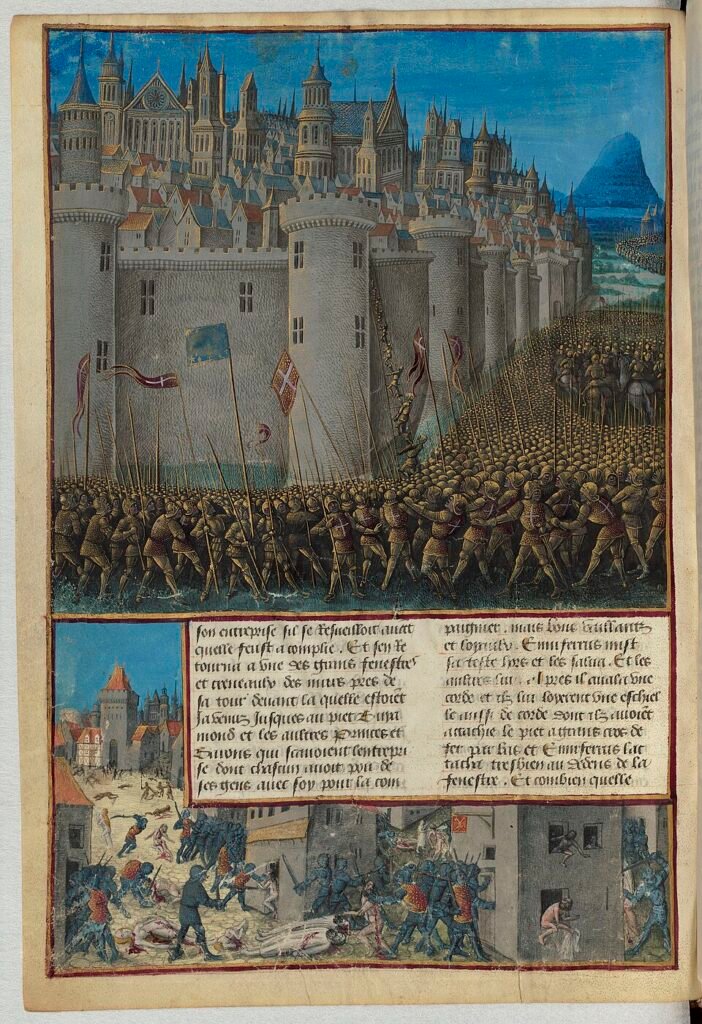
Castle walls had one simple job: keeping people out. So medieval armies came up with an equally simple, if slightly bonkers, solution. If you can’t get through the wall, build your own wall, put it on wheels and roll it right up to theirs. The medieval siege tower was a wooden skyscraper, packed with soldiers, creaking slowly towards the enemy while everyone on the battlements tried very hard to set it on fire. Ready to climb aboard? Mind the splinters.
Jump to a section:
What was a medieval siege tower?
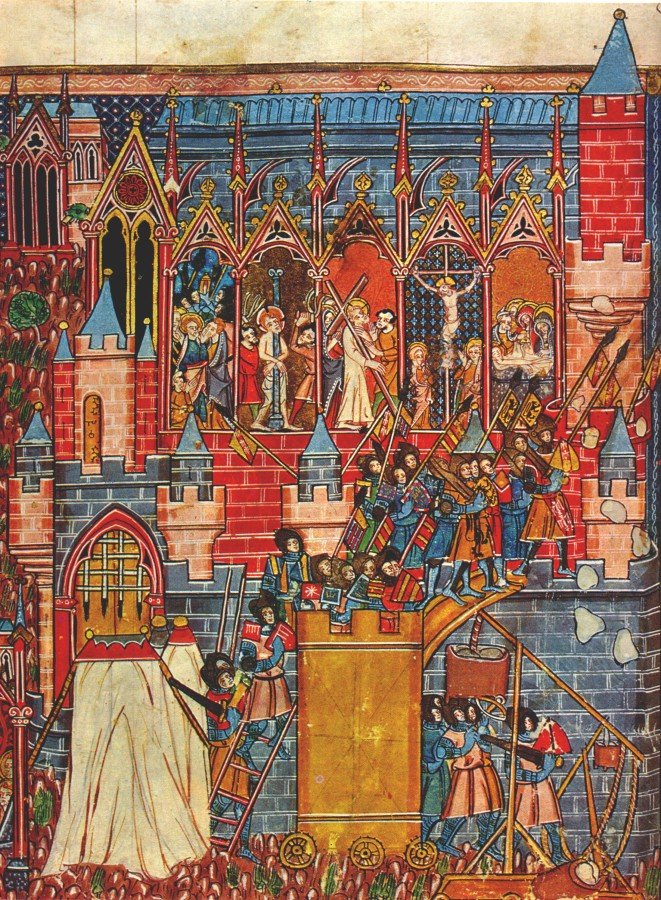
In short, it was a tall wooden tower on wheels, built by an attacking army and pushed up against an enemy’s walls. Encyclopaedia Britannica describes these wheeled towers as having drawbridges that could be lowered onto the top of the wall, and as giving archers a protected position from which to sweep the defenders off the battlements. Britannica also notes that building one and moving it forward while the enemy fought back was no small task. That’s putting it mildly.
The towers had a famous nickname. In medieval French, a movable siege tower was a berfroi. According to the Online Etymology Dictionary, English borrowed the word around 1400. Only later did it come to mean a bell tower, and the spelling drifted towards “belfry”, probably helped along by the word “bell”. So the next time you hear about bats in the belfry, picture a siege engine instead.
An old idea with a long history
Medieval engineers did not invent the siege tower. The ancient Greeks had already built some real monsters. A 19th-century dictionary of classical antiquities, edited by William Smith, describes the helepolis, or “city-taker”, used by the Macedonian general Demetrius against the island city of Rhodes. It was fitted with wheels and casters so it could move sideways as well as forwards, and the dictionary rates it the most impressive machine of its type ever constructed.
The Middle Ages picked up the idea and ran with it, especially once castles began to spread across Europe.
How did a medieval siege tower work?
Mark Cartwright of World History Encyclopedia explains the basics. The towers were made of wood and put together on the spot, close to the siege. They ran on their own wheels and were shoved into position by men or oxen.
Getting there was the hard part. A tower can’t roll across a moat, so first the attackers had to fill in part of the ditch, or bridge it, sometimes with ready-made folding bridges. Only then could the tower be wheeled right up to the wall. While all this was going on, archers sheltering behind wooden screens called pavises kept up covering fire, to stop the defenders from picking off the workers.
Once in place, the tower had several tricks. Cartwright lists some of the extras that clever builders added:
- a sheltered platform at the bottom, so men could dig at the base of the wall in safety;
- a battering ram hanging inside, to pound the wall;
- an arm with a box on the end, which could swing a group of soldiers over the battlements;
- and, at the top, a drawbridge that dropped onto the wall so the attackers could charge straight across.
Because the towers were built taller than the walls they faced, archers at the top could shoot down at the defenders. Cartwright notes that the towers the crusaders built outside Lisbon in 1147 stood over 24 metres, or about 80 feet, high. That’s roughly as tall as an eight-storey building, made of planks and pushed by hand.
Armies loved to name them, too. According to Cartwright, siege towers often got nicknames such as “the cat” or “the bear”. Nothing says “surrender now” like a giant wooden bear rolling towards your front door.
How defenders fought back
A medieval siege tower had one enormous weakness: it was a giant pile of wood. Defenders knew exactly what to do with that.
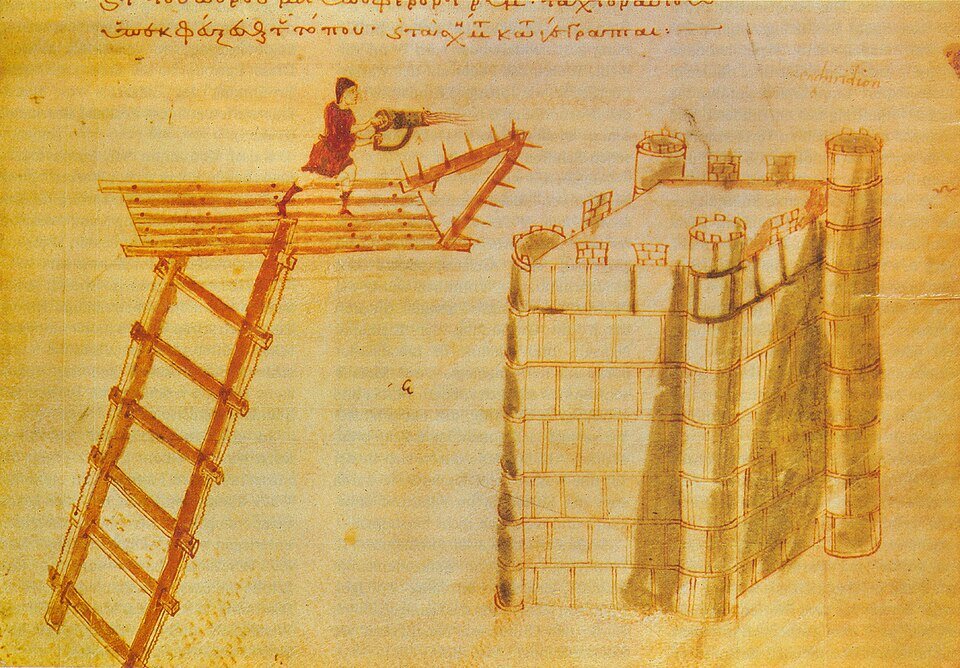
Cartwright describes how they would shoot burning arrows at the towers. In response, attackers covered their towers in animal skins soaked in water, or even in metal plates. Defenders could also dig ditches just outside the wall and pack them with loose soil, so the ground would give way when the heavy tower rolled over it. And sometimes they simply built a tower of their own, to fight the enemy’s tower face to face. Wooden skyscraper versus wooden skyscraper: medieval warfare at its most dramatic.
Jerusalem, 1099: the tower that moved overnight
One of the most famous medieval siege tower attacks came at the end of the First Crusade. According to Cartwright’s account of the capture of Jerusalem, Genoese and English ships reached the nearby port of Jaffa on 17 June 1099. Among their cargo were rope and timber, which the crusaders used to build two huge siege towers. By 10 July the towers were ready.
One was aimed at the defences on Mount Sion, another at the northern wall, plus a third, far smaller tower at the north-west corner. The defenders pelted the towers with stones and Greek fire, the highly flammable liquid invented by the Byzantines.
Then came the clever bit. During the night of 14 July, the crusaders took their north-wall tower apart and rebuilt it at a different spot. At daybreak, the defenders realised to their surprise that the attack was now coming from somewhere new. The tower came near enough that Godfrey of Bouillon and a handful of men could clamber onto the walls. On the morning of 15 July, the crusaders broke into the city. For the wider story of why the crusaders were there at all, read about the Crusades.
Lisbon, 1147: putting out fires in a wicker shed
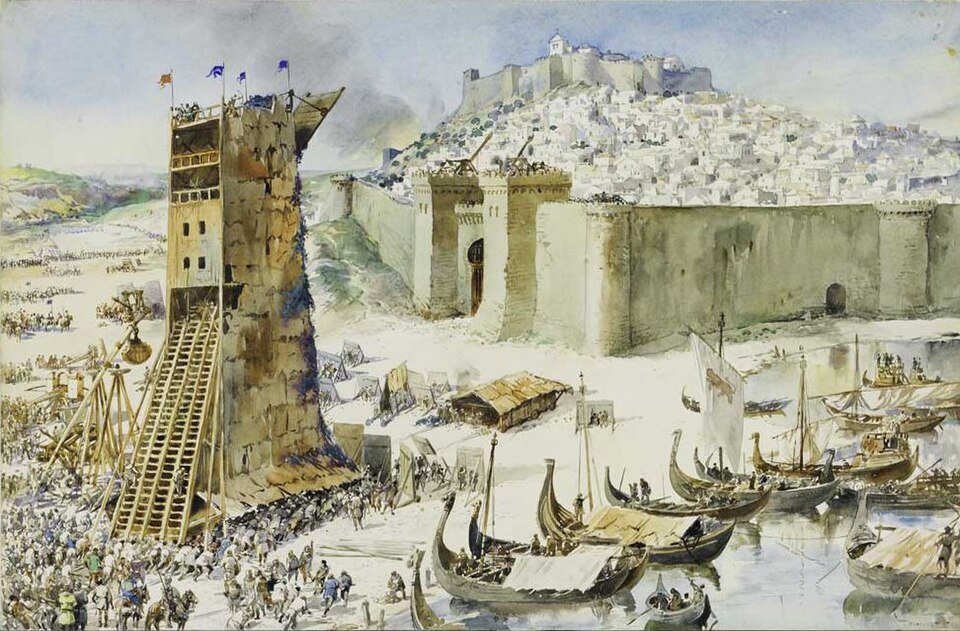
At Lisbon, crusaders from northern Europe helped the Portuguese besiege the city, and we have an eyewitness report from a priest named Raol. The historian Mathew Lyons describes one of the most heroic jobs in the whole operation. To protect their main siege engine, the attackers placed a shelter woven from willow branches, nicknamed a “Welsh cat”, between it and the city wall. Inside, seven young men from Ipswich spent two days and a night putting out fires, while the defenders rained down burning pitch, flax and oil.
It worked, eventually. Lyons notes that mines and siege towers finally forced Lisbon to surrender on 25 October 1147.
Two English sieges, two different endings
A medieval siege tower didn’t always win the day. They were just one tool among many.
At Bedford Castle in 1224, the forces of the young Henry III, then still a teenager, built two siege towers and set up seven stone-throwing machines, according to the historian Peter Purton. Even so, it took miners brought in from the Forest of Dean to bring the walls down. After eight weeks, the castle fell, and every member of the garrison was hanged for rebellion. A grim end.
Kenilworth Castle in 1266 was a different story. English Heritage explains that Henry III’s army built a wooden siege tower said to hold 200 crossbowmen. It sounds unstoppable, but a single well-aimed missile from the defenders put it out of action. The castle held out for 172 days, and in the end it wasn’t a medieval siege tower that won, but disease and hunger inside the walls.
Were siege towers worth the trouble?
Sometimes. Every medieval siege tower needed a lot of timber, a lot of labour, a filled-in moat and a fair amount of luck. Once it reached the wall, though, it could deliver a whole group of soldiers to the battlements at once, instead of one man at a time up a ladder.
Most of the time, they worked best as part of a bigger plan, alongside stone-throwers, miners and plain old starvation. For the full toolkit, from ladders and rams to mines and hunger, head over to the main overview of medieval siege warfare. And if you’d like to see the biggest stone-thrower of them all in action, find out how a trebuchet worked.
Frequently asked questions
What was a siege tower used for?
It let attackers get soldiers onto an enemy’s walls. Archers shot from the top, and a drawbridge was dropped onto the battlements so troops could cross over.
How tall were medieval siege towers?
Tall enough to look down on the walls they attacked. The towers used against Lisbon in 1147 were reported to be over 24 metres (about 80 feet) high.
How did defenders stop siege towers?
Mostly with fire, using burning arrows and substances such as Greek fire. They also dug trenches that would collapse under a tower’s weight, hurled stones at it or built counter-towers.
Why is a bell tower called a belfry?
The word first meant a movable siege tower. It came to mean a bell tower later, and its spelling changed under the influence of the word “bell”.
Sources
- Mark Cartwright, World History Encyclopedia, Siege Warfare in Medieval Europe (2018)
- Mark Cartwright, World History Encyclopedia, The Capture of Jerusalem, 1099 CE (2018)
- Encyclopaedia Britannica, Belfroy
- Online Etymology Dictionary, Belfry
- William Smith (ed.), A Dictionary of Greek and Roman Antiquities (1875), Helepolis
- Mathew Lyons, The siege of Lisbon: Welsh cat penthouses and Raol the priest (2023)
- Castle Studies Trust (with Peter Purton), Commemorating Bedford Castle on the 800th anniversary of the great siege of 1224 (2024)
- English Heritage, The Siege of Kenilworth Castle