
Were the Dark Ages Really Dark?
Say “the Dark Ages” and most people picture centuries of mud, ignorance and gloom between the fall of Rome and the Renaissance. It’s one of history’s catchiest labels, and one of its least fair. The people who coined it weren’t describing the period at all; they were insulting it. Meanwhile, the centuries in question gave us gleaming gold jewellery, beautiful books, the lowercase letters you’re reading now and the way we number our years. There was even one year when the sky genuinely did go dark. So were the Dark Ages really dark? Switch on a lamp and let’s look.
Jump to a section:
Who invented the “Dark Ages”?
The idea goes back to the Italian poet and scholar Petrarch in the 1330s. Petrarch adored the writers of ancient Rome and felt that everything since had been a long decline. He borrowed an old Christian image of light and darkness and turned it around: classical antiquity was the age of light, and the centuries after it were the darkness he was living in. He did allow that, even then, “amidst the errors there shone forth men of genius.”
In 1602 the church historian Cardinal Caesar Baronius used a related Latin phrase, saeculum obscurum, “the dark age”, for roughly the years 900 to 1046. Interestingly, he called that period dark mainly because so few writers had left records of it, not because people were stupid. Later, Enlightenment thinkers such as Voltaire and Edward Gibbon used “dark” as a weapon, to paint the Middle Ages as a superstitious, priest-ridden time that their own age of reason had escaped. By the 19th century, the label had settled on the early Middle Ages, roughly 500 to 1000.
Today most historians avoid it. As Britannica puts it, the term “is now rarely used by historians because of the value judgment it implies.” If you want the wider list of things people get wrong about the period, see our collection of medieval myths.
The one time it really was dark
Here’s the twist. In the year 536, the sky over much of the world really did go dim. The Byzantine historian Procopius wrote that the sun “gave forth its light without brightness”, rather like the moon. Summer temperatures in Europe fell by as much as 2.5°C, crops failed, and the Irish Annals of Ulster recorded “a failure of bread”. Ice cores point to a huge volcanic eruption, though nobody has yet identified the volcano. The historian Michael McCormick has called 536 the start of one of the worst periods to be alive, perhaps the worst year of all. The Plague of Justinian arrived in 541. So yes, there was a dark age, but it lasted a year or two, not five centuries.
Were the Dark Ages really dark? The evidence says no
The western Roman empire did collapse in the 400s, and life in many former provinces became poorer and less urban. Fewer people could read, fewer stone buildings went up, and trade shrank. Nobody serious denies that. But “less Roman” doesn’t mean “dark”. Look at what these supposedly gloomy centuries actually produced.
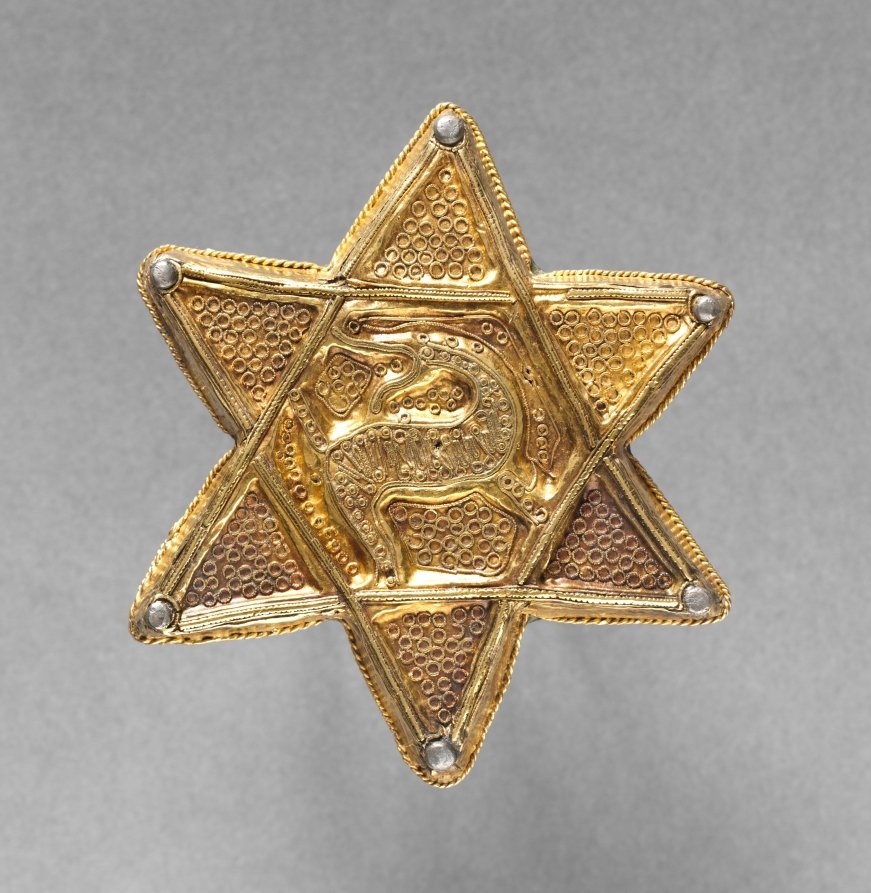
- Stunning craftsmanship. Goldsmiths in Frankish, Anglo-Saxon and Scandinavian workshops made jewellery and metalwork of extraordinary skill. The ship burial found at Sutton Hoo in England in 1939, from the early 600s, is packed with treasures that astonished everyone who saw them.
- Great books. Monks in Ireland, Britain and the Frankish lands copied and decorated manuscripts such as the Book of Kells, created around the year 800. Without these copyists, much of ancient Latin literature would have been lost.
- A thriving Eastern empire. In the east, the Roman empire never fell at all. Its capital, Constantinople, remained one of the greatest cities on earth, and in 537 it completed Hagia Sophia, for centuries the largest church in the world.
- A golden age elsewhere. From the 700s, scholars in the Islamic world, especially in Baghdad, translated and built on Greek science, mathematics and medicine, knowledge that later flowed back into Europe.
Charlemagne’s comeback, and your lowercase letters
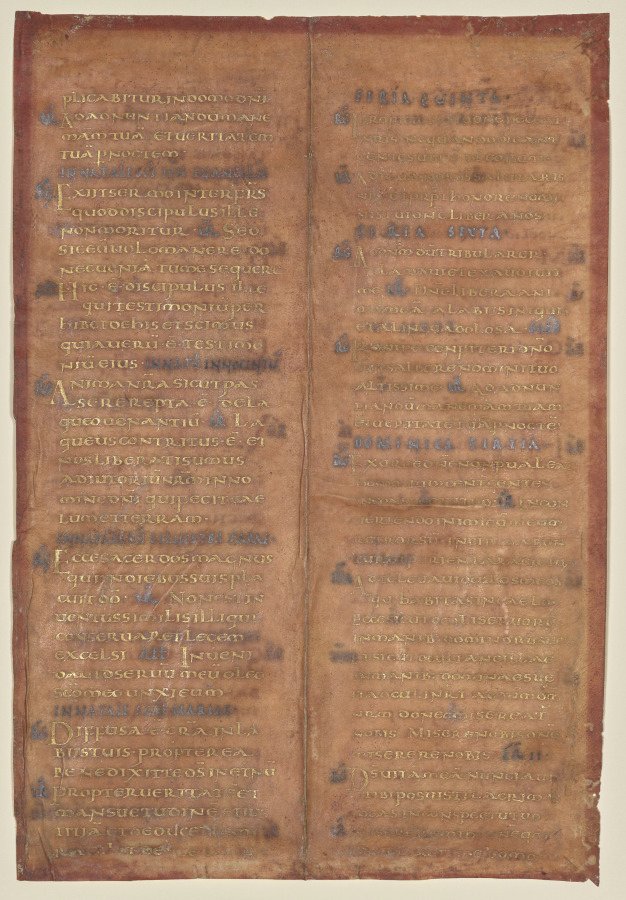
Around 800, the Frankish ruler Charlemagne set out to revive learning across his huge empire. He gathered scholars at his court, brought in the English teacher Alcuin of York to run his palace school at Aachen, and encouraged monasteries to copy and correct old texts. Historians call this burst of activity the Carolingian Renaissance, which is a strange thing to have in the middle of a supposed Dark Age.
It also left a gift you use every day. Scribes developed a new, beautifully clear handwriting, now called Carolingian minuscule, with rounded letters and spaces between words. Centuries later, Renaissance scholars found old manuscripts written in it, assumed they were ancient Roman, and copied the style. Printers took it over, and it became the basis of modern lowercase type. The irony is delicious: the very people who mocked the “dark” centuries borrowed their handwriting.
The monk who made AD popular
In the north of England, the monk Bede, who died in 735, was one of the most learned men in Europe. He wrote history and science, and both his treatise on time-reckoning and his Ecclesiastical History of the English People helped make dating events from the birth of Christ, the “AD” system devised by Dionysius Exiguus two centuries earlier, standard in Europe. Every time you write the year, you’re using an idea popularised in those supposedly gloomy centuries. Bede even knew the Earth was round, as you can read in whether medieval people thought the Earth was flat.
So why do historians still sometimes say “dark”?
In one sense the word survives. Some historians use it neutrally to mean a period with very few written sources, so that our view of it is dim, rather than the people. Britain in the 400s and 500s is the classic example, sometimes called “the darkest of the Dark Ages” simply because so little was written down. That’s a statement about historians’ evidence, not about the intelligence of the people living there.
So, were the Dark Ages really dark? Poorer in places, yes. Short of written records, often. But the centuries after Rome also produced gold, books, cathedrals, scholars and the handwriting you’re reading now. The darkness was mostly in the eye of later beholders. For how those centuries looked to the people who made their art, explore medieval art.
Frequently asked questions
When were the Dark Ages?
The term is usually applied to the early Middle Ages in western Europe, roughly from the fall of the western Roman empire in the late 400s to around 1000.
Why are they called the Dark Ages?
Because Petrarch and later Renaissance and Enlightenment writers saw the centuries after Rome as a time of lost learning, in contrast to the “light” of classical antiquity.
Is it wrong to say “Dark Ages”?
Most historians avoid it because it implies the period was backward. Many prefer “early Middle Ages” or “early medieval”.
What happened in 536?
A mysterious haze, probably from a huge volcanic eruption, dimmed the sun for months, cooling the climate and causing crop failures across the Northern Hemisphere.
Sources
- Wikipedia, Dark Ages (historiography)
- Wikipedia, Volcanic winter of 536
- Wikipedia, Carolingian minuscule
- Wikipedia, Bede
- The Cleveland Museum of Art, Brooch in the Form of a Six-Pointed Star