
The Medieval Inquisition: What It Was and Wasn’t
Say the word “Inquisition” and most people picture dark dungeons, hooded torturers and endless fires. Some of that is real. But the medieval Inquisition was not one giant secret police force, it rarely burned people, and many of its most notorious episodes, including the trial of Galileo and the great Spanish autos-da-fé, happened after the Middle Ages had ended. Here’s what the medieval Inquisition actually was, how an investigation worked, what punishments people really faced, and why its reputation is both deserved and exaggerated.
Jump to a section:
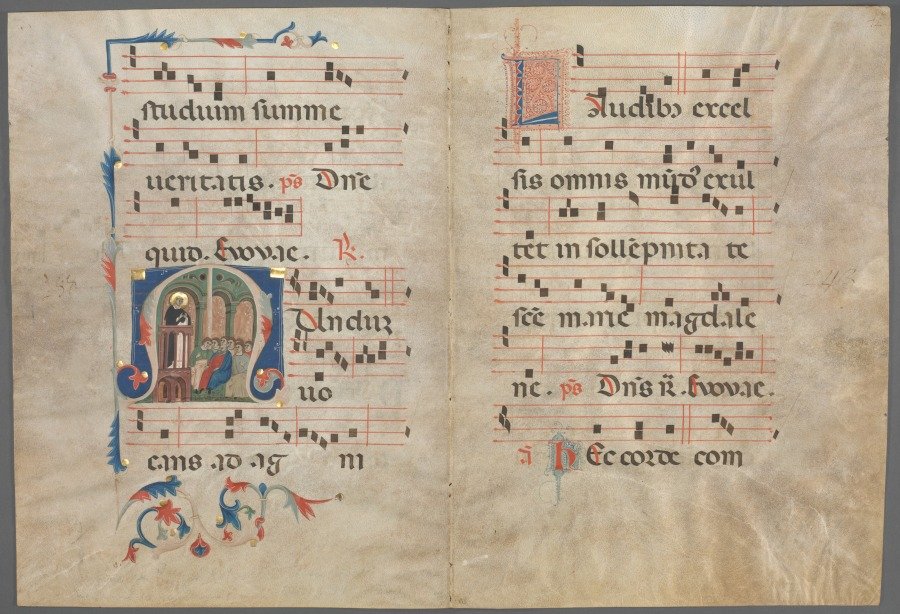
Why was the Inquisition created?
In the 1100s, new religious movements spread through southern France and northern Italy. The most famous were the Cathars, who believed the material world was the creation of an evil power, and the Waldensians, followers of a merchant from Lyon who preached poverty without the Church’s permission. To the Church, these groups were heretics: Christians who stubbornly held beliefs it had condemned.
At first, dealing with heresy was the job of local bishops. In 1184 Pope Lucius III, together with Emperor Frederick Barbarossa, issued a decree ordering bishops to seek out heretics in their dioceses, a step often seen as the start of the medieval Inquisition. In 1209 the papacy launched the Albigensian Crusade, a brutal war against the Cathars of southern France; for the wider story of holy war, see the Crusades explained. War, however, could not root out beliefs held quietly in people’s homes. Something more systematic was needed.
From the early 1230s, Pope Gregory IX began appointing special judges, called inquisitors, who answered directly to the pope. Most of them were friars from the new Dominican and Franciscan orders: educated, trained preachers who travelled from town to town. Inquisition comes from the Latin inquisitio, an “inquiry”.
How did the medieval Inquisition work?
There was no single headquarters and no permanent army of agents. Instead, individual inquisitors were given authority over a region. When one arrived in a town, he would usually preach a sermon and announce a “period of grace”, often around a month, during which people could come forward, confess any heresy and receive a lighter penance. They were also expected to name others.
Then came the investigations. Suspects were summoned and questioned, with notaries writing down their answers. Witnesses could remain anonymous, which made it hard for the accused to defend themselves. Inquisitors wrote handbooks for their colleagues explaining what questions to ask and how to spot evasive answers. The most famous was written in the 1320s by Bernard Gui, an inquisitor in Toulouse, who later appeared as a villain in Umberto Eco’s novel The Name of the Rose.
Those records are a treasure for historians. Between 1318 and 1325, Bishop Jacques Fournier, who later became Pope Benedict XII, ran an inquisition in his diocese of Pamiers and had the testimony of villagers recorded in great detail. Their words, about love affairs, quarrels, farming, beliefs and gossip in the mountain village of Montaillou, became the basis of a famous history book in the 1970s. Ironically, an institution designed to stamp out ideas preserved the voices of ordinary medieval people better than almost anything else.
Did the Inquisition use torture?
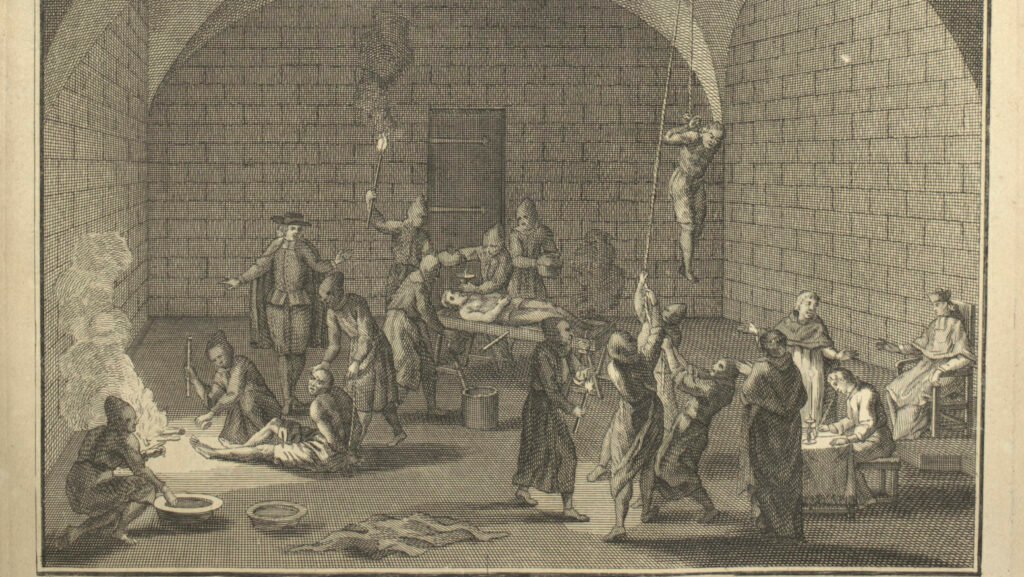
Yes. In 1252, Pope Innocent IV’s bull Ad extirpanda allowed the use of torture to obtain confessions from suspected heretics, following the practice of secular courts of the time. In theory there were limits: torture was not supposed to cause death or lasting injury or the loss of a limb, and a confession made under torture was supposed to be repeated freely afterwards. How well those rules were respected varied from place to place.
Many of the gruesome devices people associate with the Inquisition, though, belong more to legend than to the records. The famous spiked cabinet is a good example: read why historians doubt it in our article on the iron maiden.
What punishments did people really face?
The large majority of sentences were penances rather than executions. People who confessed might be ordered to fast, say prayers, go on pilgrimage or attend Mass regularly. Some were made to sew large yellow crosses onto their clothes for years, a public mark of shame. Others had their property confiscated or were imprisoned, sometimes for life.
Death was reserved mainly for those who refused to recant or who relapsed into heresy after being pardoned. Even then, the Church did not carry out executions itself. The condemned were “relaxed”, or handed over, to the secular authorities, who burned them. Bernard Gui’s own records are a useful guide: of more than 630 people he sentenced between 1308 and 1323, around 40 to 45 were handed over to be burned. That’s still a horrifying number of deaths, but far from the endless bonfires of popular imagination.
What the medieval Inquisition wasn’t
Some of the most famous inquisitions weren’t medieval at all. The Spanish Inquisition was founded in 1478 under King Ferdinand and Queen Isabella and was controlled by the Spanish crown. It targeted converted Jews and Muslims suspected of secretly keeping their old faith, then Protestants, and lasted until 1834. The Roman Inquisition, set up in 1542 to fight Protestantism, is the one that put Galileo on trial in 1633.
Witch-hunting also belongs mostly to a later period, and most witches were tried and executed by secular courts rather than by inquisitors. In fact, the Spanish Inquisition became notably sceptical about witchcraft accusations in the early 1600s. For the full story, read about medieval witch trials.
Would I have confessed?
Let me imagine for a moment that I am a peasant living in a village in France in the 1300s. An inquisitor comes to our village, preaches a sermon and announces a period of grace: if I confess anything the Church might call heresy and give the names of neighbours who have done the same, I will receive a lighter punishment. I think I would feel the way I used to feel at school when I had done something wrong: scared of being punished, and ready to spill a few names to save myself.
Anyway, we are all sinners in one way or another, and in the Middle Ages, looking after my own soul, and my neighbours’ souls too, would have felt like a duty. As a bonus, my conscience would be lighter. Would you have done the same as me?
Why the Inquisition still matters
The medieval Inquisition was a system designed to control belief, and it used fear, informers and, at times, torture and death to do it. Those things are real and shouldn’t be played down. But it was also a bureaucratic, legalistic institution that kept careful records, and much of its popular image was built later, by Protestant writers, Enlightenment critics and, eventually, film and comedy. It’s no accident that a Monty Python sketch made “Nobody expects the Spanish Inquisition!” a catchphrase. For how the Church shaped every part of medieval life, explore the medieval Church.
Frequently asked questions
When did the medieval Inquisition begin?
Its roots go back to 1184, when Pope Lucius III told bishops to hunt for heretics. Papal inquisitors, mostly Dominican and Franciscan friars, were appointed from the early 1230s.
Did the Inquisition burn people?
The Church handed over condemned heretics to secular rulers, who burned them. Most people tried by medieval inquisitors received lesser penalties, such as penances, fines or prison.
Is the Spanish Inquisition medieval?
Only just. It was founded in 1478, at the very end of the Middle Ages, and most of its activity belongs to the 1500s and later.
Who were the heretics the Inquisition pursued?
Mainly the Cathars and Waldensians at first, and later other groups the Church considered heretical.
Sources
- Wikipedia, Medieval Inquisition
- Wikipedia, Ad extirpanda
- Wikipedia, Bernard Gui
- Wikipedia, Spanish Inquisition
- Encyclopaedia Britannica, Inquisition