

Vlad the Impaler: The Real Dracula?
Every Halloween, millions of people dress up as Dracula: the pale count in the cape, with the fangs and the castle in the mountains. But behind the vampire stands a real man. Vlad III, prince of Wallachia in the 1400s, was famous in his own lifetime for impaling his enemies on sharpened stakes, and his family name was Dracula. To the printers of 15th-century Germany he was a monster. To many Romanians he is a hero who stood up to the Ottoman Empire. So who was Vlad the Impaler, how much of his terrible reputation is true, and how did he end up as the most famous vampire in the world? Let’s separate the man from the myth.
Jump to a section:

Who was Vlad the Impaler?
Vlad was born around 1428–1431, probably in Transylvania, the son of Vlad II, who became voivode, or prince, of Wallachia, a principality north of the Danube in what is now southern Romania. Wallachia sat on a dangerous border between the Kingdom of Hungary and the expanding Ottoman Empire, and its princes constantly had to choose between them.
The name comes from his father. In 1431 Vlad II was admitted to the Order of the Dragon, a brotherhood of nobles founded by the future Holy Roman Emperor Sigismund to defend Christianity against the Ottomans, a late echo of the ideals behind the Crusades. From then on he was known as Dracul, “the dragon”. His son became Drăculea, “son of the dragon”, or Dracula. In modern Romanian, drac also means “devil”, which later helped give the name its sinister ring.
A hostage at the Ottoman court
In 1442, when Vlad was still a boy, his father was detained by the Ottoman sultan Murad II and released only on condition that he leave two of his sons, Vlad and his younger brother Radu, at the sultan’s court as guarantees of his loyalty. The boys spent several years there. Radu, nicknamed “the Handsome”, grew close to the Ottomans and later fought on their side. Vlad seems to have come away with a deep knowledge of Ottoman ways and no love for them at all.
Meanwhile, Wallachian politics turned murderous. In 1447, during an invasion backed by the Hungarian commander John Hunyadi, Vlad’s father was killed and his elder brother Mircea was reportedly blinded and buried alive by boyars, the local nobles, and townsmen of Târgoviște. Vlad briefly seized the throne in 1448, but was pushed out after about two months. He returned to power in 1456, and his main reign lasted until 1462.
Why was he called “the Impaler”?
Impalement was a slow, agonising method of execution in which a victim was pierced with a sharpened wooden stake and left to die. Vlad didn’t invent it, but he used it so often that, after his death, he became known in Romanian as Vlad Țepeș, “Vlad the Impaler”.
He used terror as a tool of government. He crushed the boyars he suspected of disloyalty, punished thieves and cheats brutally, and executed large numbers of Ottoman prisoners. Many of the most famous stories about him come from German pamphlets printed after 1462, which were written by his enemies and full of sensational detail, so they need to be read with care. Still, a surviving letter of his, written in February 1462, boasts of killing more than 23,000 people during a winter raid along the Danube, so his reputation for cruelty is not just enemy propaganda.
The night attack and the forest of the impaled
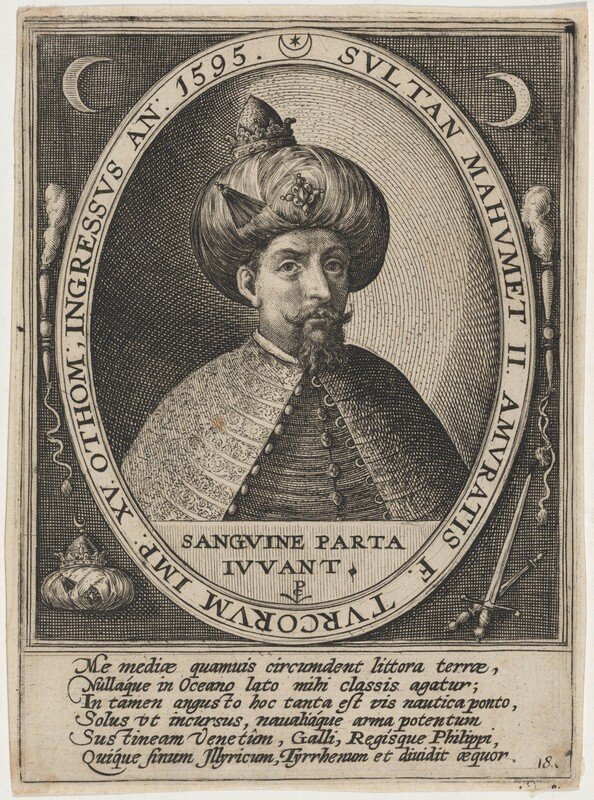
By late 1461 Vlad had stopped paying tribute to the Ottomans, and that winter he raided their lands south of the Danube. In 1462 Sultan Mehmed II, the conqueror of Constantinople, invaded Wallachia with a huge army. Vlad couldn’t face him in open battle, so he retreated, burned crops and poisoned wells, and in June 1462 launched a daring night raid on the sultan’s camp. It caused chaos and many deaths, but failed to kill Mehmed.
Then came the most notorious scene of his career. According to the Byzantine historian Laonikos Chalkokondyles, when the Ottoman army approached Vlad’s capital at Târgoviște, it found a vast field of stakes bearing the bodies of some 20,000 impaled prisoners. The number may be exaggerated, but the sight reportedly shook even the hardened sultan. For more on how medieval torture stories grew in the telling, see the truth about the iron maiden.
Prisoner, prince again, and a mysterious death
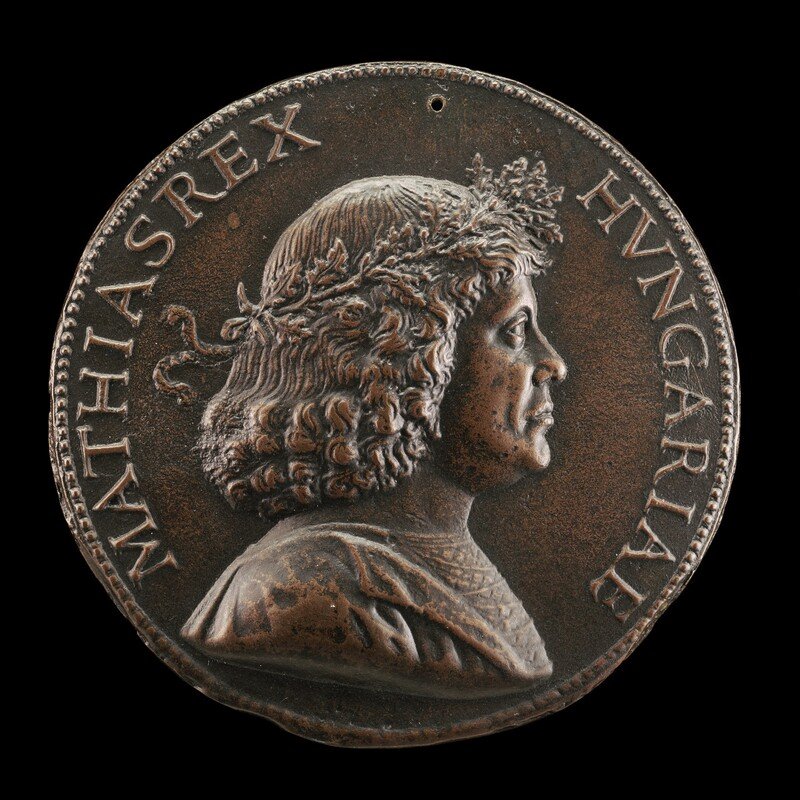
Vlad’s victories didn’t last. Mehmed put Radu on the throne of Wallachia, many boyars switched sides, and Vlad fled to Hungary. Instead of helping him, King Matthias Corvinus had him arrested and kept him in custody for years, partly by producing letters, quite possibly forged, in which Vlad supposedly offered to submit to the sultan.
Around 1475 he was released, and in 1476 he regained the Wallachian throne for the third time. It lasted only a few weeks. By early 1477 he was dead, killed in fighting against the Ottomans or their Wallachian allies. The details are uncertain. Where he was buried is uncertain too: tradition points to the island monastery of Snagov, near Bucharest, but historians have suggested other places, and his grave has never been securely identified.
Hero or monster?
Those German pamphlets turned Vlad into one of the first international villains of the printing age. They told of him dining among his impaled victims and nailing the turbans of Ottoman envoys to their heads when they refused to remove them. A Russian account written by the mid-1480s tells many of the same stories, but presents him as a harsh but effective ruler.
In Romanian folklore and later national history, Vlad is often remembered quite differently: as a fierce defender of his country against a much larger empire and as a ruler of strict justice. Both images, monster and hero, contain some truth, which is part of why he still fascinates people more than five centuries later.
The golden cup nobody dared to steal
Whether it really happened or not, there is a legend that appears in an old Russian text, The Tale of Dracula the Voivode. It says that Vlad the Impaler was so harsh with thieves that nobody in Wallachia, today’s southern Romania, dared to steal. According to the story, Vlad placed a cup made of gold beside a fountain, so that anyone who was thirsty could drink from it. The cup stayed there untouched for the rest of his reign, because everybody knew what would happen to a thief: the voivode would almost certainly punish him violently.
Was it cruel? Was it fair? I think it’s human nature to obey the rules when you expect to be punished for breaking them. Christian teaching told people to fear God and his wrath, and in the same way, in the Middle Ages, the fear of something terrible happening to you if you stole kept most people in line. Maybe the same approach would work today. Or maybe not? I’ll let you think about it.
How Vlad became Dracula
The vampire arrived much later. In 1897, the Irish writer Bram Stoker published Dracula, the novel that created the modern image of the vampire count. Stoker’s notes show that he took the name from a book about Wallachia and Moldavia, where he read that Dracula meant “devil”. Historians who have studied his notes argue that Stoker knew very little else about the real Vlad, and his fictional count is a Transylvanian nobleman, not a prince of Wallachia.
Real vampire legends in eastern Europe have little to do with Vlad either. And Bran Castle in Transylvania, sold to tourists as “Dracula’s Castle”, has only a loose connection to him. The fortress more closely linked to the real Vlad is the ruined castle of Poenari, high on a cliff above the Argeș river. For more on how medieval people marked the season of the dead, read about medieval Halloween, and for other stories that grew far beyond the facts, dip into more medieval myths.
Frequently asked questions
Was Dracula a real person?
The fictional Count Dracula wasn’t, but his name was borrowed from a real ruler: Vlad III of Wallachia, known as Dracula, “son of the dragon”, in the 1400s.
What was Dracula’s real name?
The real man behind the name was Vlad III, prince of Wallachia in the 1400s, better known today as Vlad the Impaler. His father, Vlad II, was called Dracul, “the dragon”, after joining the Order of the Dragon, so the son was known as Drăculea, “son of the dragon”, or Dracula.
Was Vlad the Impaler a vampire?
No. Nothing in the medieval sources describes him as a vampire. The link was created by Bram Stoker’s novel in 1897, more than four centuries after Vlad’s death.
How many people did Vlad the Impaler kill?
No one knows. Figures of tens of thousands appear in contemporary sources, including one of his own letters, but many numbers were exaggerated by friends and enemies alike.
When did Vlad the Impaler die?
He won back the Wallachian throne for the third time in 1476, but by early 1477 he was dead, killed in fighting against the Ottomans or their Wallachian allies.
Where is Vlad the Impaler buried?
Nobody knows for sure. Snagov Monastery near Bucharest is the traditional answer, but his grave has never been securely identified.
Sources
- Wikipedia, Vlad the Impaler
- Wikipedia, Order of the Dragon
- Wikipedia, Night attack at Târgoviște
- Encyclopaedia Britannica, Vlad III
- Wikipedia, Dracula (Bram Stoker’s novel)