
How Tall Were Medieval People?
Walk through an old castle or a Tudor house, duck under a low doorway, and someone will almost always say it: people were so much shorter back then. It is one of the most common things we believe about the Middle Ages. Medieval people, the story goes, were tiny, half-starved and barely five feet tall. But scientists have now measured the bones of thousands of medieval men and women, and the results are surprising. So how tall were medieval people really? Much taller than you think, and in some centuries almost as tall as we are today.
Jump to a section:
How tall were medieval people? The short answer
On average, a medieval man in northern Europe stood somewhere between about 1.68 and 1.74 metres, roughly 5 feet 6 inches to 5 feet 8 inches. Women were usually a few inches shorter. Today the average British man is about 5 feet 9 inches. That means a typical medieval man was only a few centimetres shorter than a modern one, and in the early Middle Ages the difference was even smaller. The really short people in European history lived much later, as we will see.
What medieval skeletons tell us
So how tall were medieval people, according to their bones? We cannot measure people who died 800 years ago, but we can measure their skeletons. The length of the thighbone, the femur, gives a good estimate of a person’s height. In 2004 the economist Richard Steckel of Ohio State University put together the results of 30 earlier studies of skeletons from Iceland, Sweden, Norway, Denmark and Great Britain. He found that men who lived in the 9th to 11th centuries were on average 173.4 centimetres tall, or about 5 feet 8 inches. As Steckel put it, “height is an indicator of overall health and economic well-being.”
Medieval height in England
A study from 2017 looked at England alone and reached a similar result. Gregori Galofré-Vilà of the University of Oxford, with researchers from the universities of Southampton and the Open University, estimated the height of English men over 2,000 years, again from thighbones. According to the University of Oxford, men reached about 173 centimetres in the 1100s, after the Norman Conquest. From 1400 to the early 1650s they stood at 173 to 174 centimetres, a level similar to the 20th century. For comparison, the average English man in 1950 was 175 centimetres tall.
How tall were medieval people in London?
Cemeteries in medieval London give us real figures for both men and women. At Spital Square, the burial ground of a London hospital used between about 1197 and 1320, the London Museum’s database gives an average height of 169.5 centimetres for men and 161.1 centimetres for women. The novelist Elizabeth Chadwick, looking at the excavation report on the 11th- and 12th-century cemetery of St Nicholas Shambles in London, found men of around 5 feet 8 inches. Across other English sites she lists, average male heights ranged from about 5 feet 5 inches to 5 feet 10 inches.
Why were early medieval people so tall?
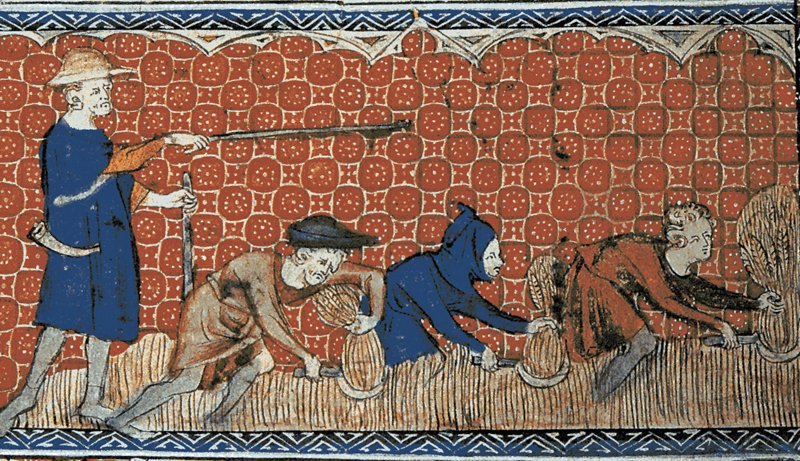
Steckel had a few explanations. Between about 900 and 1300, Europe enjoyed a warm period, with temperatures up to two or three degrees higher. The growing season was three to four weeks longer, and farmers could plant crops on higher land. Populations were small and quite isolated, so diseases spread less easily. More food and fewer infections in childhood mean taller adults. Even ordinary peasants, who lived mostly on bread, pottage and dairy, as we explain in our article on what medieval peasants ate, could grow to a good height.
When did people really become shorter?
Here is the twist. The shortest Europeans were not medieval at all. According to Steckel, heights fell slightly in the 12th to 16th centuries and then dropped to their lowest point in the 17th and 18th centuries, at around 167 centimetres. He blamed the colder climate of the Little Ice Age, growing towns, trade that spread disease, and more inequality and war. The Oxford study also found a fall after 1650. And Tastes of History notes that men in the crowded Victorian cities of the mid-19th century averaged only about 167 centimetres.
Tall medieval kings
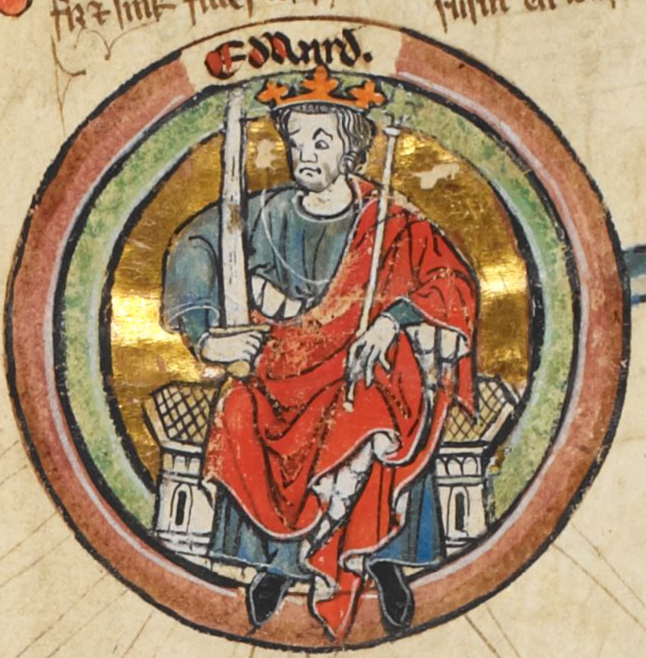
Some medieval people were tall even by today’s standards. Edward I of England was nicknamed “Longshanks”, meaning long legs, and Westminster Abbey says he was 6 feet 2 inches tall. When his tomb was opened in 1774, his body was found “nearly entire”. Henry VIII, born in 1491 at the very end of the Middle Ages, was 1.87 metres tall according to Historic Royal Palaces, while the average Londoner was about 1.70 metres. And Richard III, whose skeleton was found under a car park, would have been about 5 feet 8 inches without his scoliosis, about average for a man of his time.
The Mary Rose: real sailors from 1545
If you want to know how tall were medieval people at the very end of the period, look at the Mary Rose. The crew of Henry VIII’s warship, which sank in 1545, give us a rare look at ordinary working men. According to the Mary Rose Trust, their average height was 5 feet 7 inches, or 170 centimetres. The tallest man was 5 feet 11 inches, and the shortest adult 5 feet 3 inches. One archer, whose face was reconstructed, was 5 feet 9 inches. You can read more about these strong archers in our article on longbow vs crossbow.
Where does the short medieval people myth come from?
Mostly from buildings and objects. The decks of the Mary Rose have beams only 4 to 5 feet high, but the Mary Rose Trust explains that they had to be thick and strong to carry guns weighing several tonnes. “The people of the past probably banged their heads just as often as we would!” it says. Tastes of History adds that low doorways helped keep the heat inside, and that short beds were made for people who slept sitting up against pillows. A small door says more about heating a house than about the height of the people living in it.
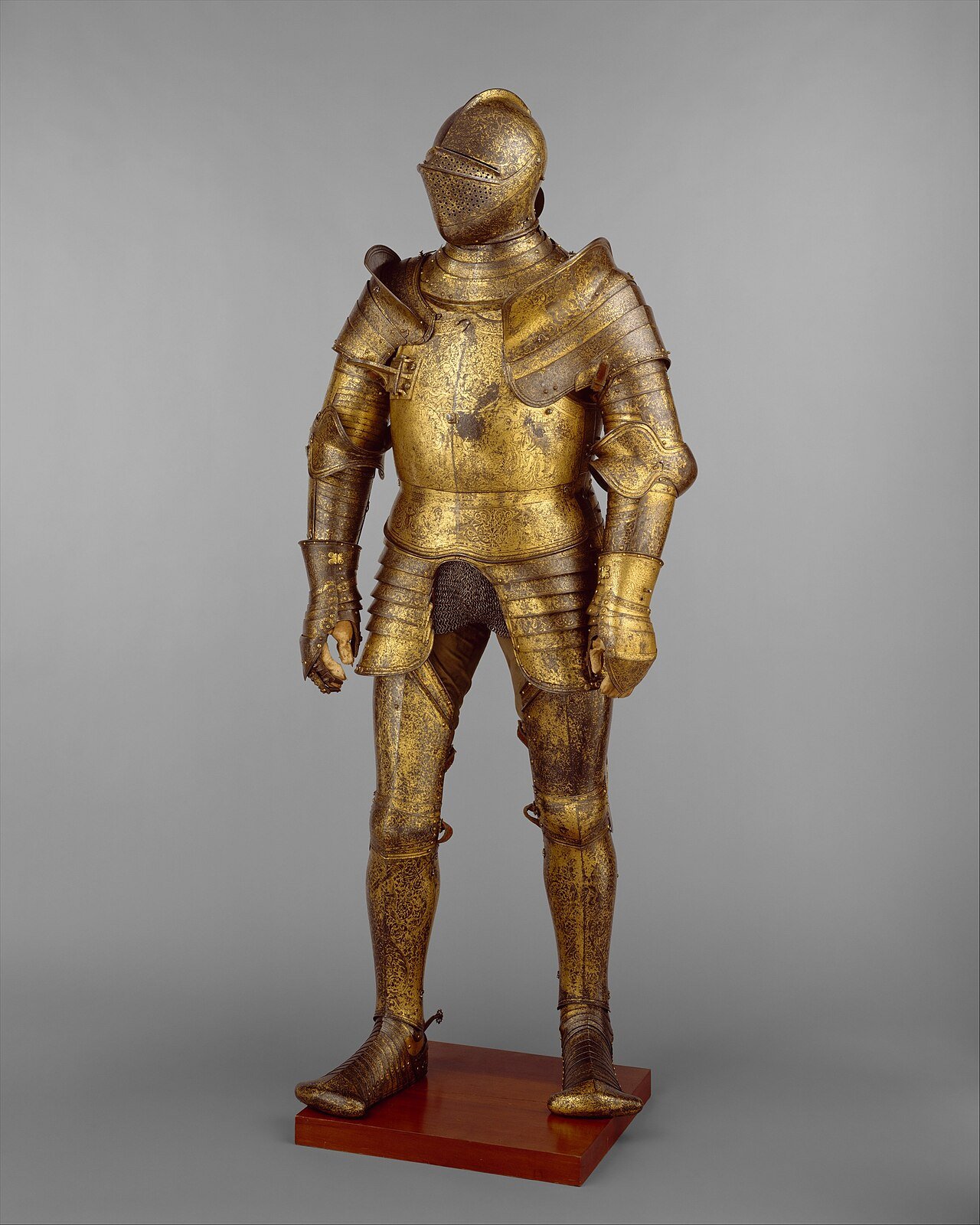
Suits of medieval armour in museums can also look surprisingly small. But armour was made to measure for one person, and a suit standing on a stand without a body inside it often looks smaller than it really is. Some armours were also made for boys, like the boy’s armour of about 1610 in the Royal Armouries. Put together, all these clues created a picture of a tiny medieval population that the skeletons simply do not support.
What do I think?
I have to admit that I believed this myth myself. If you had asked me before how tall were medieval people, I would have said five feet at most. Every time I visited an old house with low doors, I imagined people barely reaching my shoulder. Now I know that an average medieval man in London would look me in the eye, and that the Victorians, who were much closer to us in time, were often shorter than him. I find that a strange thought, and a good reminder that history does not always move in a straight line.
So, how tall were medieval people?
Taller than most of us imagine. Medieval men in England and northern Europe were usually about 5 feet 6 inches to 5 feet 8 inches tall, and women usually a little over 5 feet, only a little shorter than people today. Early medieval men were among the tallest Europeans before the 20th century. The really short centuries came later, in the 17th, 18th and 19th centuries. The tiny medieval peasant is just another of the medieval myths we still repeat today.
Frequently asked questions
How tall were medieval people on average?
Medieval men in northern Europe were usually about 1.68 to 1.74 metres tall, roughly 5 feet 6 inches to 5 feet 8 inches. Women were usually a few inches shorter.
Were medieval people shorter than us?
Only a little. Comparing how tall were medieval people with today, a typical medieval man was a few centimetres shorter than a modern British man, who averages about 5 feet 9 inches.
How tall were medieval women?
At Spital Square in London, used between about 1197 and 1320, women had an average height of 161.1 centimetres, about 5 feet 3 inches.
When were Europeans the shortest?
In the 17th and 18th centuries, when average male height fell to around 167 centimetres. Men in Victorian cities were also short, at about the same height.
Why are medieval doorways so low?
Not because people were tiny. According to Tastes of History, low doorways helped keep the heat inside the house.
Sources
- The Ohio State University, Men from early Middle Ages were nearly as tall as modern people (2004), on the research of Richard Steckel
- University of Oxford, Highs and lows of an Englishman’s average height over 2000 years (2017)
- London Museum, Spital Square burials, osteological database
- Elizabeth Chadwick, The History Girls, post on medieval heights (2019)
- The Mary Rose Trust, How tall were the crew of the Mary Rose? and Myths of the Mary Rose
- Westminster Abbey, Edward I and Eleanor of Castile
- Historic Royal Palaces, Henry VIII
- HeritageDaily, on the 3D model of Richard III’s spine (2014)
- Royal Armouries, Boy’s armour, about 1610 (II.126)
- Tastes of History, Dispelling some myths: a short life