
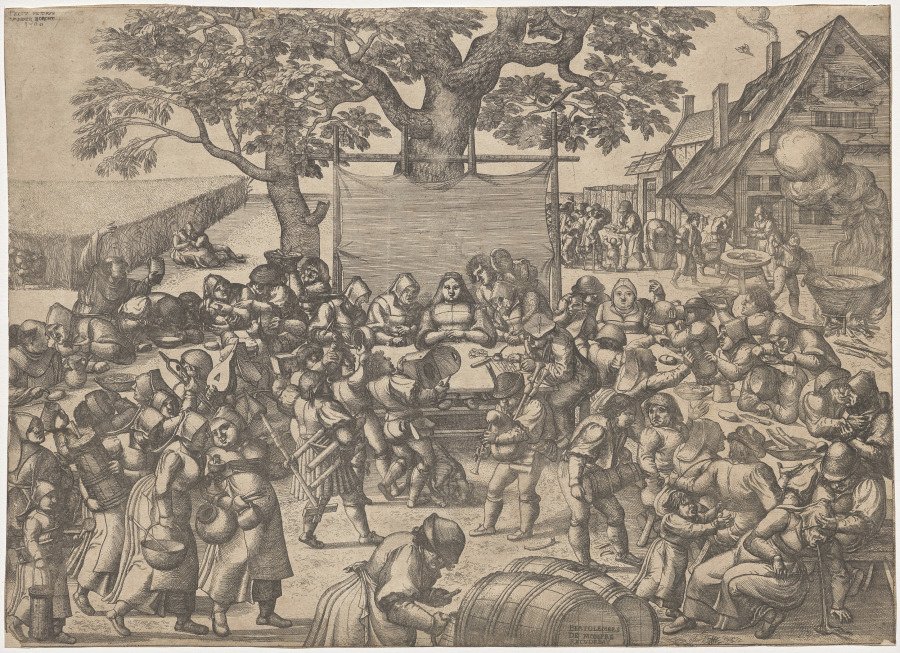
Droit du Seigneur: Did It Ever Exist?
Of all the dark stories told about the Middle Ages, this one gets the most screen time. A peasant couple marry, and on the wedding night the local lord turns up to claim the bride, because the law says he may. It is called the droit du seigneur, “the lord’s right”, or in Latin ius primae noctis, “the right of the first night”. It appears in plays, operas, novels and a certain Oscar-winning Mel Gibson film. The problem is that historians have been hunting for proof of it for about two hundred years and have come back almost empty-handed. So where did the story come from, and why won’t it die?
Jump to a section:
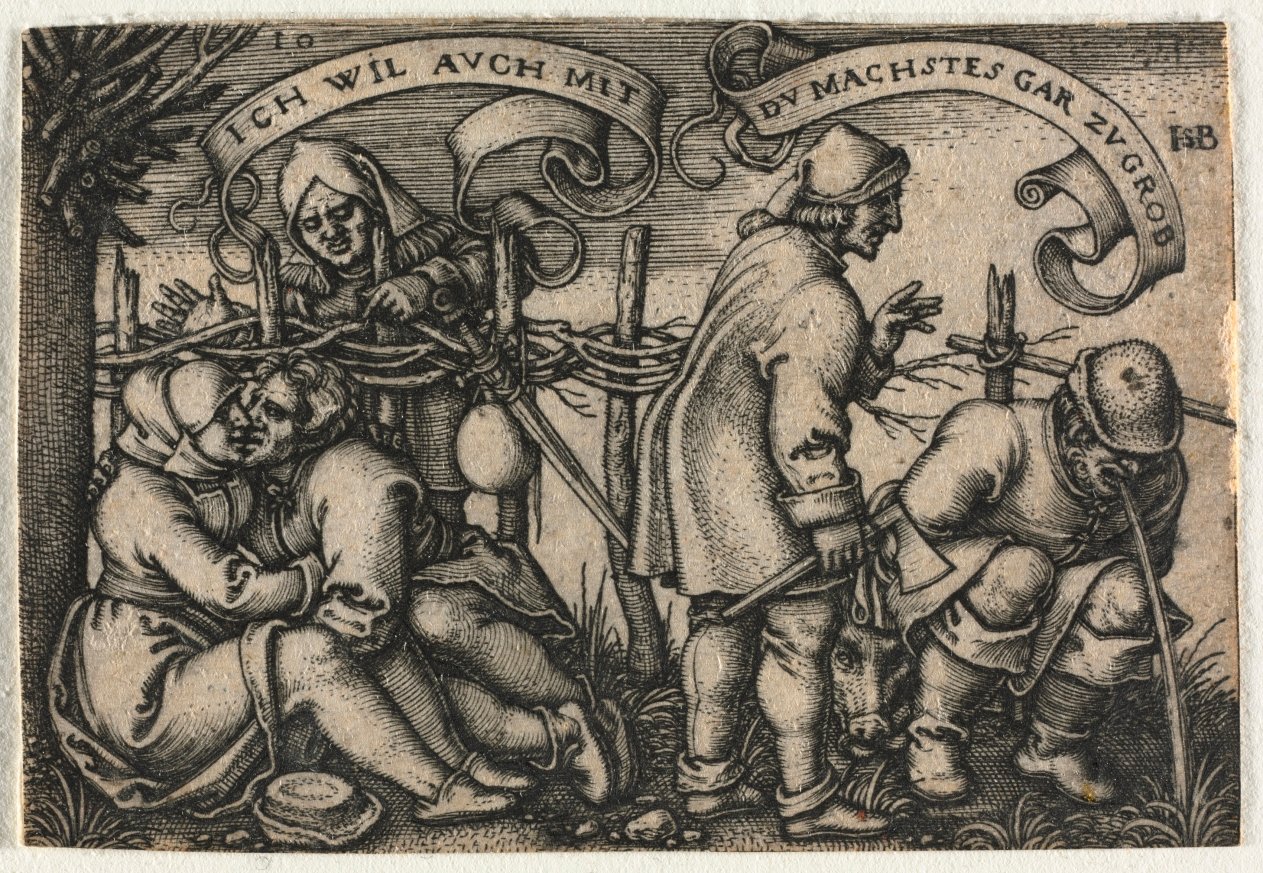
What was the droit du seigneur supposed to be?
The idea is simple and nasty. A feudal lord supposedly had a legal right to sleep with the bride of any of his tenants or serfs on her wedding night. In some versions the husband could buy the right off with a payment. In others the lord simply exercised it, as a reminder of who owned whom. The French also call it droit de cuissage, a slightly cruder name.
Note the word “legal”. Nobody doubts that powerful men in the Middle Ages abused women who depended on them. That happened then and still happens now. What the legend claims is something different: that the abuse was an official, recognised privilege written into the rules of lordship. That is the part historians find so hard to pin down.
Older than the Middle Ages
The story is far older than any medieval castle. In the Epic of Gilgamesh, one of the oldest pieces of literature in the world, the king of Uruk is accused of going to brides before their husbands do, and the people of the city complain to the gods about it. Around 430 BC the Greek historian Herodotus told a similar tale about a tribe in Libya, where brides were supposedly brought to the king first. In both cases it is a story about tyranny: what a ruler gets up to when nobody can stop him.
In other words, the first-night story was a handy way to show that a ruler had gone too far, long before anyone applied it to medieval lords.
The Scottish story that started a lot of trouble
The most influential “medieval” version comes from Scotland, and it was written in 1527. The historian Hector Boece claimed that an ancient king called Evenus III had passed a law letting lords sleep with the brides of their tenants. Centuries later, he said, King Malcolm III abolished it at the request of his saintly wife, Queen Margaret, and replaced it with a payment.
There are a couple of snags. King Evenus III almost certainly never existed; he belongs to a long list of legendary early kings that Boece’s history inherited, embroidered or simply invented. And the payment he mentions was real, but it had nothing to do with a bride’s wedding night.
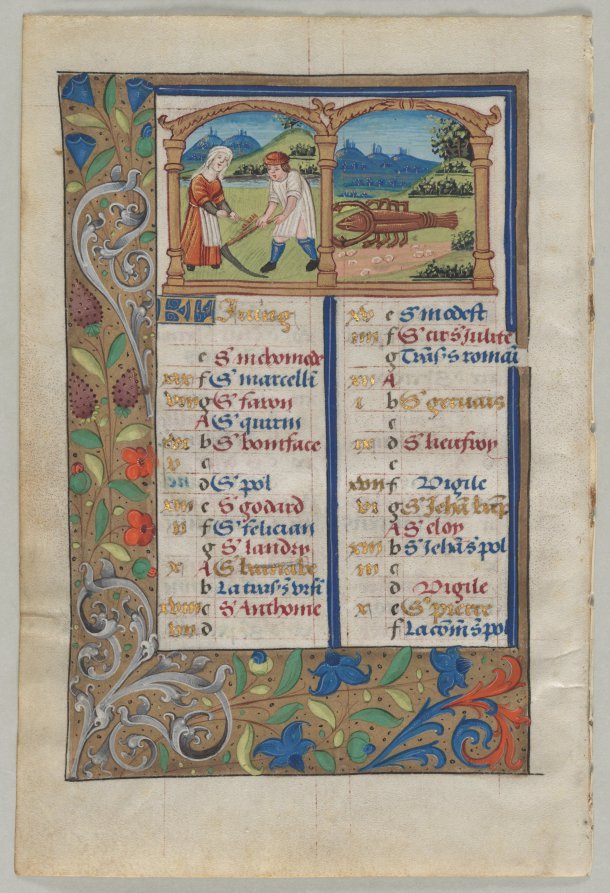
The real fee: merchet
In medieval England and Scotland, unfree peasants often had to pay their lord a fee called merchet when they married, most often when a daughter did. It was one of the irritating dues that came with serfdom, along with others you can read about in what life was like for a medieval serf. In France a similar charge, formariage, could apply when a serf married someone from outside the lord’s estate. For how weddings really worked, from betrothal to vows at the church door, read about medieval marriage.
Why would a lord care who a peasant girl married? Probably because serfs were valuable. If she married a man from another manor, her labour and her future children could leave his land, and the fee was his compensation. Merchet was about money and manpower. Later writers, already convinced the lords had once claimed something darker, read these marriage fees as the price a husband paid to buy his bride back. No medieval record of merchet itself explains it that way; the link was made by later writers. It is a bit like reading a parking fine and concluding that someone used to own your car.
The closest thing to evidence: Catalonia, 1486
Defenders of the droit du seigneur usually point to one document. In 1486 King Ferdinand II of Aragon issued a ruling known as the Sentencia Arbitral de Guadalupe, which ended a long and violent conflict between Catalan peasants and their lords. Among the “bad customs” it banned, it said that lords could not sleep with a peasant’s wife on the first night of the marriage, or step over the bed where she lay as a sign of their lordship.
This is interesting, and it is taken seriously. It shows that some Catalan lords were accused of claiming something like this, or at least of performing a humiliating ritual over the marriage bed. But it is a ban on abuses that peasants complained about, not proof of a long-standing legal right across Europe. Historians also point out that a peace settlement listing grievances tells you what one side said, not what the law had ever allowed. In an earlier draft, the Catalan lords even denied that any of their number had ever claimed it.
Voltaire, Figaro and the Enlightenment
The legend really took off in the 1700s, when writers attacking the old order found it irresistible. Voltaire wrote a comedy, Le Droit du Seigneur (written in 1762 but only staged in 1779), which gave the custom the name we still use, and he mocked it elsewhere as proof of how barbaric feudalism had been. Then came Beaumarchais. In his hit play The Marriage of Figaro, first performed in 1784, the Count has officially abolished the right of the first night but quietly hopes to use it on Susanna, his valet’s fiancée, anyway. Mozart turned the play into an opera in 1786, and the plot has been entertaining audiences ever since.
For these writers, the droit du seigneur was the perfect symbol: everything that was unfair about lords and privilege, wrapped up in one shocking image. Whether it had actually existed hardly mattered. The French Revolution began sweeping away the feudal dues in 1789, and the legend carried on without them.
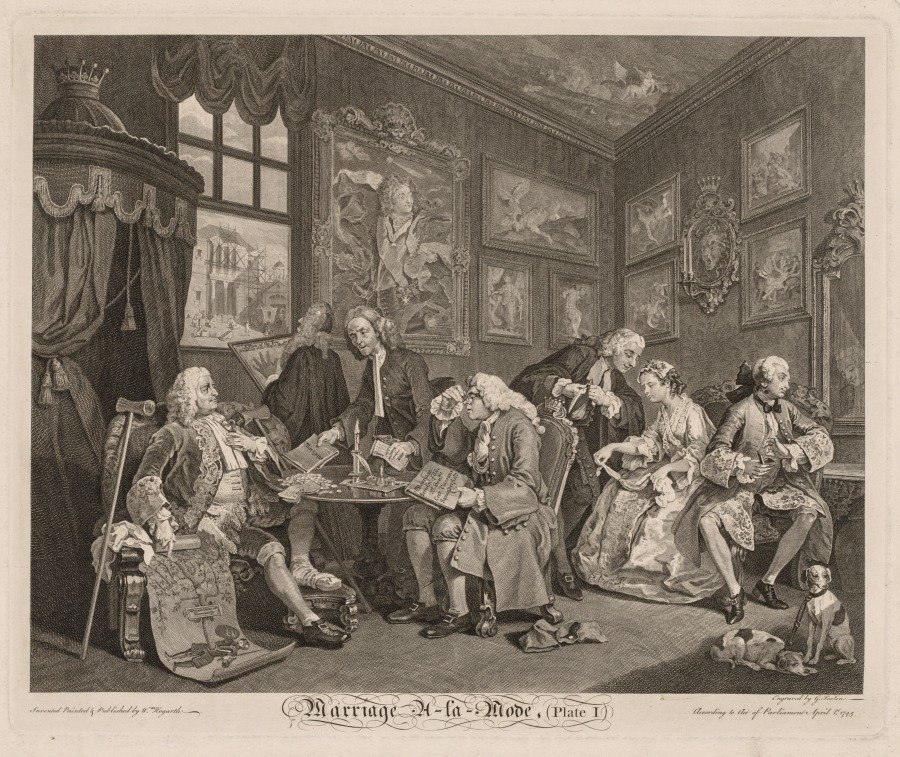
Historians go looking
In the 1800s, scholars began to argue about it in earnest. Some insisted that a right so widely talked about must have existed somewhere. Others combed through charters, court records and estate accounts and found nothing that clearly showed a lord legally exercising it. The debate became tangled up with politics and religion, which did not help anyone think clearly.
The most thorough modern study came in 1995, when the French historian Alain Boureau published a book on what he called the “fabrication of a myth”. Boureau traced the droit du seigneur through texts from the 1200s onwards and found plenty of rumours, accusations, satire and jokes, but no convincing proof that it had ever been an actual legal right. Encyclopaedia Britannica takes the same cautious line: the evidence for the custom in medieval Europe is indirect at best.
From Braveheart to Westeros
Hollywood loves it, of course. In Braveheart (1995), King Edward I of England introduces prima nocte in Scotland so that English nobles can claim Scottish brides. It is one of the film’s most memorable plot points and one of its least historical; there is no record of Edward I doing anything of the sort. George R. R. Martin borrowed the idea too: in A Song of Ice and Fire, the world of Game of Thrones, a lord’s right to the “first night” is said to have been abolished by a king at his queen’s urging, which sounds remarkably like Hector Boece’s story about Malcolm and Margaret.
So, did the droit du seigneur ever exist? As a law or an accepted custom of medieval lordship, almost certainly not. As an accusation, a joke, a grievance and a powerful story about tyranny, it has been around for nearly four thousand years. If you enjoy taking apart this kind of legend, you’ll like the medieval myths historians keep debunking, and for the real rules that bound lords and peasants together, see what feudalism actually was.
Frequently asked questions
What does “droit du seigneur” mean in English?
Literally “the lord’s right”. It refers to a lord’s supposed claim on a tenant’s bride on her wedding night, also called ius primae noctis, “the right of the first night”.
Is there any law that mentions it?
The best-known text is a Catalan ruling of 1486, which banned lords from claiming the bride’s first night. It shows some lords were accused of the practice, but it is not proof of a general medieval right.
Was prima nocte real in Scotland, as Braveheart shows?
No. The film’s version, introduced by Edward I, is invented. The Scottish legend comes from Hector Boece’s history of 1527 and involves a king who probably never lived.
What was merchet?
A fee that unfree peasants paid their lord on marriage, most often when a daughter married. It was most likely about the lord losing a worker and her future children to another estate, not about the bride herself.
Sources
- Wikipedia, Droit du seigneur
- Encyclopaedia Britannica, Droit du seigneur
- Wikipedia, Merchet
- Wikipedia, Sentencia Arbitral de Guadalupe
- Alain Boureau, The Lord’s First Night: The Myth of the Droit de Cuissage (University of Chicago Press, 1998)