
Medieval Myths: 8 Things People Get Wrong About the Middle Ages
Ask a room full of people what they know about the Middle Ages and the same answers come back. Everyone thought the world was flat. Vikings wore horns. Knights were winched onto their horses, and nobody ever took a bath. Almost none of it is true. Most medieval myths are far younger than the period they describe, and a surprising number were invented in the nineteenth century by novelists, painters and opera designers. Here are eight of the most stubborn, with what the evidence really says.
Jump to a section:

1. People thought the Earth was flat
This is the most famous mistake of all. Greek thinkers such as Pythagoras and Aristotle had already worked out that the planet is a globe, and that knowledge was never lost. History.com sums it up bluntly: after about 250 BC, nobody in the West with any schooling took a flat Earth seriously. Medieval scholars, most of them churchmen, inherited the idea and taught it.
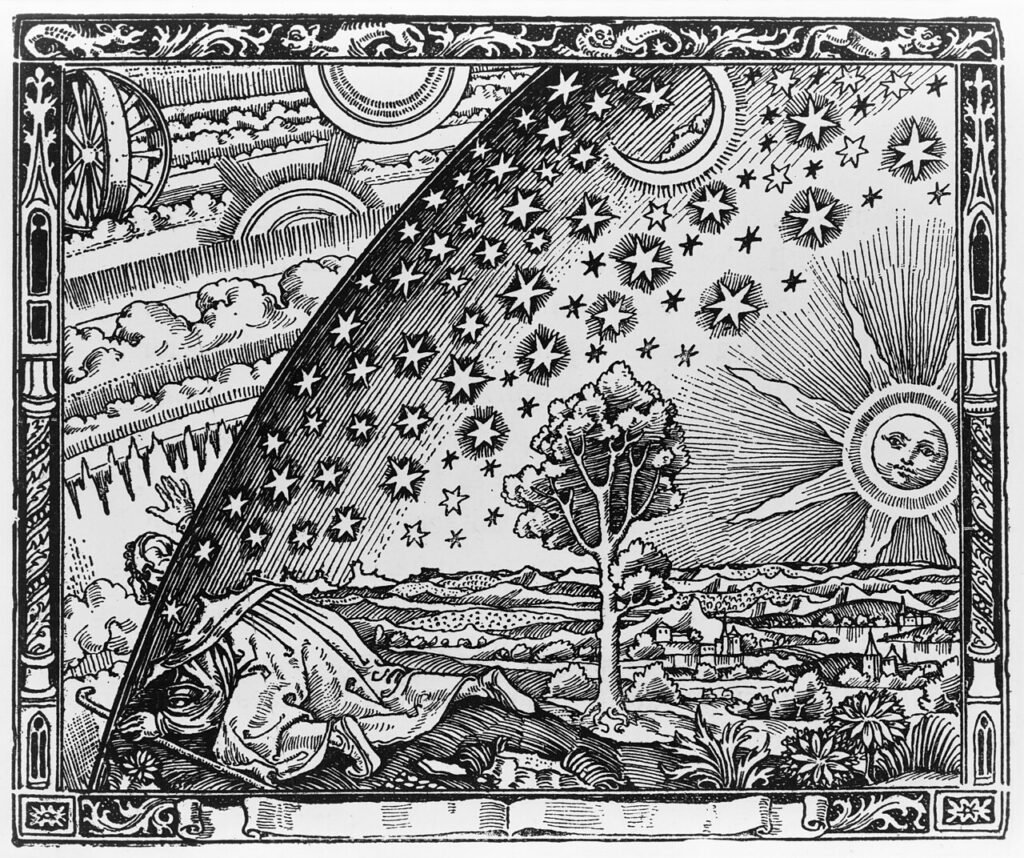
So where does the story come from? Largely from one book. In 1828 the American writer Washington Irving published a biography of Christopher Columbus and spiced it with invented scenes, including learned Spaniards insisting the world could not be round. In reality the argument was about distance. Columbus believed the globe was much smaller than it is, and his critics, who thought Asia was too far to reach by sailing west, were right.
2. Vikings wore horned helmets
The National Museum of Denmark is clear on this point. Just a single Viking helmet has come down to us in one piece, and it has no horns. Fragments of others have turned up, but helmets were not normally buried with their owners, so finds are rare.
The horns arrived about a thousand years late. Scandinavian painters of the 1800s began adding them to their pictures of raiders. Then, in the 1870s, the designer Carl Emil Doepler put horned helmets on the cast of Richard Wagner’s opera cycle Der Ring des Nibelungen. The look stuck, and cartoons and football fans have kept it alive ever since.
3. Armour was so heavy that knights needed cranes
Curators at the Metropolitan Museum of Art in New York hear this one constantly. Their answer is that a complete armour made for battle normally weighed 20 to 25 kilograms, or 45 to 55 pounds. A modern firefighter wearing breathing apparatus carries more, and so have most soldiers since the 1800s. Because the load was spread over the whole body, a fit man could run, climb and get on a horse unaided. Tests with real fifteenth- and sixteenth-century armour have confirmed it.
As for the crane, the Met traces the idea to a joke from the late nineteenth century. It became fixed in the public mind in 1944, when Laurence Olivier used the image in his film of Henry V. Armour was not reserved for knights either. Ordinary foot soldiers wore it too, on the battlefield and in the slow, dangerous work of attacking and defending castles.
4. Nobody washed
Mud-covered peasants are a film director’s shortcut, not a historical fact. Washing the face and hands on getting up was an ordinary habit, and hands were rinsed again around mealtimes, which mattered when people ate from shared dishes. Many towns had public bathhouses. Standards were not ours, since a full bath meant heating a great deal of water, but the idea that people enjoyed being filthy has no basis. There is more on soap, teeth and toilets in our article on how ordinary people lived.
5. Husbands locked their wives in chastity belts
The tale says that a crusader would fasten an iron belt around his wife before leaving for the Holy Land. No such object from the Middle Ages has ever been found. The earliest known picture of one is a drawing in a German book on military machines from 1405, and scholars suspect it was meant as a joke.
The belts shown in museums tell the same story. The British Museum has said of its own collection that most surviving examples were probably made in the 1700s and 1800s, as curiosities or as crude humour. Albrecht Classen, a scholar who has studied the subject in depth, points out that the belt appears often in literature and satire but hardly ever in records of real life.
6. A lord could claim a bride’s wedding night
The so-called droit du seigneur, or “right of the first night”, supposedly allowed a lord to sleep with any tenant’s bride. It makes a strong scene in a film. Britannica notes, however, that all the evidence for it in Europe is indirect. What the records actually show is tenants paying fees connected with marriage. A payment is not proof that anything worse was ever demanded, and no reliable case of the “right” being used has come to light. Power in this period had real limits, as the story of medieval kings and their barons shows.
7. The Middle Ages were the great age of witch burning
The witch hunts belong mainly to a later era. Dr Jonathan Durrant, a historian at the University of South Wales, explains that the Church doubted witchcraft was even real until the 1400s, and that the persecution was at its fiercest from roughly 1560 until 1630. That is the age of Shakespeare and Galileo, not of the crusades.
The numbers are grim enough without exaggeration. Britannica estimates that close to 100,000 people were put on trial between the fifteenth and eighteenth centuries, and that somewhere between 40,000 and 60,000 of them were put to death, most of them women. Burning was not universal. In England, convicted witches were hanged. For the beliefs people held before the panic began, see our piece on religion in everyday medieval life.
8. It was a “Dark Age” when nothing was learned
The phrase “Dark Ages” was once used for the centuries after the western Roman empire fell, roughly 500 to 1000. Britannica observes that historians now rarely use it, because it passes judgment on a whole era instead of describing it.

The record does not support the gloomy label for the period as a whole. Europe’s first universities date from these centuries: Bologna counts its history from 1088, and teaching was under way at Oxford by 1096. Builders raised Chartres Cathedral in the decades after 1194. Mechanical clocks appeared, and one made around 1386 still ticks at Salisbury. The manuscripts, glass and sculpture of the time, described in our overview of medieval art, are hardly the work of a society that had stopped thinking.
Why medieval myths last so long
Look at the dates and a pattern appears. The flat Earth story took off in 1828. The horned helmet comes from paintings and an opera of the 1800s. The crane is a Victorian joke, and most chastity belts are Georgian or Victorian fakes. The same goes for the iron maiden, a “medieval” torture device that first went on show in the early 1800s. The nineteenth century loved the Middle Ages, but it loved them as a stage set, and it filled the gaps with whatever was most dramatic. Some legends are far older, of course: the question of whether King Arthur was real has kept historians busy for centuries.
There was also a motive. Calling the past ignorant, dirty and cruel makes the present look better. Each generation since the Renaissance has enjoyed that comparison, and films and television have simply inherited it. That is the trouble with medieval myths: they tell us more about the people who repeat them than about the people they describe. The real period was harsh in many ways. It just was not stupid. Nor was it a world where everyone died at 30, as the real story of medieval life expectancy shows.
Frequently asked questions
Did Columbus prove the Earth was round?
No. Educated Europeans already knew it. Columbus’s mistake was to think the globe was small enough for Asia to be a short voyage west of Spain.
How much did a suit of armour weigh?
According to the Metropolitan Museum of Art, a full armour for battle usually weighed between 20 and 25 kilograms, with the helmet accounting for 2 to 4 kilograms of that.
Were witches burned in the Middle Ages?
Trials did begin in the fifteenth century, at the very end of the period, but the worst decades came much later, around 1560 to 1630, well into early modern times.
Why do people call the Middle Ages the Dark Ages?
The name reflects an old belief that learning collapsed after Rome fell. Historians have largely dropped it because it judges the period unfairly.
Sources
- History.com, Christopher Columbus Never Set Out to Prove the Earth Was Round
- JSTOR Daily, A Natural History of Flat-Earthers
- National Museum of Denmark, Helmets (The Viking Age)
- History.com, Did Vikings Really Wear Horned Helmets?
- The Metropolitan Museum of Art, Arms and Armor: Common Misconceptions and Frequently Asked Questions
- World History Encyclopedia, Medieval Hygiene
- Atlas Obscura, Everything You’ve Heard About Chastity Belts Is a Lie
- Encyclopaedia Britannica, Droit du seigneur
- University of South Wales, Five witchcraft myths debunked by an expert
- Encyclopaedia Britannica, Witch trial
- Encyclopaedia Britannica, Dark Ages
- UNESCO World Heritage Centre, Chartres Cathedral
- Salisbury Cathedral, What to see