
How Did Medieval People Celebrate New Year?
Today New Year means fireworks, a countdown and a glass of champagne at midnight. A medieval New Year looked very different. There were no fireworks and no countdown, and in England the official year did not even begin on 1 January. Yet medieval people still celebrated the start of January with feasts, songs and, above all, presents. In fact, for many of them New Year’s Day was a much bigger day for gifts than Christmas. Here is how people celebrated a medieval New Year, from royal palaces to monasteries.
Jump to a section:
When did the medieval New Year begin?
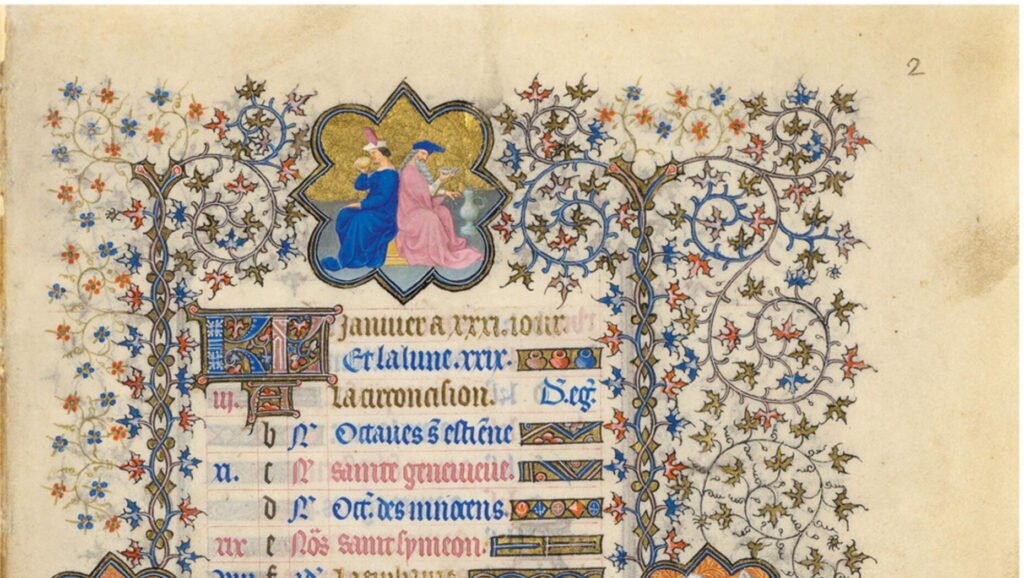
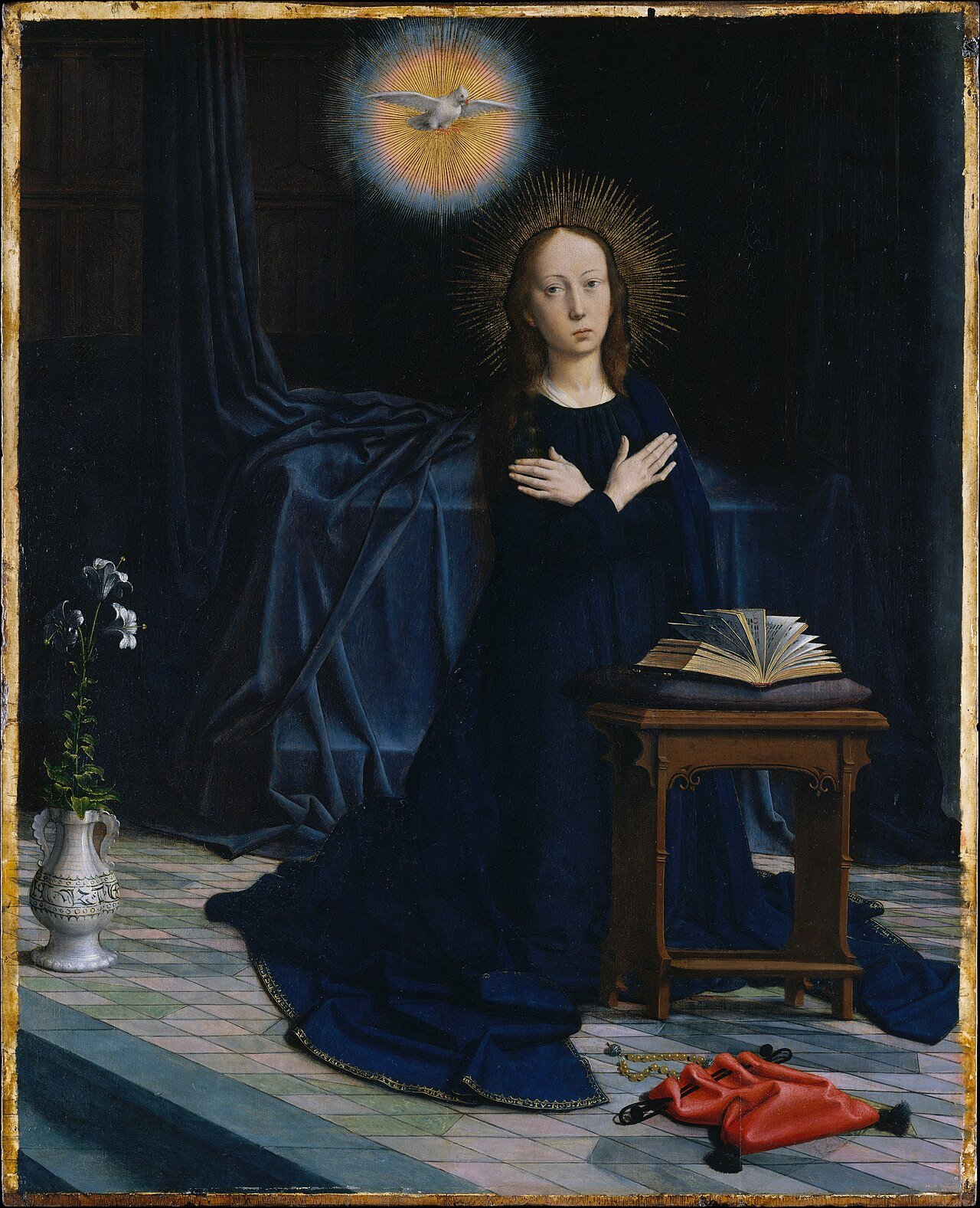
It depends on where and when you lived. The Romans started their year on 1 January, the Kalends of January, when new officials took office, and the month was named after Janus, the two-faced god of beginnings. But in medieval England things got complicated. According to the historian Matt Lewis, writing for History Hit, from around the middle of the 12th century until 1752 the English year officially began on 25 March, Lady Day, the feast of the Annunciation. The University of Nottingham explains that the civil, church and legal year started on Lady Day, and that 1752 was the first year in England and Wales to begin on 1 January.
This is why old English documents can be so confusing. A letter written on 20 February 1600 was written, for us, in 1601. Historians today often write such dates with both years, like “1600/1”. Still, 1 January was never forgotten. People called it New Year’s Day and celebrated it, even if the lawyers and clerks counted the year from March.
New Year’s Day was a church feast
For the Church, 1 January was the Feast of the Circumcision of Christ, eight days after Christmas. As Kathryn Walton explains on Medievalists.net, it was on this day that people gave gifts to friends, family, employers and acquaintances, to show their respect and to wish them luck for the coming year. The day also fell in the middle of the Twelve Days of Christmas, the long holiday that ran from 25 December to Epiphany. So the medieval New Year was not a separate party, but one more feast in the medieval Christmas season.
Medieval New Year gifts were bigger than Christmas presents
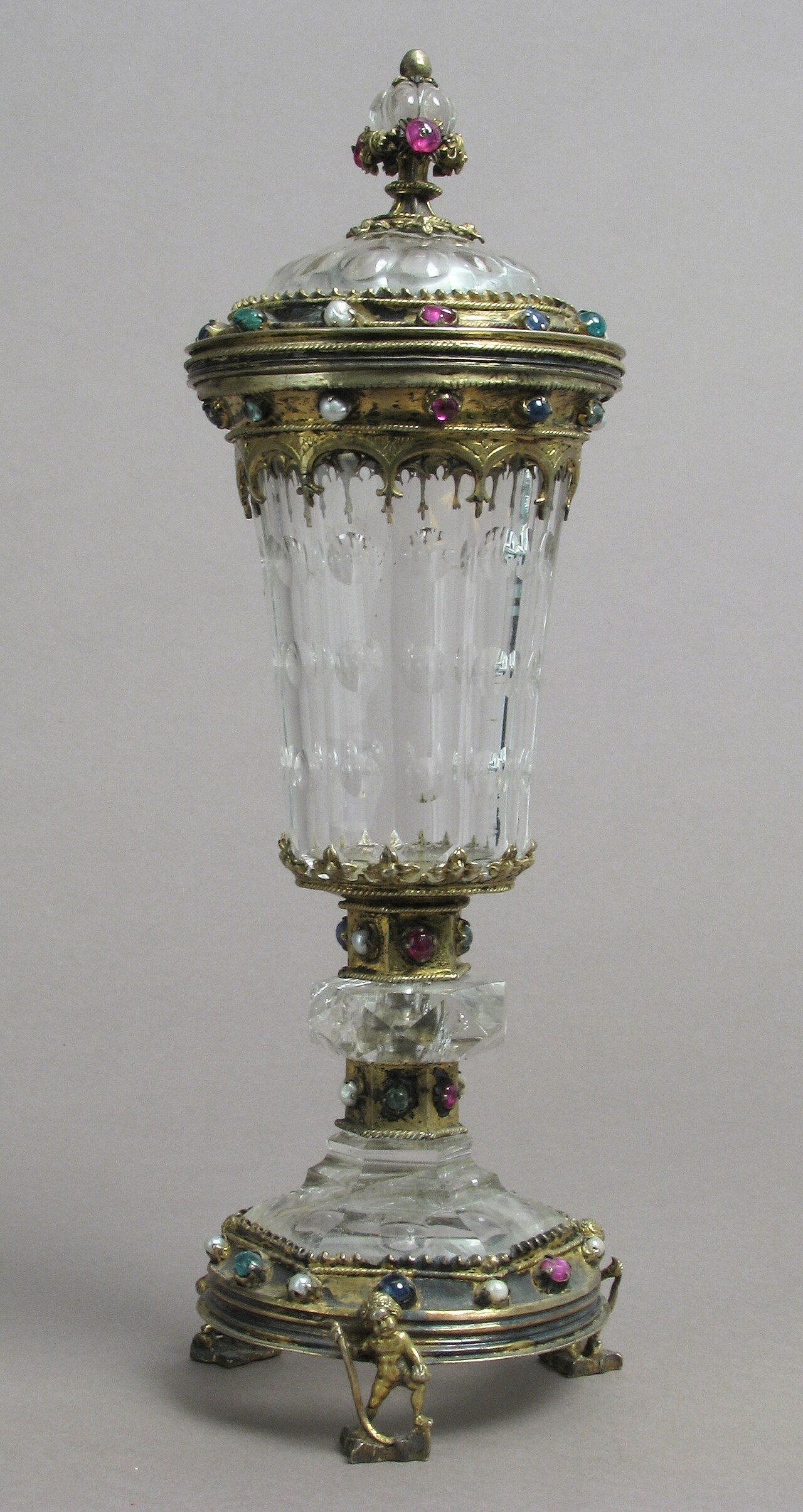
According to History Hit, in the medieval period 1 January was a bigger day for gifts than Christmas Day. The day for giving presents to children was the feast of Saint Nicholas on 6 December. On New Year’s Day, however, everyone exchanged gifts. A study of the treasure of Richard II, published by the Institute of Historical Research, states that gifts were regularly exchanged on 1 January, and compares them to our Christmas presents. Some gold cups in the royal treasure were even inscribed with wishes for a happy new year.
Royal New Year gifts between medieval kings and queens could be breathtaking. For New Year 1405, Queen Isabeau of Bavaria gave her husband, King Charles VI of France, the Goldenes Rössl, the “Little Golden Horse”, a precious jewel that the Richard II study gives as an example of a New Year’s gift. In 1399, according to the same Richard II study, Charles VI rewarded the English knight who brought him Richard’s New Year gifts with a covered gold cup and a gold collar.
Not all gifts were gold: capons, rabbits and peacocks
Most people could not give jewels, but they still gave something. The historian C. M. Woolgar, quoted by Walton, found a list from 1477 of New Year’s gifts given to the prior of a cathedral priory, the head of a community of monks, “mainly capons, with some peafowl, rabbits and non-foodstuffs.” Food was a common gift for a lord or an important churchman, because it could be shared at the feast. A fat capon from a tenant was a way to say thank you and to stay on good terms for another year, a little bit like a box of chocolates for your boss today. You can read more about what medieval peasants ate in a normal year.
The Duke of Berry’s New Year feast
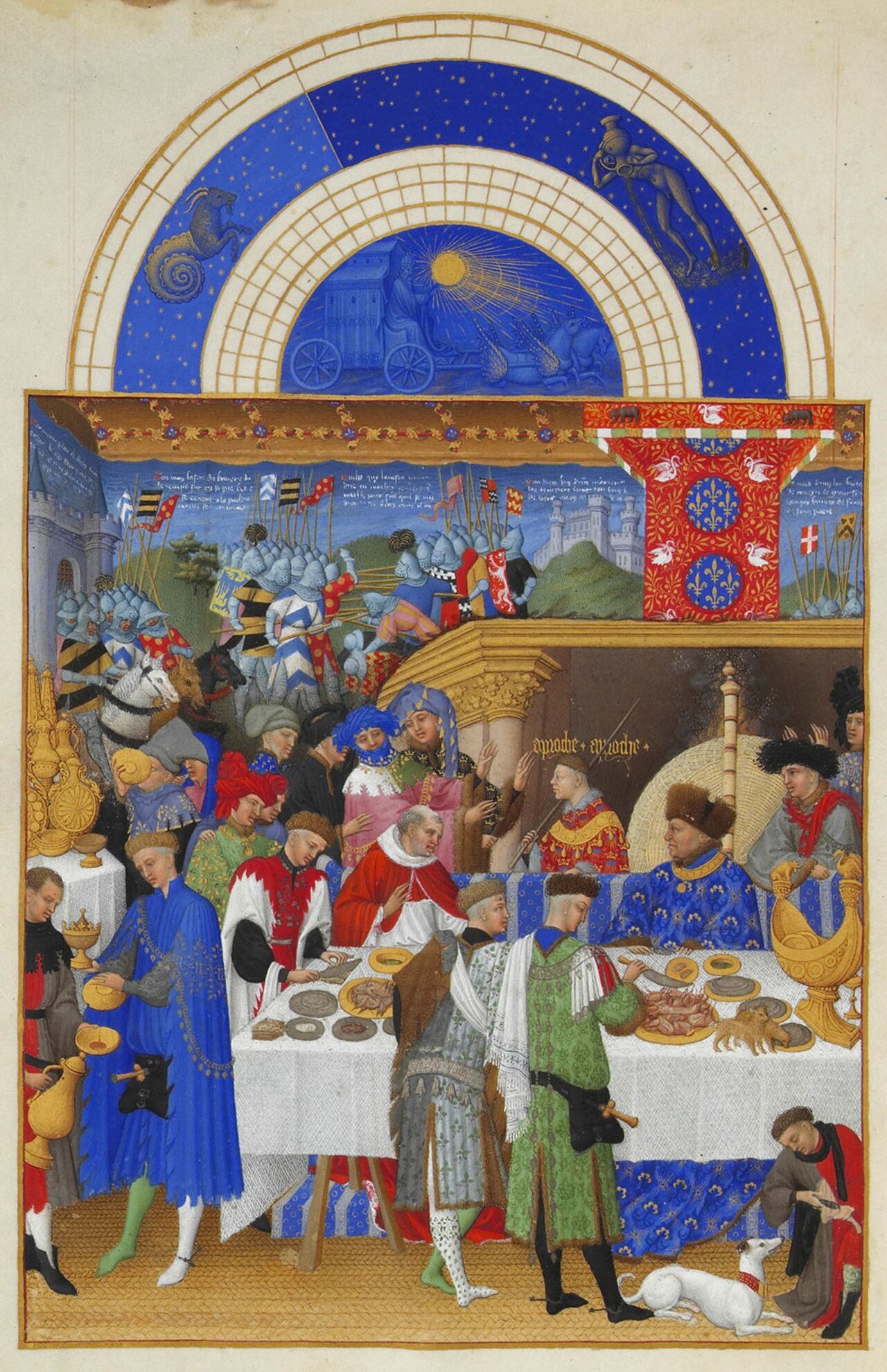
The most famous picture of a medieval New Year is the January page of the Très Riches Heures, the luxurious prayer book made for Jean, Duke of Berry, by the Limbourg brothers. The duke sits at a table full of food, in front of a huge tapestry, with a golden ship-shaped table ornament beside him. Above a servant’s head are the words “Aproche, aproche”, inviting guests to come closer. According to Catherine A. Fernandez of the Index of Medieval Art, the French court celebrated the new year with the étrennes, a gift-giving ritual with roots in Roman times. The page does not show the gifts themselves, but the rich metalwork and clothes show how lavish these celebrations were.
Why the Church disliked some New Year customs
Not every New Year tradition pleased the medieval Church. The old Roman celebrations of the Kalends of January survived for centuries after the empire became Christian. In the 6th century, Bishop Caesarius of Arles in southern Gaul asked his listeners to rebuke anyone who still practised “that most sordid and disgraceful act of masquerading as old hags and stags” on New Year’s Day. For Christian preachers, these noisy pagan games had no place in a Christian feast.
Twelfth Night and the end of the medieval New Year
The celebrations did not stop on 1 January. Twelfth Night, on 5 January, closed the Twelve Days of Christmas and was another day for gifts and parties. According to History Hit, people went wassailing, going from door to door with warm spiced drinks. The festive season only really ended on 2 February, Candlemas, when the last decorations came down. For people living through a cold medieval winter, these weeks of feasting and light must have been very welcome.
Would I enjoy a medieval New Year?
Honestly, I think I would. I would miss the fireworks, but a medieval New Year inside a whole season of feasts from Christmas to Candlemas sounds much better than one night of celebration and back to work on 2 January. The only thing that worries me is the gift. If I had been a peasant, I would have had to bring a capon to my lord, and I am not sure I would know how to catch one.
So, how did medieval people celebrate New Year?
With feasts, wishes of good luck and, most of all, gifts. A medieval New Year fell in the middle of the Twelve Days of Christmas, on the Feast of the Circumcision, even though in England the official year started on 25 March. Kings gave each other golden treasures, tenants brought their lords capons and rabbits, and the Duke of Berry sat at a table covered in gold. The fireworks came much later, but the tradition of New Year presents is one the Middle Ages would recognise.
Frequently asked questions
Did medieval people celebrate New Year on 1 January?
Yes. New Year’s Day on 1 January was celebrated with gifts and feasts, even though in England the official year began on 25 March from around the 12th century until 1752.
Why did the year start on 25 March in England?
Because 25 March was Lady Day, the feast of the Annunciation, when the angel told Mary she would bear a child, exactly nine months before Christmas.
Did medieval people give gifts at New Year or at Christmas?
Mostly at New Year. According to History Hit, 1 January was a bigger day for gifts than Christmas Day in the medieval period.
What gifts did medieval people give at New Year?
Kings and nobles gave jewels, gold cups and precious objects. Ordinary people and tenants usually gave food, such as capons, rabbits or peafowl.
When did England start the year on 1 January?
In 1752. It was the first year in England and Wales in which the civil and legal year began on 1 January.
Sources
- Matt Lewis, History Hit, How Did the Medieval World Celebrate New Year? (2023)
- University of Nottingham, Manuscripts and Special Collections, Historical Year and the Civil Year
- Kathryn Walton, Medievalists.net, Holiday Gifts in the Middle Ages
- Institute of Historical Research, The Treasure of Richard II: Donors
- Catherine A. Fernandez, Index of Medieval Art, Princeton University, New Year (2020)
- SUNY Oneonta, The January page of the Très Riches Heures
- Roger Pearse, Caesarius of Arles, Sermon 13