
Why Do Babies in Medieval Paintings Look Like Old Men?
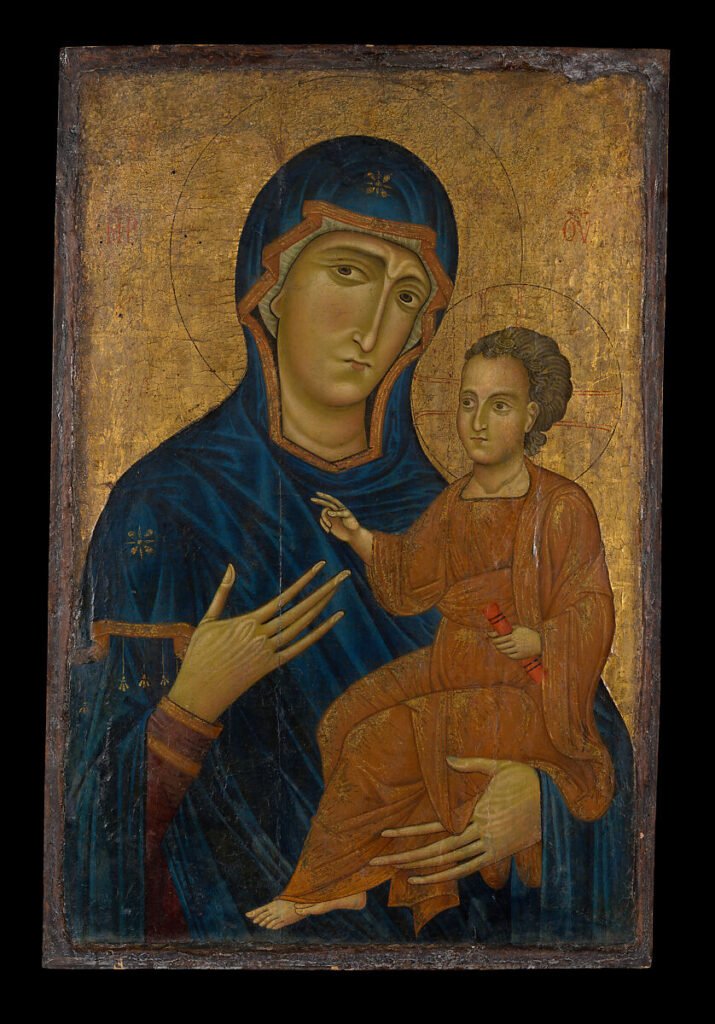
Walk through the medieval rooms of any big museum and sooner or later you will meet him: a baby with a receding hairline, a serious frown, the body of a small bodybuilder and the face of a tired middle-aged man. He sits on his mother’s lap, raises two fingers like a bishop and looks at you as if you owe him money. Babies in medieval paintings are so strange that whole social media accounts are dedicated to them, such as UglyArtBabies on X. But medieval artists were not bad at painting children. They painted them this way on purpose, and the reasons are more interesting than the jokes.
Jump to a section:
Almost every baby was the same baby
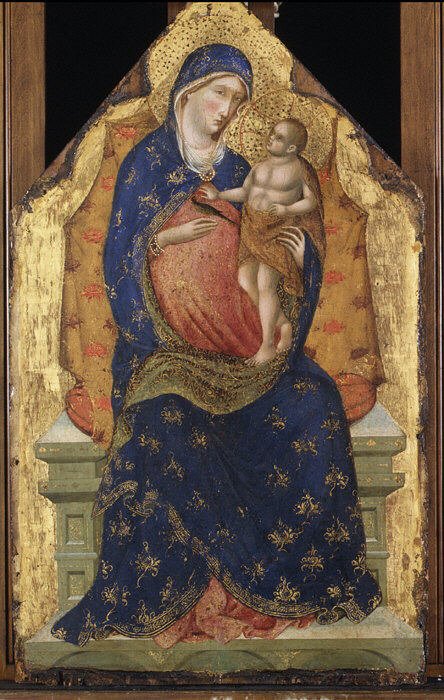
The first thing to know is that almost all babies in medieval paintings are one baby: Jesus. As Phil Edwards explained in a Vox video in 2015, most of these strange infants are the Christ Child sitting with the Virgin Mary. Paintings of ordinary children were rare, because most art was made for churches and religious patrons. As Mental Floss notes, it was the medieval Church that commissioned most images of babies and children in the Middle Ages. So the way artists painted the baby Jesus became the model for every child in art.
Reason 1: Jesus was Wisdom in a small body
For medieval Christians, the baby on Mary’s lap was not just a baby. He was God, and God had to look wise and powerful even at the age of one. The Metropolitan Museum of Art explains this with a French sculpture of the Virgin and Child from 1175–1200, a type known as the Throne of Wisdom. In the museum’s words, “appearing like a miniature adult, Christ, as the Son of God, is Wisdom incarnate.” The Child once held a Bible in his hand, a sign of the divine wisdom he carried. A chubby, giggling baby could not show that idea, but a serious little man could.
Reason 2: the homunculus, a little man from birth
The second reason is an old idea called the homunculus, Latin for “little man.” According to the art historian Matthew Averett of Creighton University, interviewed by Vox, many people believed that Jesus was born “perfectly formed and unchanged”. He did not grow into a man the way other babies did, because he was already complete. If the baby Jesus was already a perfect man, then the most logical way to paint him was as a man, only smaller. This is why so many babies in medieval paintings have adult proportions, muscular bodies and grown-up faces, even when they sit in their mother’s arms.
Reason 3: they copied Byzantine icons
Western painters did not invent the grown-up baby alone. They followed models from Byzantium, the Christian empire in the East that later split from the Western Church in the schism of 1054, where holy images called icons followed strict rules. Helen C. Evans, curator emerita at the Met, describes one of the most famous types, the Hodegetria, “she who shows the way”. In it the Virgin points to her son, who sits on her arm, blesses with his right hand and holds the Gospels as a scroll in his left. Evans notes that his pose echoes images of the adult Christ Pantokrator, ruler of all. A baby who blesses the world and holds the Gospels simply has to look like a grown man.
Reason 4: realism was not the goal
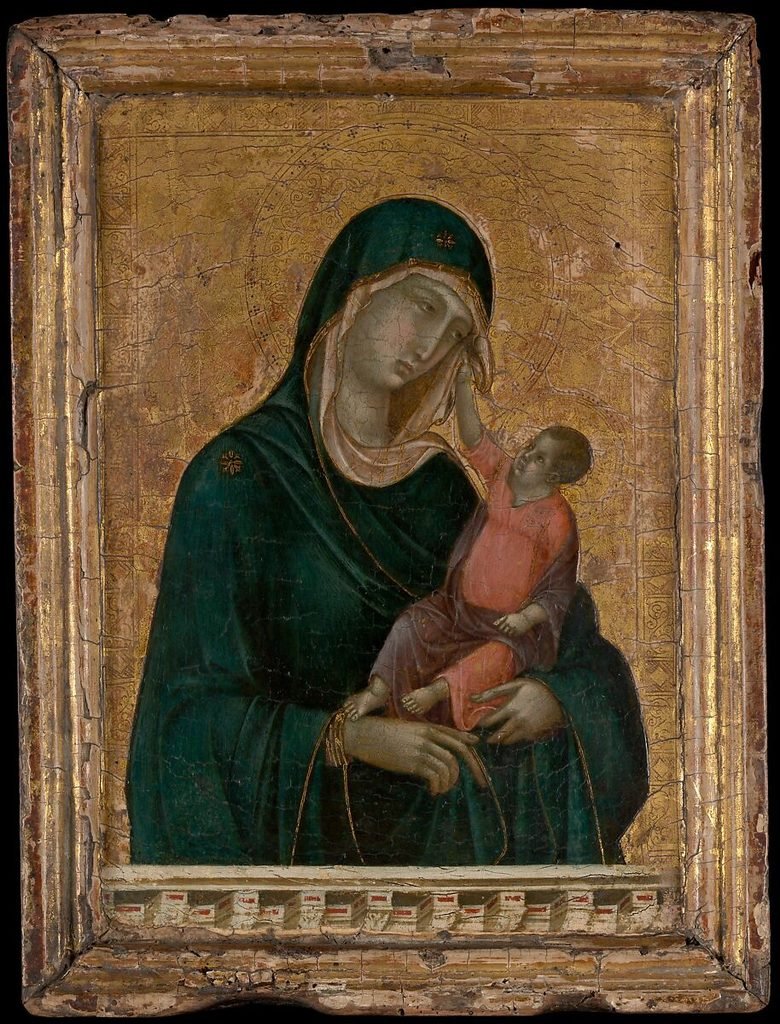
We often judge old paintings by how real they look, but medieval artists had other priorities. Averett told Vox that medieval artists showed a “lack of interest in naturalism, and they veered more toward expressionistic conventions.” In medieval art, a painting was meant to show who someone was and what he meant, not exactly what he looked like. That is also why medieval lions look like grumpy cats and why monks drew killer rabbits in the margins of manuscripts. The artists could observe the world perfectly well. They just did not think a holy picture needed to copy it.
Reason 5: did medieval people see children as small adults?
In the 1960s the French historian Philippe Ariès argued that the Middle Ages did not really have an idea of childhood. He wrote that “medieval art until about the twelfth century did not know childhood or did not attempt to portray it.” For a long time this explained the strange babies too. Today most historians disagree, and it has become one of those popular medieval myths. Nicholas Orme, author of the leading study Medieval Children, says there is “nothing to be said for Ariès’s view”. Medieval parents played with their children, loved them and mourned them, and in an age of high child mortality they had to mourn far too many. So babies in medieval paintings look old because of religion and artistic rules, not because medieval people did not know what a baby looked like.
When did babies in medieval paintings start to look like babies?
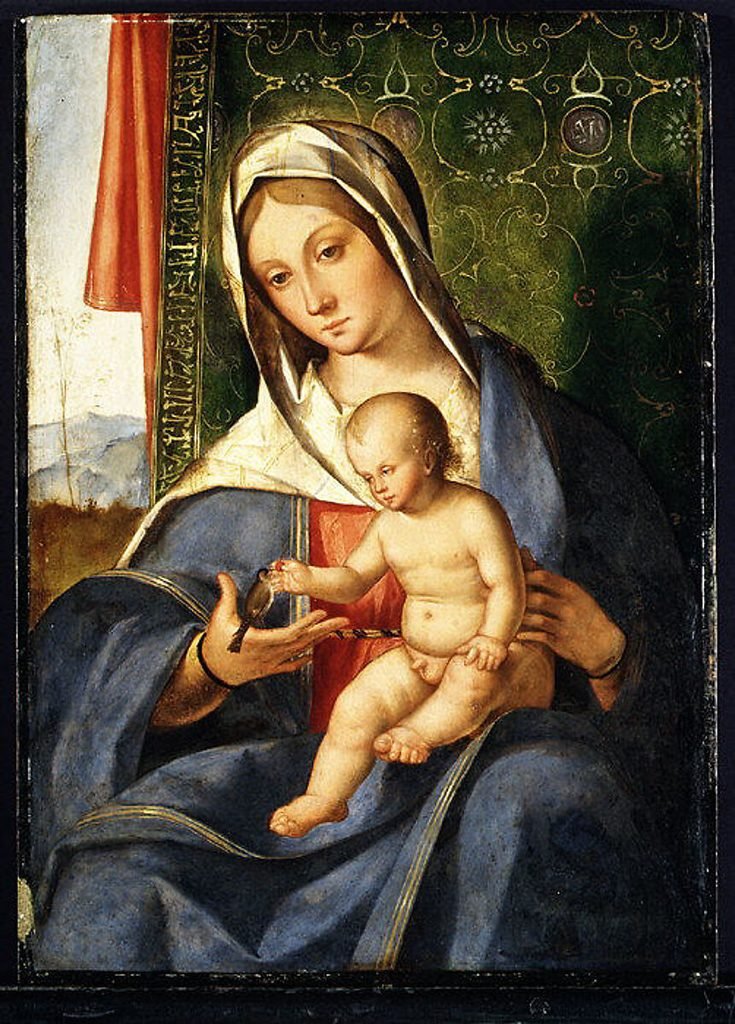
The change came with the Renaissance, which started in Italy, probably in Florence, in the 14th and 15th centuries. According to Vox, artists became more interested in realism, and rich families who were not churches began to pay for paintings. These patrons wanted their own children painted as cute, chubby babies, not as homunculi. Artists also took up the putto, a round, winged infant inspired by ancient art. The Met describes one of these Renaissance figures as having “a child’s soft, round body and mischievous expression”. Soon even the baby Jesus became a real baby, playing, reaching and smiling.
What I think about the old-looking babies
I have to admit that the first time I saw one of these paintings, I laughed. The baby looked like my neighbour. But knowing why they look this way changed how I see them. These artists were not trying to paint a cute baby. They were trying to paint God, and that is a much harder job. I still prefer the chubby Renaissance babies, but I think the serious medieval ones are more interesting.
So, why do babies in medieval paintings look like old men?
Because most of them are Jesus, and medieval artists wanted to show that he was God and Wisdom from the very first day. The idea of the homunculus, the strict models of Byzantine icons and a lack of interest in realism all pushed in the same direction. When the Renaissance brought realism and new rich patrons, the little old men finally turned into chubby babies.
Frequently asked questions
Why does baby Jesus look like an adult in medieval art?
Because artists wanted to show that he was God and divine Wisdom from birth. The Met describes the Christ Child in a 12th-century sculpture as “appearing like a miniature adult”.
What is a homunculus in medieval art?
Homunculus is Latin for “little man”. In art history it describes the idea that Jesus was born already perfectly formed, so artists painted him as a small adult.
When did babies in paintings start to look realistic?
During the Renaissance, from the 14th and 15th centuries, starting in Italy. Artists became more interested in realism, and private patrons wanted cute babies.
Did medieval people think children were small adults?
The historian Philippe Ariès thought so, but most historians today disagree. Nicholas Orme’s research shows that medieval parents loved, played with and mourned their children.
Were medieval artists bad at painting?
No. The babies in medieval paintings followed religious and artistic rules that did not value realism. The same artists could paint faces and gestures with great feeling when they wanted to.
Sources
- The Metropolitan Museum of Art, Viewpoints: Virgin and Child in Majesty
- Helen C. Evans, The Metropolitan Museum of Art, Cross-Cultural Connections in the Icon of the Virgin and Child (2023)
- The Metropolitan Museum of Art, Madonna and Child Enthroned, workshop of Paolo Veneziano (1971.115.5)
- The Metropolitan Museum of Art, Duccio, Madonna and Child (2004.442)
- The Metropolitan Museum of Art, Boccaccio Boccaccino, Madonna and Child (30.95.289)
- The Metropolitan Museum of Art, Cupid bearing a quiver and a candle socket
- Hannah Keyser, Mental Floss, Why Do Babies in Medieval Paintings Look So Scary? (with Matthew Averett’s comments to Vox)
- Angelica Frey, Artsy, I’m Obsessed with This Depiction of Infant Jesus as a Middle-Aged Man (2020)
- Samuel Hughes, Works in Progress, The myth of medieval childhood (2026)