
The Great Schism of 1054
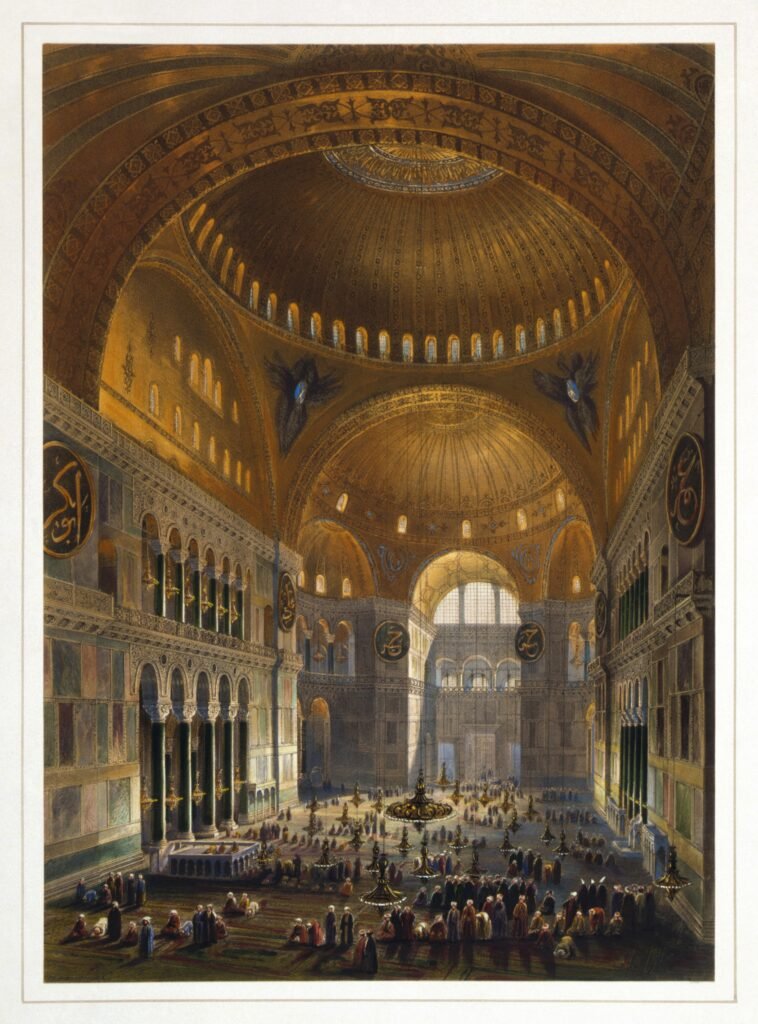
On a Saturday afternoon in July 1054, three visitors from Rome walked into the greatest church in Christendom, arrived as the service was beginning and slapped a document on the high altar. It excommunicated the most senior churchman in Constantinople. A few days later, he excommunicated them back. That angry exchange is remembered as the East-West Schism, the split that eventually divided Christianity into a Catholic West and an Orthodox East. The twist is that hardly anyone at the time thought the world had changed. Let’s find out what really happened, and why the break took centuries to become permanent.
Jump to a section:
Two halves of one Church
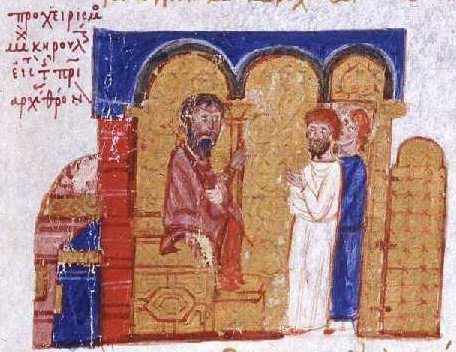
By the 11th century, the Christian world had two great centres. In the West sat the pope in Rome, who led a Church that prayed in Latin. In the East sat the patriarch of Constantinople, at the heart of the Byzantine Empire, where the services were in Greek. Officially, they belonged to one Church. In practice, they had been drifting apart for centuries.
They spoke different languages, followed different customs and answered to different rulers. In the West, reformers were pushing hard for an unmarried clergy; in the East, many parish priests had wives. The two sides even disagreed about bread. In the West, the bread used for Communion was unleavened, like a wafer. In the East, it was leavened, made with yeast. To modern ears that sounds like an argument about baking. To medieval clergy, it was a matter of getting the most sacred moment of worship right.
The big arguments
Behind the bread lay two bigger quarrels.
- Who was in charge? Popes increasingly claimed real authority over the whole Church. The East was willing to give Rome a place of honour, but not the power to give orders to everyone else. Wikipedia sums up the Eastern position as a “primacy of honor” rather than a primacy of authority.
- The filioque. This Latin word, meaning “and the Son”, had been added in the West to the Nicene Creed, the Church’s great statement of belief, to say that the Holy Spirit comes from the Father “and the Son”. Eastern theologians objected, partly to the theology and partly because the West had changed a shared creed on its own.
Add politics, rival claims over southern Italy and plenty of bruised pride, and the East-West Schism was a split waiting to happen. All it needed was the wrong people in the wrong room.
What happened in 1054?
The trouble began with a war of letters. According to Wikipedia’s account of Michael Cerularius, Archbishop Leo of Ohrid wrote in 1053 attacking Latin customs, including unleavened bread and fasting on Saturdays. Cerularius, the patriarch of Constantinople, also closed the Latin churches in the area he controlled. Pope Leo IX responded by sending three legates to Constantinople. Their leader was Cardinal Humbert of Silva Candida, a brilliant and notoriously prickly man. Sending him on a peace mission was a bit like sending a bull to rearrange a china shop.
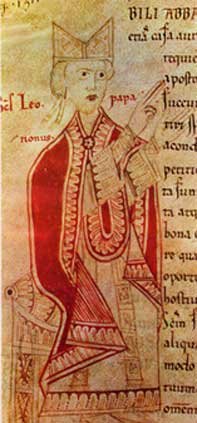
The talks went nowhere. Cerularius refused to deal with the visitors, and then their position got very awkward indeed: Pope Leo IX died on 19 April 1054, and since envoys represent the pope who sent them, the legates’ authority had arguably died with him. They carried on regardless.
On Saturday 16 July 1054, during the afternoon liturgy, the legates entered Hagia Sophia, the vast cathedral of Constantinople, and laid a document excommunicating Cerularius on the altar. The patriarch hit back. On 20 July, a synod of 21 metropolitans and bishops presided over by him condemned the legates, and the condemnation was announced in Hagia Sophia on 24 July. It’s worth noticing what didn’t happen. The pope did not excommunicate the Eastern Church, and the patriarch did not excommunicate the pope. As Wikipedia’s article on Cerularius puts it, “Only the three men were anathematised.”
Was 1054 really the start of the East-West Schism?
Not really. The date makes a tidy entry in textbooks, but the East-West Schism was a process, not a single slammed door. Life went on. Western and Eastern Christians kept trading, marrying, travelling and fighting the same enemies. When Constantinople begged Rome for soldiers against the Turks in the 1090s, the result was the start of the Crusades, not a declaration of war between churches.
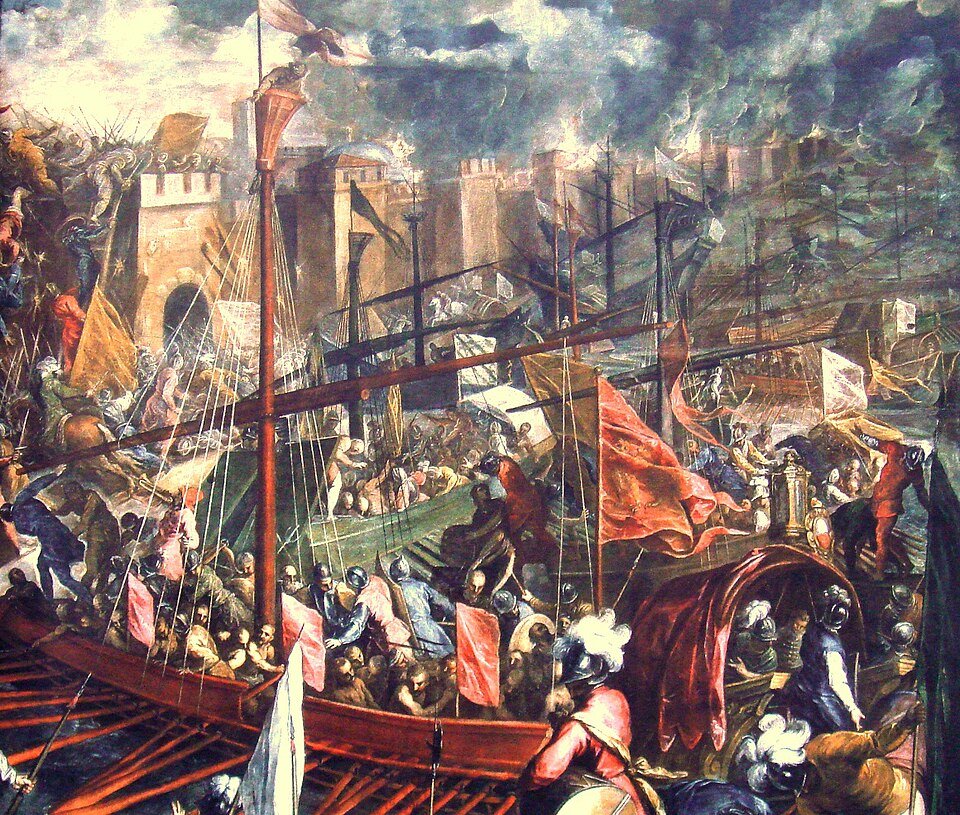
The real damage came later, and it came with blood. In April 1182 a mob in Constantinople turned on the city’s Latin merchants, mostly Genoese and Pisans. The death toll is unknown; the historian David Jacoby thinks the victims were more likely numbered in hundreds than thousands. Then, in 1204, the army of the Fourth Crusade, which was supposed to be heading for the Holy Land, attacked and looted Constantinople itself. Western knights stripped churches and installed a Latin emperor and a Latin patriarch. After that, the split was no longer a quarrel between churchmen. It was a wound felt by ordinary believers.
Attempts to patch things up
Healing the East-West Schism was attempted more than once. The most serious try came at the Council of Florence. On 6 July 1439, Pope Eugene IV and the Byzantine emperor John VIII Palaiologos signed a decree of union with the cheerful title Laetentur Caeli, “Let the heavens rejoice”. The heavens may have rejoiced, but Constantinople didn’t. The bishop Mark of Ephesus refused to accept it, and most clergy and ordinary people back home rejected the deal as a betrayal.
The union was finally proclaimed in Hagia Sophia on 12 December 1452. Less than six months later, on 29 May 1453, the Ottoman army took Constantinople, one of the great sieges of medieval siege warfare. The East-West Schism had outlived the empire that started it.
The handshake, 900 years later
The ending of this story isn’t medieval at all. In 1964, Pope Paul VI and Patriarch Athenagoras I of Constantinople met in Jerusalem, the first such meeting in centuries. On 7 December 1965, a joint declaration was read at the same moment in Rome, at the Second Vatican Council, and in Istanbul. It withdrew the excommunications of 1054, “removing them from memory”, and expressed regret for what had happened.
It was a gesture of goodwill rather than a reunion. Catholics and Orthodox remain separate churches today, still discussing the same questions of authority that troubled Humbert and Cerularius. The East-West Schism is a reminder that big historical turning points are often clearer to later historians than to the people living through them.
To see how Eastern Christians kept their own visual tradition, discover the icons in medieval art. For the Western Church’s side of the story, read about the medieval Church.
Frequently asked questions
Did the pope and the patriarch excommunicate each other in 1054?
Not quite. The papal legates excommunicated Patriarch Michael Cerularius, and his synod condemned the legates. The pope who sent them was already dead, and neither church as a whole was excommunicated.
Why is the East-West Schism also called the Great Schism?
Because it divided the largest bodies of Christians. It shouldn’t be confused with the Western Schism of 1378–1417, when rival popes competed within the Catholic Church.
What does “filioque” mean?
It’s Latin for “and the Son”. The West added it to the creed to say the Holy Spirit proceeds from the Father and the Son; the East objected.
Is the schism over?
No. The excommunications were lifted in 1965 and relations are friendly, but Catholics and Orthodox are still not in full communion.
Sources
- Wikipedia, East–West Schism
- Wikipedia, Michael I Cerularius
- Wikipedia, Massacre of the Latins
- Wikipedia, Council of Florence
- Wikipedia, Catholic–Orthodox Joint Declaration of 1965
- Wikipedia, Athenagoras I of Constantinople