

Medieval Christmas: How People Celebrated in the Middle Ages
As a kid I was very excited for the arrival of Christmas, because I knew that I would receive a Christmas gift and that I would find it under a beautiful ornate tree. If you had a similar holiday, I am glad for you! Do you think medieval people had the same tradition? Well, not exactly. Forget the tree, the turkey and the presents under the tree on Christmas morning. A medieval Christmas looked very different from what you are used to. It started with weeks of fasting. It did not last one day like in modern days; it lasted twelve days. Even the moment when you received the present was different: it came at New Year. The star of the dinner table might be a boar’s head with an apple in its mouth. Choirboys were made bishops for a couple of weeks. Kings were crowned on Christmas Day. A “Lord of Misrule” could turn a royal court upside down. I will show you now how people in the Middle Ages really celebrated Christmas, and which of our favourite traditions they had never even heard of.
Jump to a section:

When did Christmas begin?
The Bible doesn’t give a date for the birth of Jesus. The earliest document that puts it on 25 December is a Roman calendar known as the Chronograph of 354, and Britannica notes that Rome was already keeping the feast by 336. Over the next decades the date spread across the Christian world, though the Eastern churches took some time to adopt it.
By the early Middle Ages, Christmas was one of the great feasts of the Church year, second only to Easter. Its date was fixed, its services were grand, and the whole season around it was treated as holy.
Advent: fasting before the feast
As we have in modern times, before a major religious celebration like Christmas or Easter there is a period of penance, before we feast on pork and share presents. In the same way, there was a period of penance before the Christmas party. For example, from around the late 400s, in parts of Gaul, Christians were expected to fast for three days every week from 11 November, St Martin’s Day, until Christmas, a season sometimes called “St Martin’s Lent”. The tradition and the religious rules varied from one region to another, like in modern days. Over the centuries this tradition changed, but one thing remained the same: the weeks of Advent were a time of prayer and self-denial.
Of course, after all these hard times and struggles while fasting, we can see brighter days around Christmas. This makes the feast that followed easier to understand. After fasting, the Christmas days meant wine and celebrations, meat and sweets. I think it was worth the wait!
Christmas Day: three Masses and a crown
Christmas Day itself was a day of church. A tradition that goes back to Rome gave priests three Masses to celebrate: one at midnight, one at dawn and one during the day. Kings used the day too. Charlemagne was crowned emperor by the pope during Mass in St Peter’s on Christmas Day 800, as you can read in our article on Charlemagne.
More than two and a half centuries later, William the Conqueror was crowned king of England on Christmas Day 1066, in Westminster Abbey. The ceremony went badly wrong: when the crowd inside shouted its approval, Norman guards outside thought it was an attack and set fire to nearby houses.
Christmas at court: where Domesday began
The Norman kings liked very much to display their status by wearing their handsome crowns in public three times a year. I think they even kept a journal where they noted: “Today I was awesome!” Joking aside, for Christmas they often chose Gloucester. According to the Anglo-Saxon Chronicle, at Christmas in the year 1085, King William held his court at Gloucester for five straight days and had “deep speech” with his advisers about the affairs of the kingdom and the people in it.
The result was one of the most famous documents in English history. William sent his men into every corner of his kingdom to record who held what, and the survey became the Domesday Book. Funny how a celebration became a national audit! Not every day is a king in the mood for work!

Twelve days of celebration
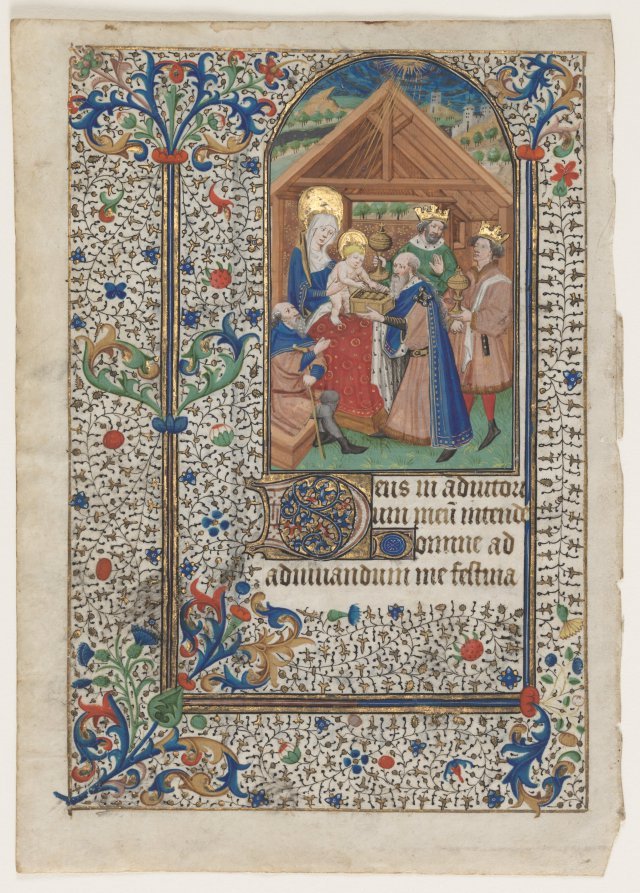
A medieval Christmas wasn’t a single day. It ran from 25 December to Epiphany on 6 January, when the Church remembered the visit of the Magi. As early as 567, a church council at Tours ruled that monks didn’t have to fast between Christmas and Epiphany, because “every day is a festival”.
Those twelve days were filled with feast days of their own: St Stephen on 26 December, St John on the 27th and the Holy Innocents on the 28th. For ordinary people, they were a rare stretch of time off in the middle of winter.
What was on the Christmas table?
It depended on who you were. King John’s Christmas at Windsor in 1213 called for 200 pigs’ heads, 1,000 hens, 15,000 herrings, 24 tuns of wine and generous amounts of pepper, saffron and almonds, and the orders kept growing. At the other end of the scale, most peasants ate pottage, bread and whatever meat they could afford, as you can see in what medieval peasants ate.
The most famous festive dish was the boar’s head. The Boar’s Head Carol, a 15th-century English song mixing English and Latin, was printed in 1521 by Wynkyn de Worde, and it’s still sung every year at The Queen’s College, Oxford. Mince pies came later: medieval cooks made meat pies, but the link between mince pies and Christmas belongs mostly to the Tudor age.
Christmas on the manor
It was not all laughter and joy. For medieval peasants, Christmas also had a business side. Many tenants owed their lord a payment which needed to be paid at Christmas, and it was often a payment in hens. For example, at Acklington in Northumberland, bond tenants owed one fowl every Christmas, or a penny in its place. Imagine you owe the local authorities a hen on Christmas Day. Where do you get a hen? At the local mall? I don’t think it would be a pleasant task, for sure! In the Middle Ages, dues like these were a normal part of life for a medieval serf.
Even more taxes: Christmas was also one of the four “quarter days” of the year, when rents fell due. Moving further up the social ladder, the season meant a feast. Poor peasants, they funded the rich guys’ parties. I think this sounds familiar, right? One example that I found was that in 1289 Richard Swinfield, the Bishop of Hereford, hosted a big Christmas party for around 60 to 70 people. His household accounts are studied at Durham University, and they list a whole wild boar, two calves, four pigs, three beef cattle, more than 60 birds and over 40 gallons of wine. That’s what I call a feast! Kudos to the bishop!

Carols were made for dancing
Today carols are songs for choirs. In the Middle Ages, a carol was something you danced to. The British Library explains that the word probably comes from the French carole, a round dance performed to singing. Over time the songs became linked to Christmas, and English manuscripts from the 1400s are full of them.
In 1426 a blind chaplain named John Awdlay collected 25 “caroles of Cristemas”, and the Selden Carol Book, dating from about 1425–50, holds about 30 pieces. For the wider story of medieval songs and instruments, read about medieval music.
Boy bishops and the Lord of Misrule
Christmas was also the season of turning the world upside down. In many cathedrals a choirboy was chosen as “boy bishop” on St Nicholas’ Day, 6 December, and he played the part, with robes and processions, until the feast of the Holy Innocents on 28 December. In parts of France, clergy held a riotous Feast of Fools, which church authorities tried again and again to ban.
Royal courts had their own mischief-makers. Under Edward II there was a “bean king”, traditionally the person who found a bean hidden in a cake, and by the reign of Henry VII the English court appointed a Lord of Misrule to run the Christmas games. For a season, the people at the bottom could play at being on top.
A murder in the Christmas season
Not every medieval Christmas was merry. On Christmas Day 1170, Thomas Becket preached in Canterbury Cathedral and ended his sermon by excommunicating his enemies. Four days later, on 29 December, the fifth day of Christmas, four knights killed him inside the cathedral.
The murder shocked Europe and turned Becket into one of the most popular saints of the Middle Ages. You can read the full story in our article on Thomas Becket.
Presents came at New Year
As a kid, if you had been hoping for a present on Christmas morning, well, I am sorry for you, but you would have been really disappointed. In medieval England, people swapped gifts on 1 January, New Year’s Day. Historians studying the court of Richard II describe these New Year’s gifts as the equivalent of our Christmas presents. Well, in the end you would be disappointed just for a while, and finally the well-deserved gift from your loved ones would come.
The last section was all about the gifts of ordinary people. Here come the glamorous gifts of royalty. Royal gifts could be spectacular. For instance, in 1405 Queen Isabeau of France gave her husband, Charles VI, a dazzling gold sculpture now known as the Goldenes Rössl, the “little golden horse”, as a New Year’s present. You can find it today in Bavaria.
What a medieval Christmas didn’t have
Some of our favourite traditions are much younger than people think. Christmas trees spread from 16th-century Germany and only reached the English royal court around 1800. The magic of the Christmas tree is, as you can see, a much younger tradition than you think. As children, we could all relate to it as a wonderful tradition, and the emotion that comes with the celebration is overwhelming. It is that time of the year when families gather and spend quality time. The Yule log, a separate tradition, appears in a few German records from the Middle Ages, but in England the first clear references come in the 1600s. Mince pies, as we saw, are mostly Tudor.
And the twelve days of feasting eventually got someone into trouble. I found something interesting in my research for this article: in 1647, during the English Civil War, Parliament abolished the celebration of Christmas altogether. Oh no! No Christmas? Sad times in England! The ban lasted until the Restoration of 1660. It’s one more reminder that the past was rarely as simple as the stories about it, a theme we return to often in our list of medieval myths.
My medieval Christmas wish list
If I had lived as a peasant in medieval times, I would have wished for a couple of things: meat instead of porridge, and fine clothing instead of ugly, dirty clothes. Maybe some antibiotics, so I would not get the plague. Joking aside, I would not swap our present-day Christmas for a medieval one. Not a chance!
A feast in the darkest time of the year
From the bells and candles of medieval Halloween to the fasting of Advent and the twelve days of Christmas, the medieval year was built around the calendar of the medieval Church. The medieval Christmas was louder, longer and stranger than ours: no Christmas tree, no presents on Christmas Day, and a lot of taxes and hens. I am not a fan of this Christmas at all! To be honest, though, if we look at its heart, it was the same thing: a bright, crowded feast in the darkest part of the year, one that brought people closer.
Frequently asked questions
How long did a medieval Christmas last?
Twelve days, from Christmas Day on 25 December to Epiphany on 6 January. Advent, the season of preparation and fasting, came before it.
What did people eat at Christmas in the Middle Ages?
The rich ate meat, game, fish and spiced dishes, sometimes in enormous quantities, and a boar’s head was a famous festive centrepiece. Most peasants had simpler food, with whatever meat they could afford.
Did medieval people give Christmas presents?
Not usually on Christmas Day. In medieval England, presents were given on New Year’s Day, 1 January.
Did medieval people have Christmas trees?
No. Christmas trees spread from Germany in the 16th century and only became popular in England much later.
Sources
- Wikipedia, Chronograph of 354
- Wikipedia, Advent
- Internet Medieval Sourcebook, Fordham University, Anglo-Saxon Chronicle: the Domesday survey
- Magna Carta Project, Christmas at the court of King John
- British Library, A brief history of the Christmas carol
- English Heritage, The Lord of Misrule
- Institute of Historical Research, Richard II’s treasure: gifts and donors
- Durham University, Exploring the medieval Christmas table