
Relics and Pilgrimage: Why People Walked Across Europe
Today, people walk hundreds of miles for charity, for fitness or because their satnav gave up. In the Middle Ages, they did it for their souls. A medieval pilgrimage meant leaving home, sometimes for months, to stand next to the bones of a saint, a scrap of holy cloth or, if you were very lucky, a thorn from the crown of Christ. It was part prayer, part adventure and part package holiday, complete with souvenirs. So why did so many people set off, and what did they find when they got there? Grab your staff and let’s go.
Jump to a section:
Why go on a medieval pilgrimage?
The reasons were as varied as the pilgrims themselves. The Metropolitan Museum of Art lists the main ones: a pilgrim could be keeping a vow, making amends for a crime, hoping to be healed by a miracle or just trying to grow closer to God. For some it was a personal choice. For others, especially those who had done something seriously wrong, the journey served as a penance for their sins.
Behind all of these reasons lay one big belief. Saints were thought to keep their power after death, and that power clung to their bodies and belongings. Canterbury Cathedral explains that thousands of pilgrims came because the remains of saints were believed to heal. Some brought wax models of the body part that needed help, such as a wax leg for a bad limb. It was a sort of medieval appointment card: “Dear saint, this is the bit that hurts.”
Relics: the holy treasures at the end of the road
A relic was a physical object linked to a holy person. The Met describes them as things like the bones or clothes of the saints. Because they were so precious, sculptors and goldsmiths produced splendid containers, called reliquaries, to hold them. A humble finger bone might end up in a case of gold, silver and gems.
The most valuable relics could cost more than the buildings that housed them. In the 1230s and 1240s, King Louis IX of France acquired the Crown of Thorns, together with a piece of the True Cross, from his cousin Baldwin II, the emperor in Constantinople. To give them a worthy home, he built the Sainte-Chapelle in Paris. According to History Hit, the chapel cost 40,000 livres and was consecrated on 26 April 1248, while the relics had cost 135,000. In other words, the box was the cheap part.
Jerusalem, Rome and Santiago: the big three
Three destinations stood above all others on the medieval pilgrimage map.
Jerusalem. Nothing beat walking where Jesus himself had walked. The Met notes that in the 4th century the emperor Constantine built a basilica at the site of the Crucifixion and a round church over the Holy Sepulchre, while another church stood over the cave in Bethlehem honoured as Christ’s birthplace. For most pilgrims from western Europe, though, the journey was far longer and harder than a trip to Rome.
Rome. The city where Peter and Paul, the two greatest apostles, were buried, with great basilicas raised over their tombs by Constantine. In 1300, Pope Boniface VIII declared the first Jubilee year. As Medievalists.net explains, pilgrims who confessed their sins and visited the basilicas of St Peter and St Paul every day for fifteen days could receive a full, or plenary, indulgence, while Romans had to keep it up for thirty. The chronicler Giovanni Villani wrote of 200,000 pilgrims in Rome during the year. The Jubilee also brought a very welcome boost to the papal treasury. Holy and profitable: a winning combination.
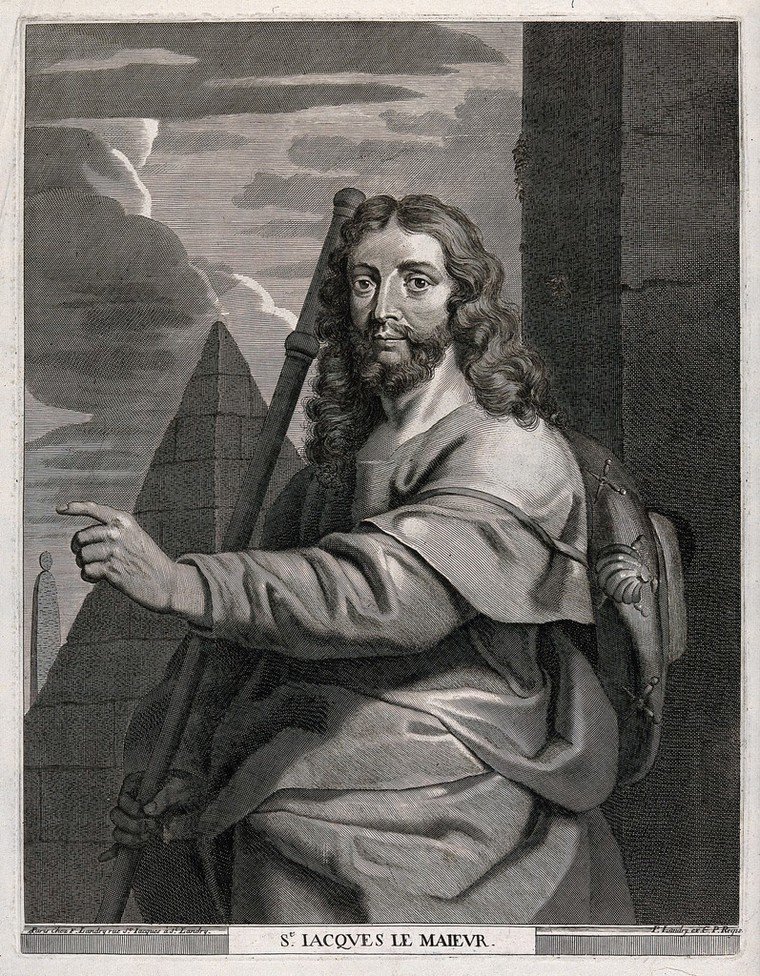
Santiago de Compostela. In north-west Spain, a tomb thought to hold the remains of Saint James the Greater, one of the twelve apostles, was found in the 9th century. UNESCO describes how Compostela quickly became a pilgrimage centre that could rival Jerusalem and Rome. The main road through northern Spain, known as the French Route, is about 738 kilometres long, and along it pilgrims can still see the churches, hospitals, hostels, monasteries and bridges built to serve their medieval predecessors. Pilgrims who made it all the way were rewarded with a badge in the shape of a shell, as the Met notes, and the scallop shell is still the symbol of the route today.
The road even had its own guidebook. Book V of the Codex Calixtinus, compiled around the late 1130s or early 1140s and probably written by a French cleric named Aymeric Picaud, gave practical advice on the route, the relics and the shrines. It also warned travellers about scams. Often called the first travel guide, it proves that tourist traps are nothing new.
Canterbury: a medieval pilgrimage close to home
English pilgrims did not have to cross the sea to visit a superstar saint. After Archbishop Thomas Becket was murdered in Canterbury Cathedral in 1170, reports of miracles spread fast, and Canterbury became one of the great pilgrim destinations in England.
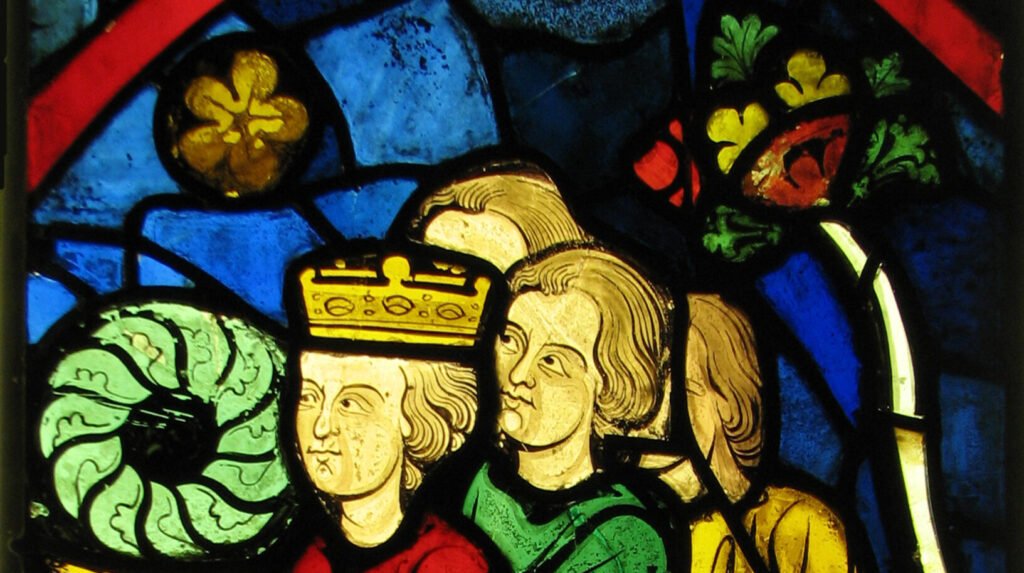
The cathedral’s own history tells the story. To let pilgrims get as close as possible to the saint, tombs like his could have holes and prayer niches in their sides, where people knelt and reached in. Around fifty years after his death, his bones were moved to a magnificent new shrine, which became covered in gold and precious stones thanks to the flood of gifts. Remarkably, one of the earliest pictures of the pilgrims themselves survives in the cathedral’s stained glass. Medievalists.net reports that the historian Rachel Koopmans identified a panel made in the 1180s, within two decades of the murder, showing pilgrims travelling on foot and on horseback to Becket’s tomb.
Then there were the souvenirs. Canterbury sold small flasks called ampullae filled with “St Thomas’ water”, originally said to contain a trace of the saint’s blood mixed with water. Pilgrims could also buy metal badges. According to Canterbury Cathedral, the badges did several jobs at once: they raised money, advertised the saint, proved that you had made the trip and, rather cleverly, gave pilgrims less reason to chip bits off the shrine itself. A souvenir shop as a security system. Genius.
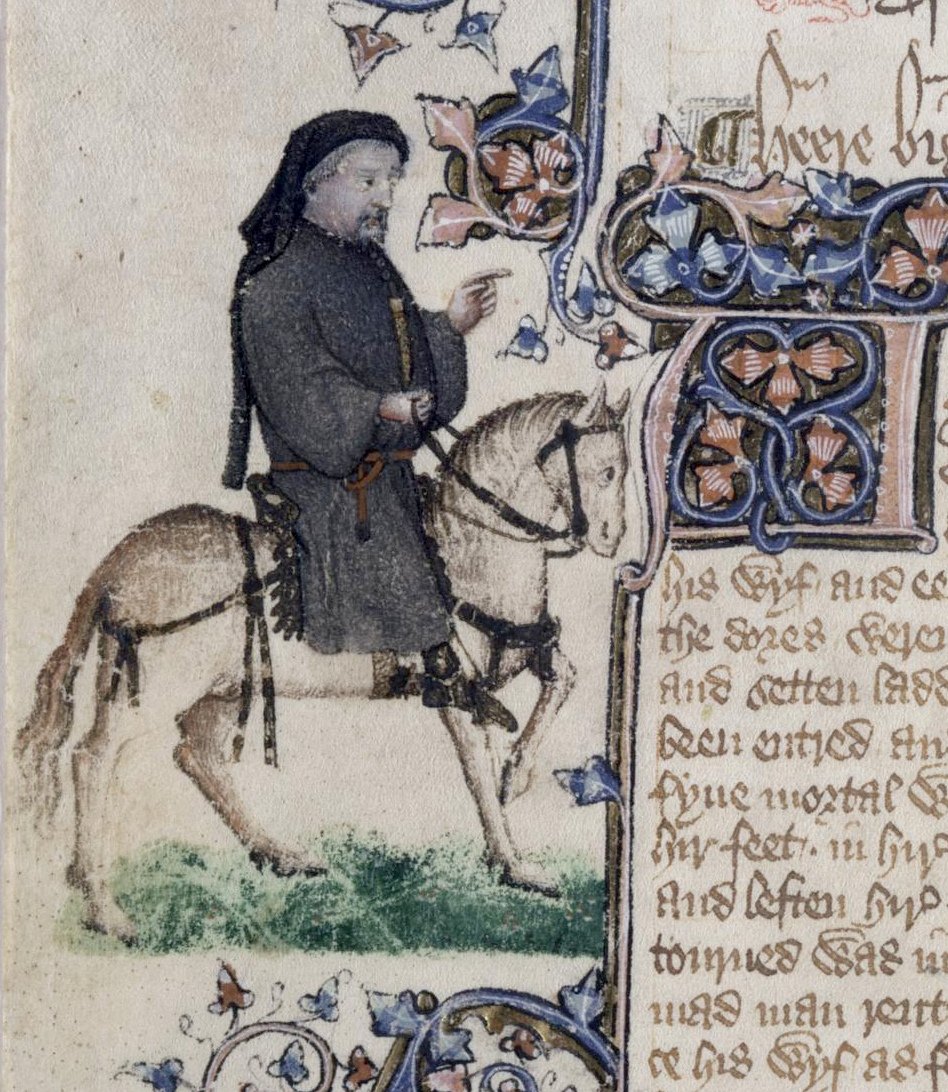
The most famous pilgrims to Canterbury never existed at all. In Geoffrey Chaucer’s Canterbury Tales, written in the late 1300s, a company of “nyne and twenty” pilgrims meets at the Tabard, an inn in Southwark, just south of London Bridge. According to the Becket Story project, the real trip from London lasted roughly four days in each direction, plenty of time for a storytelling competition.
The party ended in 1538, when Henry VIII destroyed Becket’s shrine during his reform of the Church. The souvenir flasks stopped selling the same year.
Packing for a medieval pilgrimage
You did not just wander off on a medieval pilgrimage. According to the Met, a pilgrim was usually blessed by the bishop of his own diocese before leaving, and anyone travelling as a penance made a full confession first. Then came the outfit: a long, rough garment, a walking staff and a small purse. Canterbury Cathedral adds that men wore a long tunic called a sclavein, and that some later pilgrims wore broad-brimmed hats decorated with the badges they had collected. A few badges on your hat showed everyone you were a seasoned traveller.
On the road, medieval pilgrimage depended on the Church. Monasteries along the major routes provided food, beds and prayers. Some churches were even designed with the crowds in mind. The Met explains that some monastic churches included an inner passageway, called an ambulatory, so that pilgrims could visit the relics without disturbing the monks at prayer.
The long-distance walkers
Some medieval pilgrims covered astonishing distances. In 990, Sigeric, who had just become Archbishop of Canterbury, made the long trip to Rome to receive his pallium, the woollen band that marked his office, from Pope John XV. According to the Council of Europe, he recorded 79 stages of his journey in his diary, and that record has helped modern researchers rebuild the route known as the Via Francigena. Today the Council of Europe’s Via Francigena runs for about 3,200 kilometres, from Canterbury to Rome and then on to Santa Maria di Leuca in the far south of Italy.
Then there was Margery Kempe, an Englishwoman from King’s Lynn and the mother of fourteen children. According to the University of Surrey’s Medieval Women project, in her forties her travels took her to the Holy Land, Rome, Assisi and Santiago, and in her sixties she set off again for northern Europe. Her habit of weeping loudly during worship got her criticised by priests and neighbours alike, and her fellow travellers probably needed earplugs. Her book about her life is thought to be the first autobiography written in English by a woman.
What a medieval pilgrimage was really about
A medieval pilgrimage combined faith, hope, hardship and a surprising amount of shopping. It filled roads with travellers, built hostels, bridges and churches, and turned places like Canterbury and Santiago into famous destinations. Many pilgrims also travelled to earn indulgences, the Church’s promise to cut the punishment owed for their sins, as the Met points out.
To see how pilgrimage fitted into the wider world of faith, saints and bishops, explore the medieval church. You can also follow the armed pilgrims who marched east in the Crusades, or step inside the daily routine of medieval monastery life.
Frequently asked questions
Why did people go on pilgrimages in the Middle Ages?
People set off on a medieval pilgrimage to keep a vow, to make up for a sin or crime, to seek a cure or to strengthen their faith. Many also hoped to earn indulgences.
What were the main medieval pilgrimage destinations?
Jerusalem, Rome and Santiago de Compostela were the greatest. In England, Canterbury, home of Thomas Becket’s shrine, attracted vast crowds of pilgrims.
What is a relic?
An object linked to a holy person, such as a saint’s bones or clothes. Relics were kept in decorated containers called reliquaries.
Why is the scallop shell a pilgrim symbol?
Pilgrims who reached the shrine of Saint James at Santiago de Compostela received a shell-shaped badge, and the shell became the emblem of that pilgrimage.
How long did it take to walk to Canterbury from London?
About four days in each direction. Many pilgrims set off from Southwark, just south of London Bridge, where the inns were handy places to gather a travelling party.
Sources
- Jean Sorabella, The Metropolitan Museum of Art, Pilgrimage in Medieval Europe (2011)
- The Metropolitan Museum of Art, King Louis IX Carrying the Crown of Thorns
- The Metropolitan Museum of Art, Pilgrim’s Badge of the Shrine of St. Thomas Becket at Canterbury
- Canterbury Cathedral, Medieval Pilgrimage
- History Hit, Sainte Chapelle
- UNESCO World Heritage Centre, Route of Santiago de Compostela: Camino Francés and Routes of Northern Spain
- Pilgrimaps, The 12th-century pilgrim’s guide
- Medievalists.net, The First Jubilee (2014)
- Medievalists.net, Discovery of the earliest known image of pilgrims to Canterbury (2018)
- The Becket Story, The Tabard Inn
- Council of Europe, The Via Francigena
- University of Surrey, Medieval Women, Margery Kempe (c. 1373 – after 1438), mystical writer, visionary and pilgrim