
Longbow vs Crossbow: Which Was Better?
Picture two soldiers standing side by side on a medieval battlefield, far from the swords and lances of the knights. One holds a simple stick of yew taller than himself and a bag of arrows. The other holds a heavy wooden stock with a steel bow fixed across it and a strange winding machine hanging from his belt. Both can kill a knight in armour, but they could hardly be more different. The longbow vs crossbow debate has been going on for centuries, and the English still love to say the longbow won. But which one was really better? The answer depends on who was shooting, how much training he had, and whether he stood in an open field or behind a castle wall.
Jump to a section:
The English longbow: a simple stick of yew
The longbow looks almost too simple to be a great weapon. According to History Hit, a typical English longbow was about six feet long, made of yew, and drawn back as far as the archer’s ear. The best evidence we have comes from the Mary Rose, Henry VIII’s warship that sank in 1545. The Mary Rose Trust says divers recovered 172 longbows, all made from a single piece of yew, between 1.84 and 2.11 metres long. Their draw weights are estimated at between 65 and 175 pounds, with most around 110 pounds. Pulling 110 pounds with your fingers, again and again, takes enormous strength.
The crossbow: a bow that does the work for you
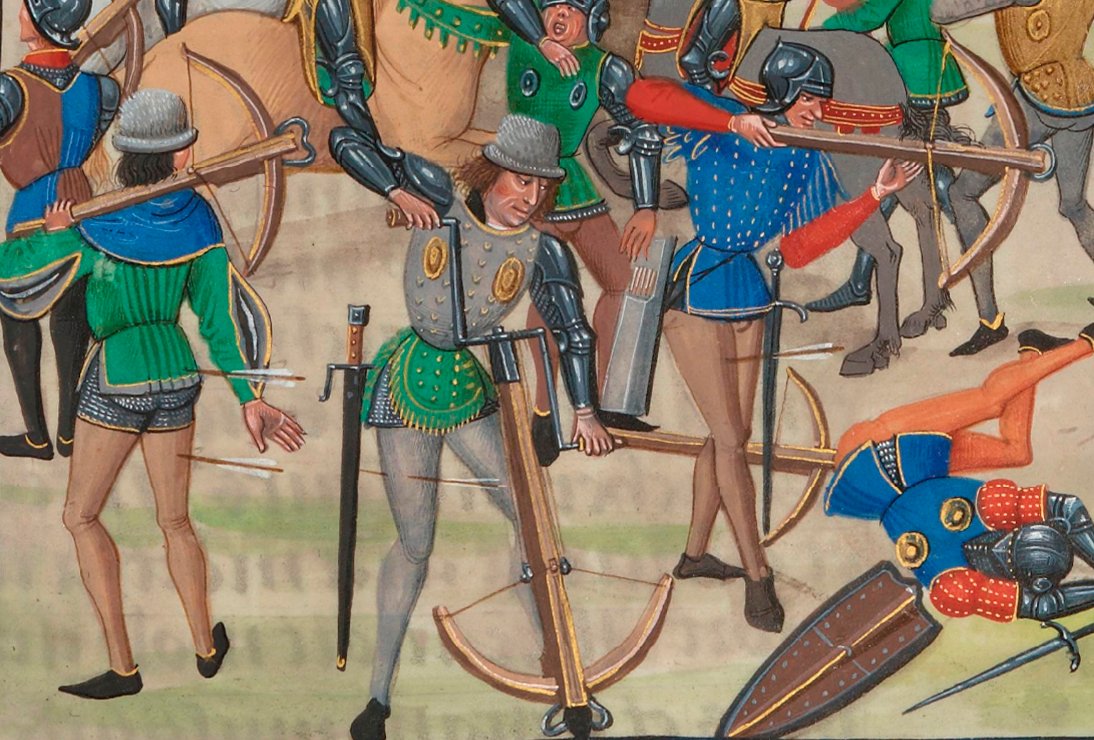
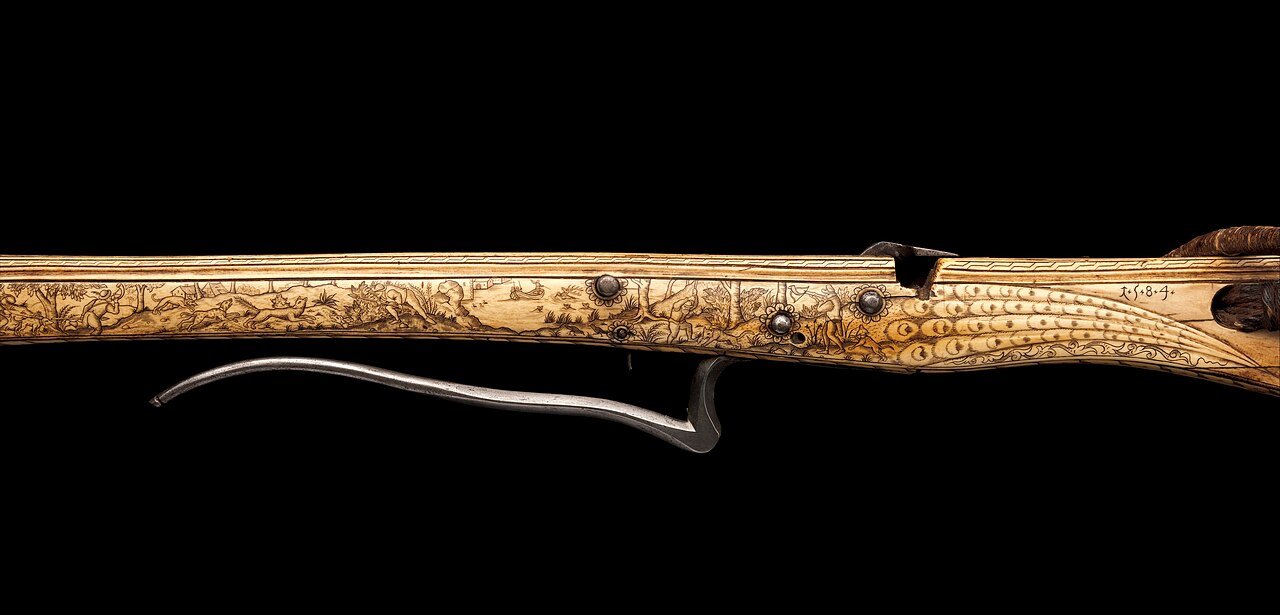
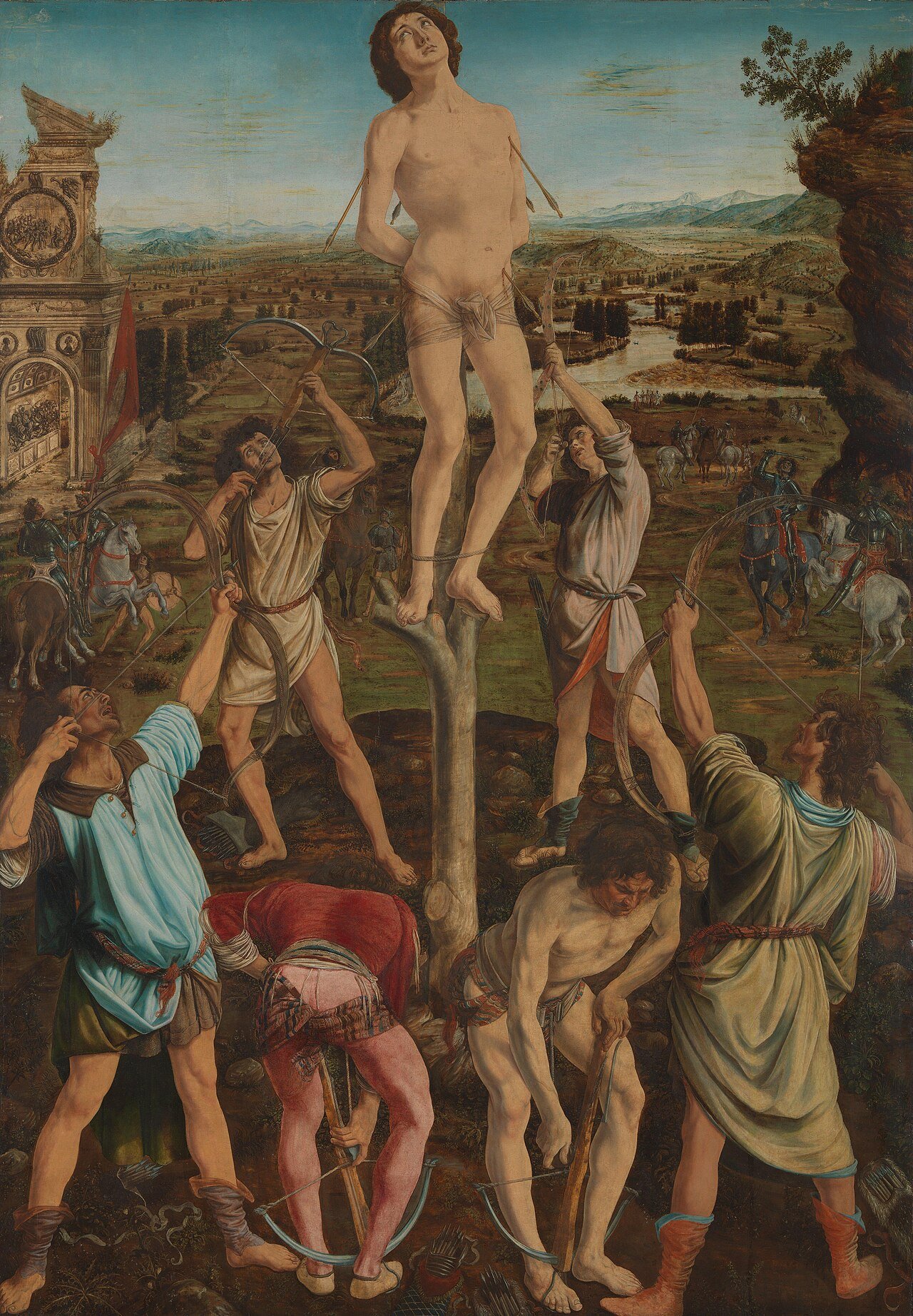
The crossbow solved the strength problem with mechanics, a bit like the big siege engines in our trebuchet vs catapult comparison. Instead of holding the string with his fingers, the crossbowman locked it in place and released it with a trigger. The Metropolitan Museum of Art explains that lighter crossbows could be spanned by hand, using a lever called a goat’s foot or a hook on the belt, while heavier ones needed a cranequin, a geared winder, and the biggest a windlass. According to the Met, even a light crossbow could have a pull of about 125 pounds, and crossbows could be far more powerful than any hand bow. The price was weight: one German crossbow in the Met’s collection weighs 3.8 kilograms, and its cranequin another 2.6.
Longbow vs crossbow: years of training or a few days
This is the biggest difference between the two weapons. History Hit explains that learning to use a longbow “took a significant amount of time, and a lifetime still to master,” and that England required men to practise archery every Sunday. A crossbow was the opposite. The same source notes that an untrained peasant could be taught to use one effectively very quickly, because the crossbowman did not need to be strong. Archaeologists believe the Mary Rose archers were exceptionally strong men. One of them, studied by Swansea University, stood about six feet tall, well above average for his time.
Longbow vs crossbow speed: who could shoot faster?
Here the longbow wins. You will often read that English archers fired 12 arrows a minute, but the living-history site Tastes of History shows that this number has no real source. Using the work of the historians Matthew Strickland and Robert Hardy, it concludes that about five or six arrows a minute was a realistic battle pace. The crossbow was much slower. According to History Hit, a crossbowman managed no more than three or four bolts a minute, because spanning the bow took so long. In a battle, that difference meant many more arrows in the air.
Longbow vs crossbow: power and range
Both weapons could kill an armoured knight. History Hit says both could penetrate even iron or steel armour at the right distance. For range, it states that the longbow could shoot farther than the crossbow, at least until the second half of the 14th century. A crossbow had one more advantage: it could be loaded and held ready, so the shooter could wait and aim calmly. A longbowman could not keep a 110-pound bow drawn for long.
The Church tried to ban the crossbow
There is a famous story that the Church banned the crossbow because it was too deadly. It is true, but only half the story. In 1139 Pope Innocent II held the Second Lateran Council of the medieval Church, and one of its decisions banned the use of bows and crossbows in wars between Christians, as Encyclopedia.com notes. So the ban covered ordinary bows as well, not just crossbows. And it had little effect. Christian armies kept using both weapons against each other for the rest of the Middle Ages, which says a lot about how useful they were.
Crécy 1346: the longbow’s greatest day
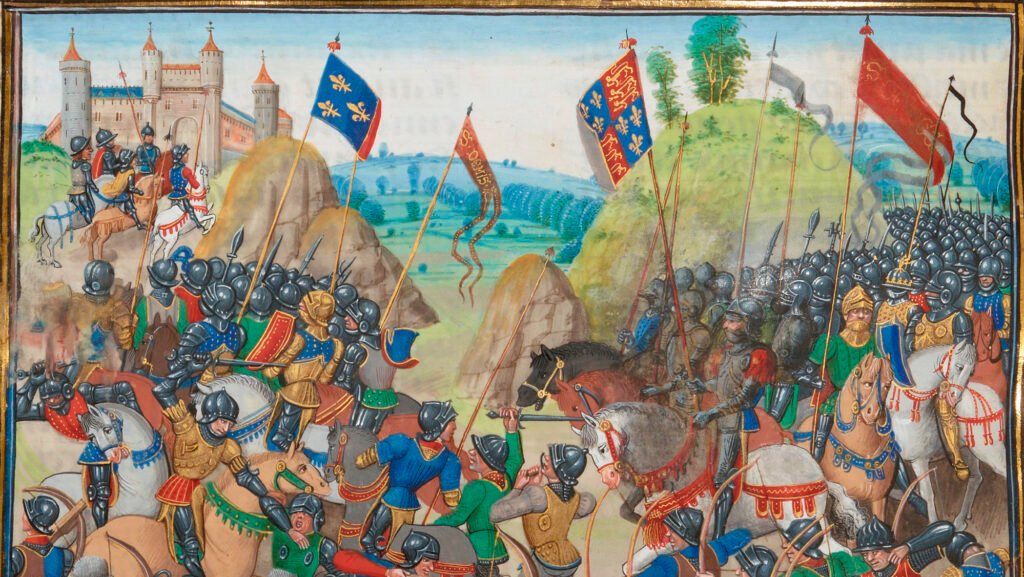
The most famous clash of longbow vs crossbow happened at the Battle of Crécy in 1346. According to the historian Julian Humphrys, writing for HistoryExtra, the French army included a large force of Genoese mercenary crossbowmen. In the rush to attack, their pavises, the big shields they hid behind while reloading, had been left with the baggage. Their first volley fell short, and the English archers stepped forward and shot them down in the open. When the Genoese fell back, the French knights behind them rode straight through them. It was a disaster, but it was a disaster of bad planning, not only of a bad weapon.
Where the crossbow was better
Behind a wall, the crossbow was hard to beat. A defender could span it in safety, wait at an arrow slit and shoot only when a target appeared. History Hit notes that crossbows were very popular for defending castles, and that the English garrison at Calais reportedly kept as many as 53,000 bolts. The crossbow was used all over Europe, as the Genoese mercenaries show, and even the English relied on it in sieges: English Heritage notes that Henry III’s army built a siege tower said to hold 200 crossbowmen. The longbow, by contrast, is remembered above all as an English weapon.
Which one would I choose?
If I had to fight in the Middle Ages, I would take the crossbow without thinking twice. I could not pull a 110-pound longbow even once, let alone six times a minute for half an hour. With a crossbow, I would at least have a chance after a few days of training. But I would make sure to stay behind a castle wall, and never forget my pavise.
So, longbow vs crossbow: which was better?
In the longbow vs crossbow contest, neither really won. Each was better at something. The longbow shot faster and farther, and in the hands of trained English archers it won famous battles in the open field, such as Crécy and Agincourt. The crossbow was easier to learn, could be held ready to shoot and was perfect for defending walls. That is why many European armies relied on the crossbow, while England built its armies around archers who had trained since they were boys.
Frequently asked questions
Was the longbow better than the crossbow?
In the longbow vs crossbow debate, the answer depends on the situation. In open battle with well-trained archers, often yes, because it shot faster. But the crossbow was easier to learn and better for defending castles, so many European armies preferred it.
How many arrows could a longbowman shoot per minute?
About five or six arrows a minute in real battle conditions. The famous figure of 12 arrows a minute has no reliable historical source.
How long did it take to train a longbowman?
Years. Archers needed great strength to draw bows of around 110 pounds, and England required men to practise archery every Sunday.
Did the Church ban the crossbow?
Yes, but not only the crossbow. In 1139 the Second Lateran Council banned bows and crossbows in wars between Christians. The ban was largely ignored.
Why did the Genoese crossbowmen lose at Crécy?
Their pavises had been left with the baggage, their first volley fell short, and they were shot down in the open by English archers before being trampled by their own French knights.
Sources
- Tristan Hughes, History Hit, What Was the Difference Between the Crossbow and Longbow in Medieval Warfare? (2018)
- The Mary Rose Trust, Longbows
- Current Archaeology, Meet the Mary Rose archer (2013)
- The Metropolitan Museum of Art, Crossbow with Cranequin (14.25.1574a, b)
- Tastes of History, Dispelling some myths: archers shooting twelve arrows a minute
- Encyclopedia.com, Lateran Council, Second
- Julian Humphrys, HistoryExtra, The battle of Crécy: triumph of the longbow