
How Gunpowder Ended the Age of Castles
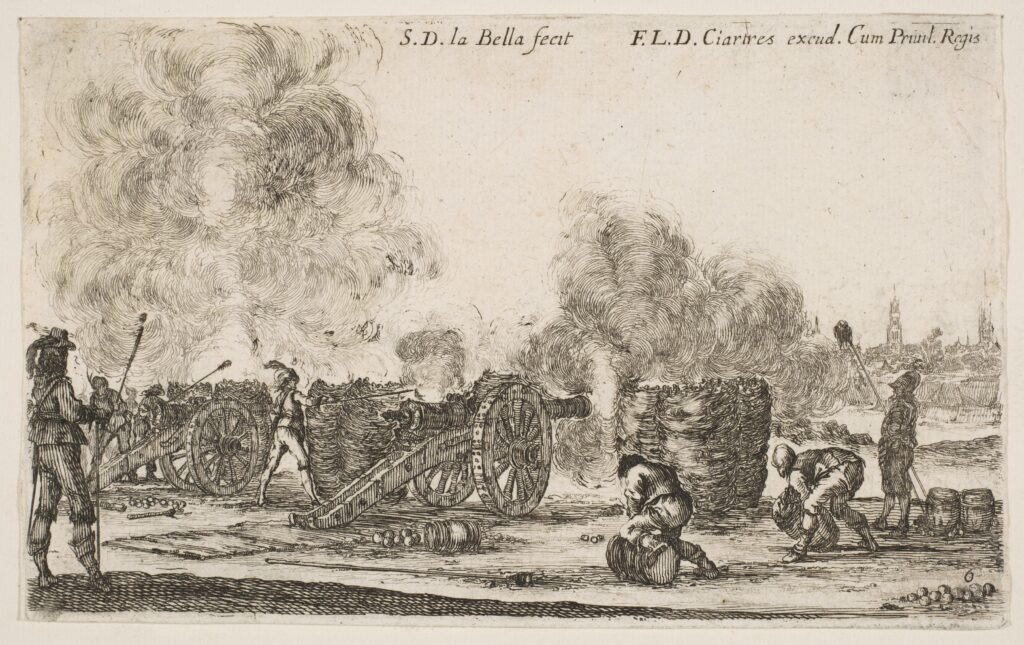
For centuries, the cleverest thing you could do in a European war was own a big stone castle and stay inside it. Attackers could throw rocks at you, dig under you or simply wait for your cheese to run out, but a good wall usually had the last word. Then somebody worked out how to blast a heavy ball out of a metal tube with a bang loud enough to rattle your teeth. The story of gunpowder and castles is often told as a quick knockout: cannon turn up, walls fall, the end. The real version is slower, stranger and a lot funnier, with a king killed by his own gun, cannons named after cities and castles that were finally finished off not by cannonballs but by barrels of powder stuffed underneath them. Let’s light the fuse.
Jump to a section:
Where gunpowder and castles first met
Gunpowder was a Chinese invention long before anyone in Europe had heard of it. Writing in Science and Its Times, Dean Swinford notes that the Chinese were using explosives widely in the 10th and 11th centuries, and that the recipe was written down under the Song dynasty, which came to power in 960. From China, the powder and the idea of the gun slowly travelled west.
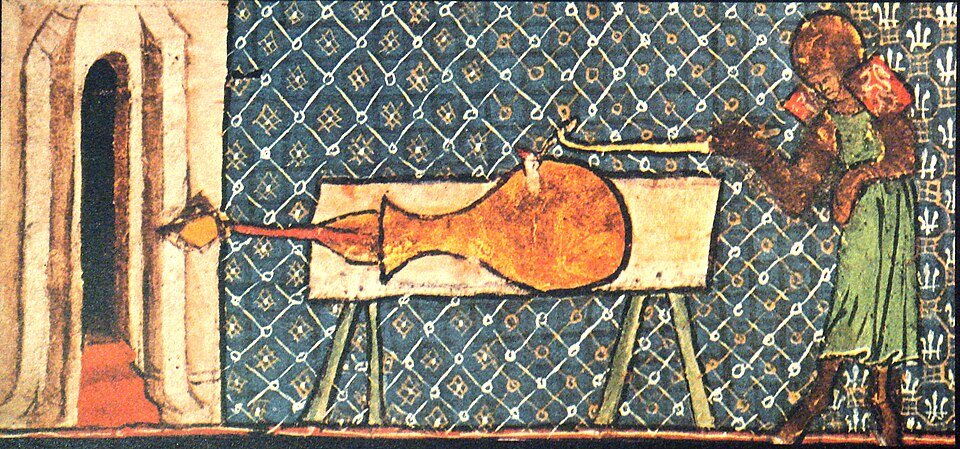
By the 1320s, Europeans had their own guns, and we even have a picture of one. In late 1326, an English royal clerk called Walter de Milemete put together a lavish book of advice on kingship, intended for the young Edward III. In its margin sits a gun shaped like a fat vase, loaded not with a ball but with a giant arrow and aimed at a fortification. The manuscript still belongs to Christ Church, Oxford. The University of Oxford’s online collection jokes that the arrow looks about as likely to reach its target as the gun is to jump backwards and flatten the gunner. Not a confident start.
Early guns: lots of noise, not much damage
Here is the first surprise. For most of the 14th century, the contest between gunpowder and castles was hardly a contest at all, because cannons were no real threat to a properly built castle. The castle historian Peter Purton points out that early guns simply lacked the punch to harm stone walls. He links the first gun loops in English defences to fear of French raiders arriving by sea, not to any danger from enemy cannon. Swinford agrees that cannons strong enough to do serious damage to castle and town walls only arrived in the 1400s.
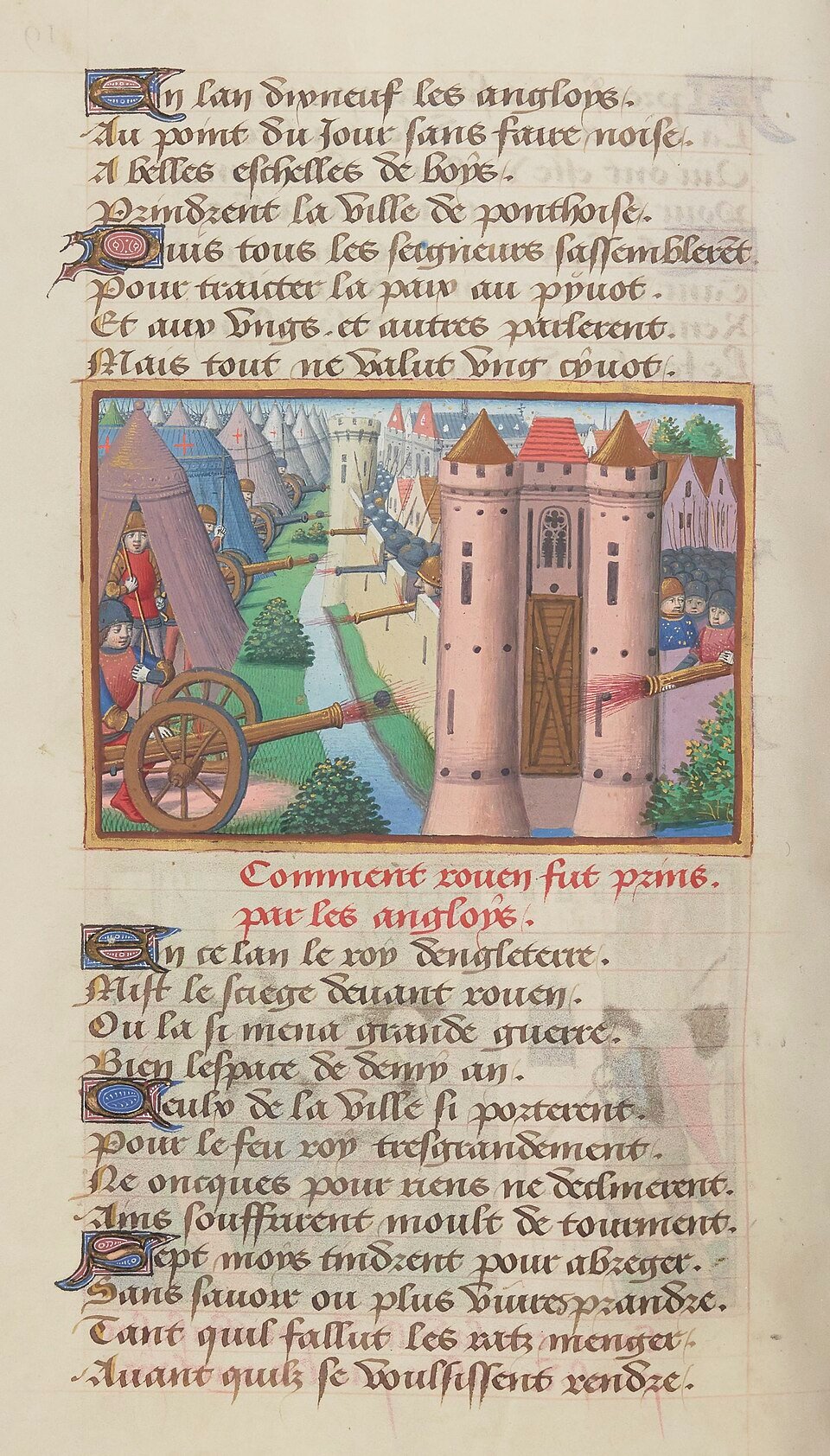
Even then, guns did not win sieges on their own. When Henry V of England besieged Rouen in 1418, the city’s defenders had their own cannon pointed at his army. According to Encyclopaedia Britannica, Henry decided not to storm the walls and settled down to starve the city instead. By December, people inside were eating horses, dogs, cats and even mice. Rouen surrendered in January 1419, beaten by hunger rather than by artillery.
Monster guns: the age of the bombard
Gunmakers answered the problem in the most medieval way possible: make it bigger. This was the moment the struggle between gunpowder and castles turned serious. The giant siege guns of the 1400s, known as bombards, threw huge balls of stone. The most famous survivor is Mons Meg, which still sits at Edinburgh Castle. Historic Environment Scotland says she was built in 1449 in the town of Mons, in what is now Belgium, weighs about six tonnes and could hurl a 150-kilogram stone ball up to 3.2 kilometres. Philip the Good, Duke of Burgundy, gave her to King James II of Scotland in 1457. Under James IV she was turned on two castles, Threave and Norham, in 1497, and in 1681 her barrel finally split.
James II adored his guns, and they repaid him badly. History Today describes him as fascinated by artillery. In August 1460 he was besieging Roxburgh Castle, then held by the English, when one of his own cannons burst as it was fired. A Scottish chronicle of the time says simply that the gun broke in the firing and killed the king. Writing a century later, the chronicler Pitscottie added that a piece of it broke the king’s thigh. His army took the castle a few days later anyway. The lesson for everyone else: early gunpowder and castles were dangerous for both sides of the wall.
When the walls finally started falling
By the middle of the 15th century, the balance between gunpowder and castles finally tipped. France showed it first. In 1449 King Charles VII set out to win back Normandy from the English, and his artillery was run by two brothers named Bureau, Jean and Gaspard, whom Britannica calls pioneers of ordnance. Rouen was back in French hands by the autumn of 1449. At Formigny in April 1450, the French brought cannon onto an open battlefield for the first time, and Caen fell that June. By early August the whole of Normandy was French again. Castles that might once have held out for months were falling in weeks.
England got its own lesson during the Wars of the Roses. In June 1464 the Earl of Warwick brought his guns to Bamburgh Castle in Northumberland, where the Lancastrian Sir Ralph Grey was holding out. The History of War website lists Warwick’s big guns by name: two great iron pieces called Newcastle and London, and a brass gun called Dysyon. One shot from Dysyon smashed through the rooms where Grey was staying. Falling masonry knocked him senseless, his deputy surrendered, and Grey, who had swapped sides once too often, lost his head that July. It is often described as the first time an English castle was beaten by gunpowder artillery.
The most famous breach of all came at Constantinople in 1453. As Britannica puts it, the city’s fall proved that cannon could break through even the strongest masonry. How the Ottomans pulled it off deserves its own telling, and you will find it in the history of medieval siege warfare.
1494: the year Italy’s castles panicked
If anyone still doubted who was winning the fight between gunpowder and castles, the French king Charles VIII settled the matter. In 1494 he marched into Italy with, according to the historian Richard McGaha, about 18,000 soldiers and 40 siege guns. Oxford’s Cabinet collection explains that the real secret was a new generation of bronze cannon, light enough to move with the army. The Florentine historian Francesco Guicciardini was impressed that the guns worked as well on a battlefield as they did against walls. Eight of northern Italy’s main strongholds, some of them thought impossible to take, went down in the campaign. Italian lords who had felt safe behind tall towers suddenly felt very exposed indeed.
Fighting back: gun loops, low walls and star forts
Castle builders did not just give up. In England, Purton notes, people began adapting their defences for guns as early as the mid-14th century, a little before builders in the Low Countries and France. The West Gate of Canterbury got a gun loop. In Southampton, God’s House Tower, put up in the early 1400s after French raiders had wrecked the town, was one of the first towers designed for guns. Bodiam Castle in Sussex, begun in 1385, also has gun loops, though Purton admits they may not have been much use.
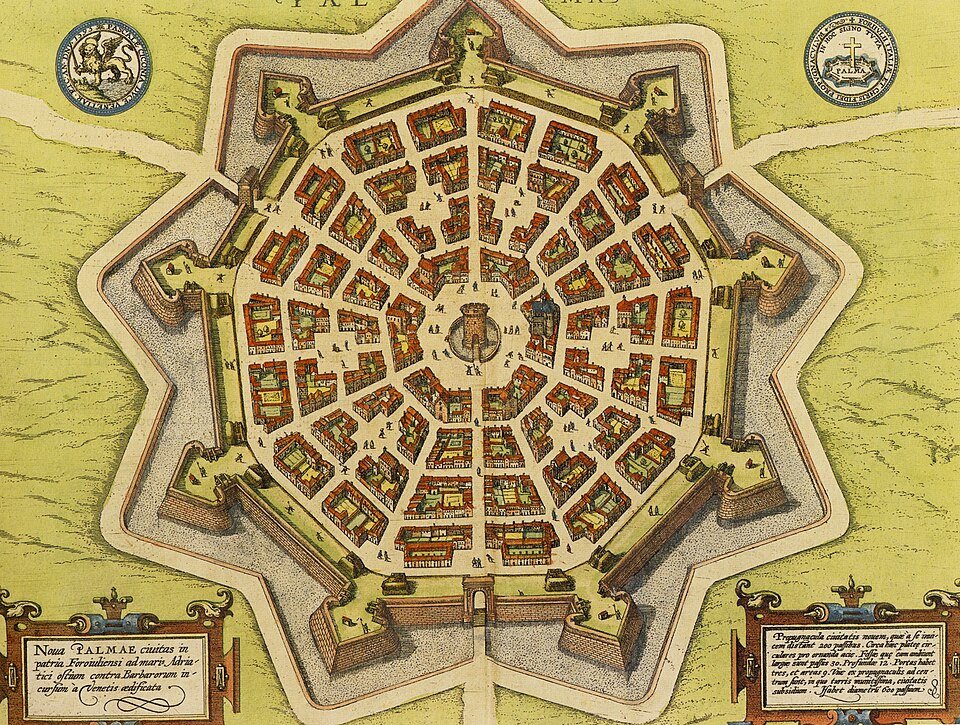
The real answer came from Italy, where the wars never seemed to stop. Engineers stopped building up and started building out. McGaha explains that walls were made lower and thicker, and that angled bastions poking out from the line of the wall let defenders see every stretch of it and catch attackers in crossfire. Britannica adds that men now dug down into the earth rather than piling stone ever higher, using soil from the ditch to make the rampart. Earth soaked up cannonballs far better than stone, which tends to shatter. The result was the star fort, which historians call the trace italienne. It was Italy’s answer to the problem of gunpowder and castles, and it spread across Europe.
England built its own version on the coast. Historic England records that Henry VIII put up Deal Castle in Kent in 1539–40, paid for with money from closing the monasteries. It has a round central tower with six rounded towers attached, all surrounded by six low semicircular bastions, and it once had as many as 145 gun openings on five levels. It is called a castle, but it was really a gun platform, among the first buildings in England made purely for artillery. Nobody was going to hold a feast in it.
So did gunpowder really kill the castle?
Only partly, and this is where the myth needs trimming. Plenty of castles were fading away for reasons that had nothing to do with cannon. In an article for HistoryNet, the castle writer Lise Hull argues that late medieval lords cared more and more about comfort and showing off, and that wars were increasingly decided by armies meeting in the field rather than by long sieges. Upkeep was expensive, and a draughty old keep looked terribly old-fashioned next to a fine new country house. Queen Elizabeth I reportedly hated castles for exactly that reason. Purton goes further and suggests castles had always been part fortress and part palace anyway.
And yet gunpowder and castles had one last meeting in Britain. In the English Civil War of the 1640s, old castles were dusted off and defended again. Corfe Castle in Dorset held out for the king until one of Lady Bankes’s own guards let disguised Parliamentarian soldiers inside. In March 1646 Parliament ordered the castle to be “slighted”, and according to Dorset Life its walls were blown apart with barrels of gunpowder packed into tunnels underneath. That is why Corfe is a spectacular ruin today. In the end, plenty of castles were destroyed by gunpowder, just not in the way most people imagine: with shovels and barrels rather than cannonballs.
To see how armies attacked strongholds before cannon took over, start with medieval siege warfare. Then meet the machines that gunpowder put out of a job: how a trebuchet worked, the medieval battering ram and the medieval siege tower. And if you enjoy seeing popular history stories taken apart, browse our collection of medieval myths.
Frequently asked questions
How early were guns being fired at European fortresses?
By the 1320s Europeans had guns, and a drawing made in England in 1326–27 shows one aimed at a fortification. For about a century, though, they were too weak to do much harm to solid stone, so the real clash between gunpowder and castles came in the 1400s.
Could one cannon knock down a castle?
Rarely on its own. It took a battery of heavy guns pounding the same spot, often for days, plus soldiers ready to rush the gap. Some sieges with guns, like Rouen in 1418–19, were still won by starving the defenders.
What made a star fort so tough to crack?
Its walls were low, thick and backed with earth, which absorbed cannonballs instead of shattering. The pointed bastions meant there was no blind spot at the base of the wall, so anyone who got close could be shot at from two directions.
If cannon did not finish off Britain’s castles, why are so many in ruins?
Many were simply abandoned for more comfortable houses and left to decay. Others, like Corfe, were deliberately wrecked with gunpowder after the Civil War so they could never be used again.
Can you still see Mons Meg?
Yes. The great bombard is on display at Edinburgh Castle. Her barrel is split, so nobody will be firing her again.
Sources
- Dean Swinford, Science and Its Times (Gale), via Encyclopedia.com, The Chinese Invention of Gunpowder, Explosives, and Artillery and Their Impact on European Warfare
- University of Oxford, Cabinet, Firearms: the earliest European image, 1326–7
- University of Oxford, Cabinet, French invasion of Italy, 1494
- Peter Purton, Castle Studies Trust, Fragile symbols: gunpowder and castle walls (2021)
- Encyclopaedia Britannica, Siege of Rouen
- Encyclopaedia Britannica, Battle of Formigny
- Encyclopaedia Britannica, Bastion
- Historic Environment Scotland, Mons Meg
- History Today, James II of Scots killed at Roxburgh
- National Library of Scotland, 1460: James II killed by exploding cannon
- History of War, Siege of Bamburgh Castle, June–July 1464
- Richard McGaha, History of Applied Science & Technology, Cannon and Fortresses in Early Modern Europe
- Historic England, Artillery castle at Deal
- Lise Hull, HistoryNet, Changing Conceptions of English Castles
- Dorset Life, Treasures of Dorset: Corfe Castle