
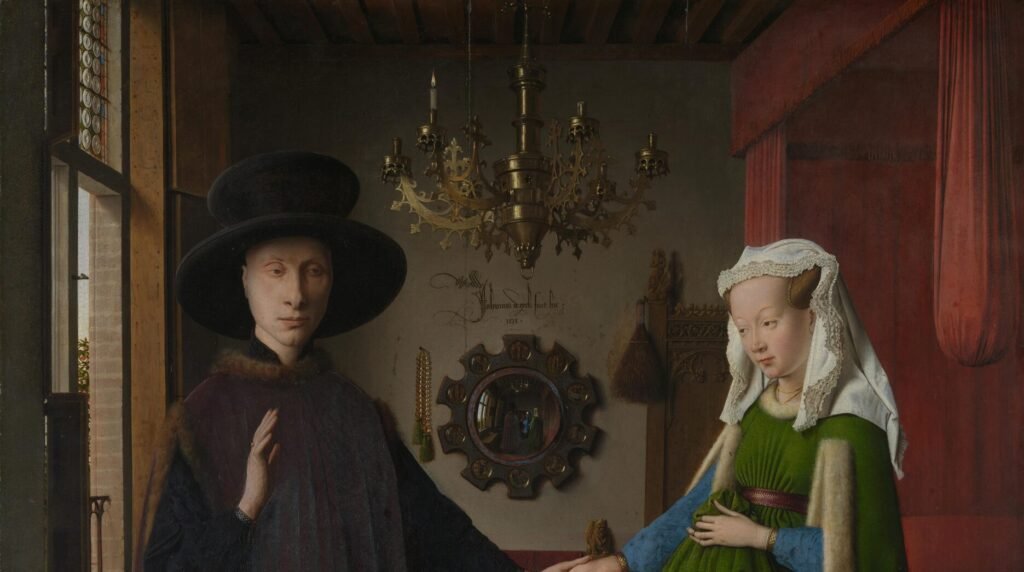
What Did Medieval People Wear?
Hollywood has a very clear idea of medieval clothing: brown sacks for the peasants, shiny armour for the knights, and everybody slightly muddy. The real Middle Ages were far more colourful, far more itchy and, at times, far more ridiculous. There were laws telling you which cloth you could afford to be seen in, shoes so pointy they gave people bunions, and underwear that would not look out of place in a modern shop. So what did medieval people actually wear? Let’s open the wardrobe.
Jump to a section:
The basics: wool on the outside, linen underneath
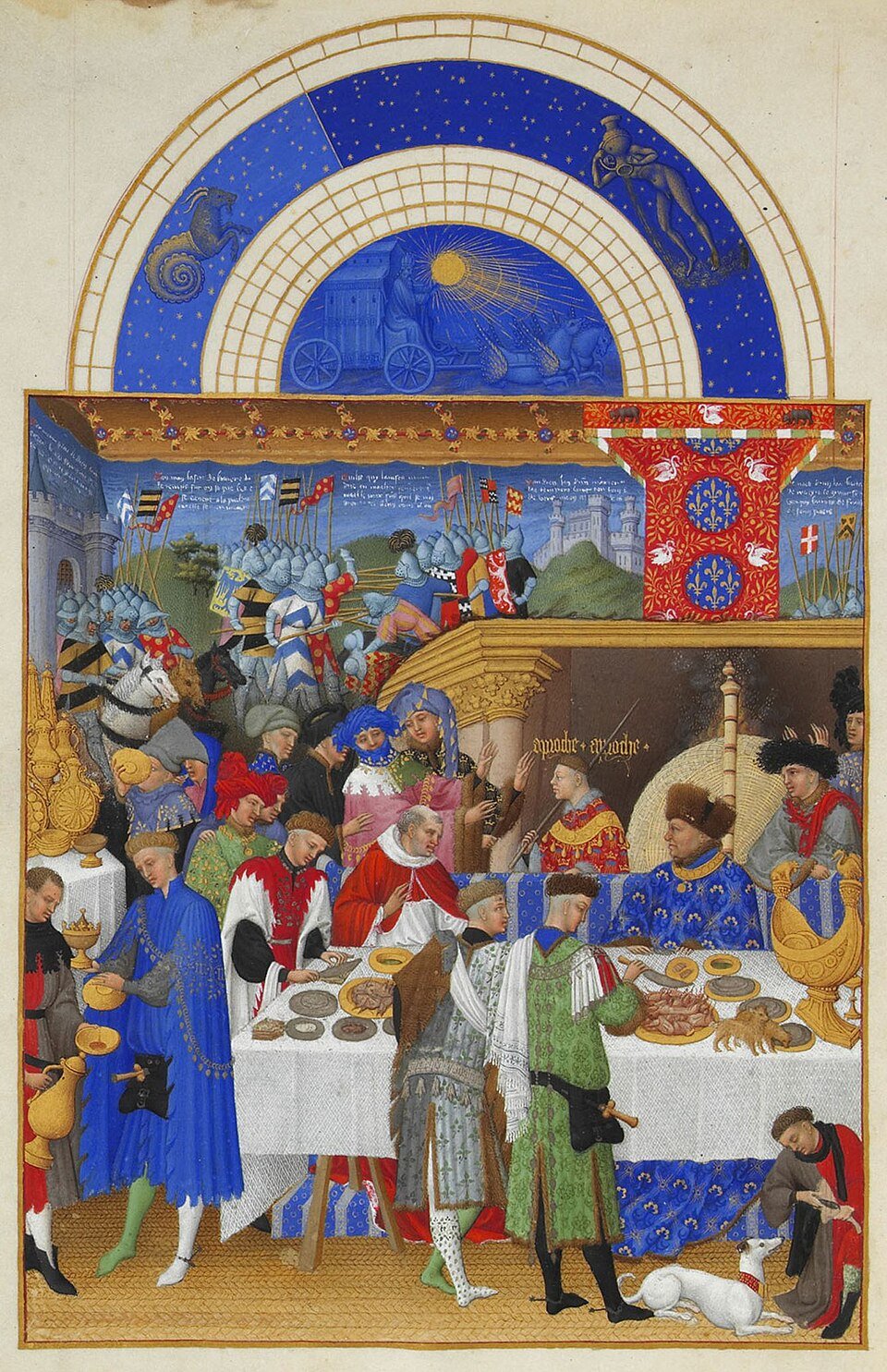
If you could pick one fabric to sum up medieval clothing, it would be wool. Mark Cartwright of World History Encyclopedia notes that most clothes in medieval England were made from it, while silk and rich brocade were saved for special occasions. Wool had a lot going for it. Danièle Cybulskie of Medievalists.net points out that wool was warm and heavy and could absorb a lot of moisture, which matters in a country where it rains roughly every ten minutes. She adds that the English and the Flemish ran the finest wool market of the day.
Next to the skin, people preferred linen. It was lighter, cooler and much kinder than wool, so it was used for the layers you actually felt all day. According to Cartwright, men wore linen shirts and a sort of loose underpants called braies, while women wore a long linen undergarment called a chemise. Over the top went a tunic or gown, often with a belt, and in cold weather an extra layer, sometimes lined with fur.
Here’s a surprise: the basic types of garment were much the same at every level of society. Cartwright points out that outfits followed much the same patterns across society, and that the rich stood out not through the design but through better materials and a better cut. The poor also simply owned fewer outfits. A lord and a ploughman might both wear a tunic, but only one of them had a tunic lined with expensive fur.
What did peasants wear?
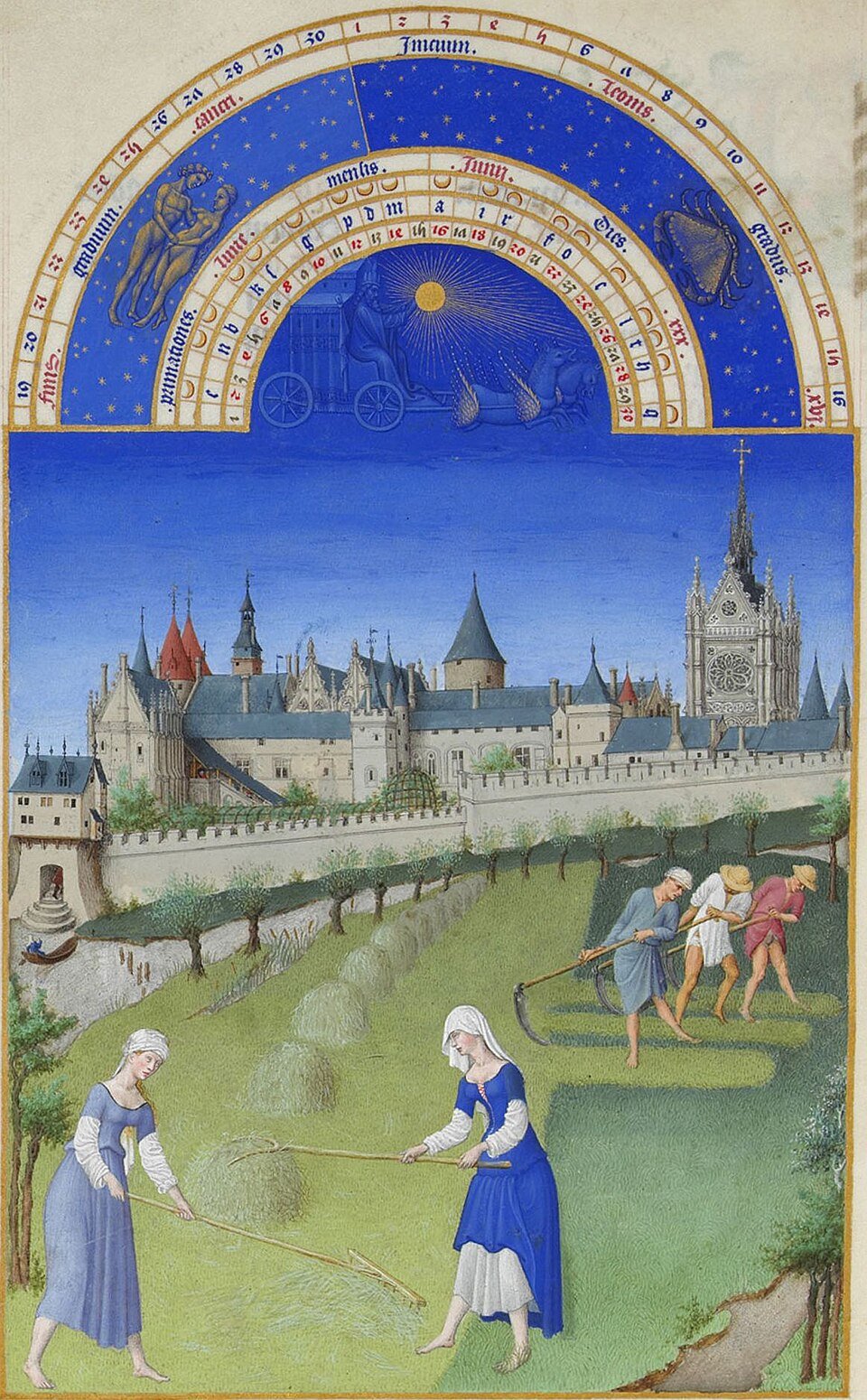
Working people dressed for work. History Hit notes that the poorest made do with coarser linen and rough, scratchy wool, owned only a few garments and often went barefoot. In pictures such as the June page above, the men wear short, simple tunics and the women long dresses with their heads covered.
Medieval clothing for the poor was not always drab, though. History Hit also stresses that even the lower classes usually wore colourful clothes. Almost any colour could be made from plants, roots, lichen, bark, nuts and other natural materials. The catch was that cheap dyes faded quickly, and colours that lasted needed more expensive ingredients. So a peasant’s red tunic might start the year bright and end it as a sort of tired pink.
Hats and hoods mattered more than you might think. According to History Hit, knocking someone’s hat off was a serious insult, and it could even lead to a charge of assault. Cartwright adds that a separate hood covering the head and shoulders was another option. It was basically the medieval hoodie, minus the band logo.
The price of colour
In medieval clothing, colour was a status symbol. Cartwright names purple, green, yellow, blue and crimson among the favourite shades, and History Hit explains that the costliest dyes, for reds and purples, were associated with royalty.
The ultimate luxury was a cloth called scarlet. Today the word just means a bright red, but in the Middle Ages it was the name of the finest and most expensive woollen fabric. As Danièle Cybulskie explains on Medievalists.net, drawing on the dress historian Margaret Scott, scarlet was often coloured with kermes, which was the priciest dye on the market. Kermes came from tiny insects found on oak trees, which were dried and crushed to produce a rich crimson. So some of the most glamorous clothes in medieval Europe were, technically, coloured with bugs. Fashion has always been a little strange.
Dress codes by law
Here’s where medieval clothing gets really interesting. In many places, what you wore was not just a matter of taste. It was a matter of law.
These rules are called sumptuary laws. According to St John’s College, Cambridge, the earliest English example on record is a City of London ordinance of 1281 that controlled the clothing of workmen. Under Edward III, the laws became more ambitious. They were meant to support English-made cloth and to keep the social ranks visibly apart, and breaking them could cost you fines or property.
One famous example is the English statute of 1363. The Law Library of Congress quotes its opening complaint about “the Outragious and Excessive Apparel of divers People, against their Estate and Degree”. In plain English, people were dressing above their station, and Parliament was not happy. The general purpose of such laws, the Library of Congress explains, was to rein in luxury and stop extravagance, above all among the lower classes. Laying down what each rank could wear and eat was supposed to keep everybody in their place.
Did it work? Not really. The Library of Congress notes that the 1363 statute was repealed the very next year, although similar laws soon followed. Some things never change.
Pointy shoes and medieval bunions
Shoes got pointier and pointier as the medieval centuries went by, especially for men, as Cartwright notes. In the 14th century, shoes called poulaines became the height of fashion, with long pointed toes that stuck out well beyond the foot. By the end of that century, the Cambridge researchers note, almost every type of shoe, for adults and children alike, was at least a little pointed.
The authorities tried to rein them in. The University of Cambridge reports that the Church banned clergy from wearing pointed shoes in 1215, then had to repeat the ban in 1281 and 1342. That tells you how well the first one worked. In 1463, King Edward IV went further and limited the points of shoes in London to less than two inches.
The really fun part comes from science. In 2021, a team from the University of Cambridge examined 177 skeletons from cemeteries in and around the city. Only 6% of people buried between the 11th and 13th centuries had bunions, but among those buried in the 14th and 15th centuries the figure was 27%. The researchers linked the jump to the fashion for pointed shoes. The worst affected were the wealthy and the clergy: 43% of those buried at an Augustinian friary had bunions, including five of the eleven men identified as clergy by their belt buckles. Older people with bunions also seemed more likely to have broken bones from falls. Suffering for fashion is clearly not a modern invention.
Medieval underwear was more modern than you think
We tend to assume medieval people had nothing like modern underwear. A remarkable discovery says otherwise. During building work at Lengberg Castle in East Tyrol, Austria, researchers recovered more than 2,700 fragments of textile. According to the University of Innsbruck, the finds included four linen garments resembling modern bras and a completely preserved pair of men’s linen underpants. Radiocarbon tests dated them to the 15th century.
These garments even had clearly shaped cups. Until then, the university notes, there had been no evidence for bras like these before the 19th century. Medieval clothing, it turns out, was some 400 years ahead of the lingerie department.
Dressing to impress: what the rich wore
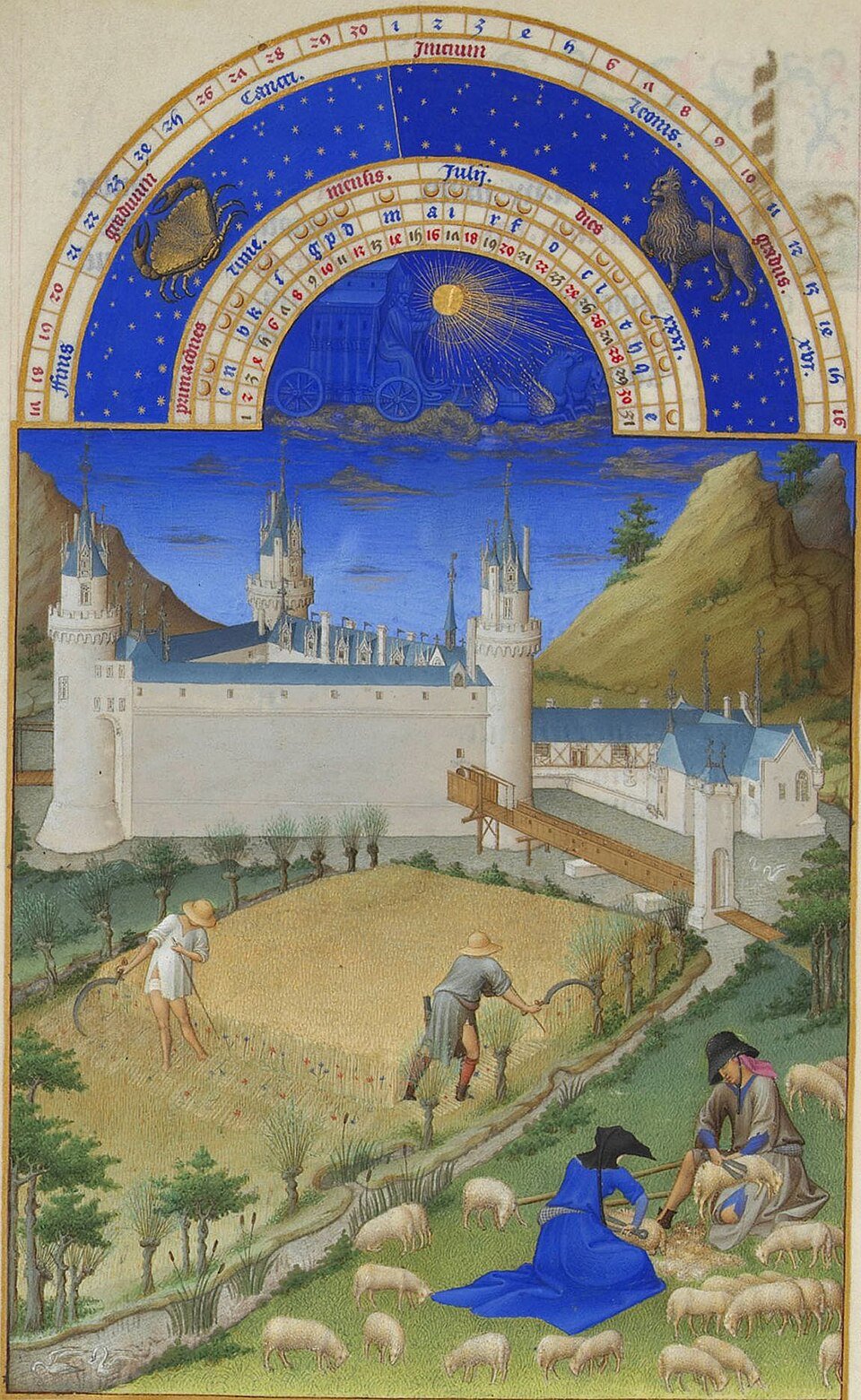
For the wealthy, clothing was a way of showing off without having to say a word. Fine wool, silk, brocade and fur all signalled money and rank. Clothing could even be part of a business deal. St John’s College, Cambridge describes an agreement from around 1330 in which a knight, William de Manneby, signed over his manor to Thomas de Multon in return for, among other things, clothes “suitable to his estate”, including a double surcoat and a tabard at New Year and a winter robe at All Saints.
Fashion also changed over time. Cartwright notes that a close-fitting jacket called the jupon was fastened all the way down the front with buttons or laces. Women wore a wimple, a cloth that framed the face and covered the neck, and pictures often show tall hats, some pointed and some flat on top, with veils trailing behind them. You did not sneak quietly into a room wearing one of those.
What medieval clothing tells us
Medieval clothing was practical, colourful and full of meaning. Your fabric, your colours and even the length of your toes told everyone around you who you were, or at least who you wanted them to think you were. To see how these clothes fitted into everyday routines, take a look at daily life in the Middle Ages. You can also find out how often medieval people bathed, what medieval peasants ate, and how artists recorded all of this in illuminated manuscripts.
Frequently asked questions
What was medieval clothing made of?
Most medieval clothing was made of wool, with linen for underwear and shirts. Silk, brocade and fur were luxuries for the wealthy.
What did medieval peasants wear?
Simple tunics or dresses in coarse wool and linen, with hoods, hats and head coverings. The poorest owned very few clothes and often went barefoot, but even ordinary people wore coloured clothing.
Did medieval people wear underwear?
Yes. Men wore linen braies and women wore a linen chemise. Finds from Lengberg Castle in Austria show that linen bras and underpants existed by the 15th century.
What were sumptuary laws?
Laws that controlled what people could wear, and sometimes eat, according to their rank. England passed several, including a well-known statute in 1363.
Why did medieval shoes have pointed toes?
It was the height of fashion in the 14th and 15th centuries. The style was so popular that the Church and the king tried to limit it, and skeletons from Cambridge show a big rise in bunions at the same time.
Sources
- Mark Cartwright, World History Encyclopedia, Clothes in Medieval England (2018)
- History Hit, What Did People Wear in Medieval England?
- Danièle Cybulskie, Medievalists.net, A Five-Minute Guide to Medieval Fabrics (2015)
- Law Library of Congress, Sumptuous Sumptuary Laws (2011)
- St John’s College, Cambridge, Fashion Rules: a 14th century Knight’s livery
- University of Cambridge, Fashion for pointy shoes in medieval Britain unleashed a plague of bunions (2021)
- University of Innsbruck, Medieval lingerie discovered (2012)