

Did Medieval People Use Spices to Hide Rotten Meat?
You have probably heard it in a documentary, from a teacher or in a pub quiz. In the Middle Ages there were no fridges, so meat went bad quickly, and people covered the terrible taste with lots of pepper, cinnamon and cloves. It sounds logical, and it makes medieval people look a bit disgusting, which is part of why the story is so popular. But it is one of the most stubborn myths about medieval food. When you look at what medieval spices cost, who used them and what the law did to people who sold bad meat, the story falls apart.
Jump to a section:
Where does the rotten meat myth come from?
The idea is old, and it was repeated by serious writers. According to the food history site CulinaryLore, one of the books often quoted as “proof” is The Englishman’s Food by the scientist Jack Drummond, who used a 1594 text by Hugh Platt about burying “greene” venison to make it “sweet enough to be eaten.” Drummond read “green” as spoiled. CulinaryLore points out that in Platt’s time “green” meant fresh or young meat, not rotten meat. A small misunderstanding of one word helped a myth travel for decades.
Medieval spices cost more than the meat
This is the biggest problem with the myth. The Yale historian Paul Freedman, author of Out of the East: Spices and the Medieval Imagination, explains that medieval spices cost much more than fresh meat, which was generally available. Prices collected by the University of California, Davis, from the historian Christopher Dyer show how big the gap was. In 14th-century England, pepper, cinnamon and cloves cost around 1 to 3 shillings a pound, and saffron 12 to 15 shillings a pound. In 1338 a whole pig cost 2 shillings in Somerset and 3 in London. So one pound of saffron was worth five pigs or more.
Wages tell the same story. In 1351 a master carpenter earned 3 pence a day. With 12 pence in a shilling, one pound of pepper at 2 shillings meant eight days of his work. Nobody who could afford pepper like that would waste it on a piece of meat that was going off. They would simply buy a fresh one.
Only the rich could afford medieval spices
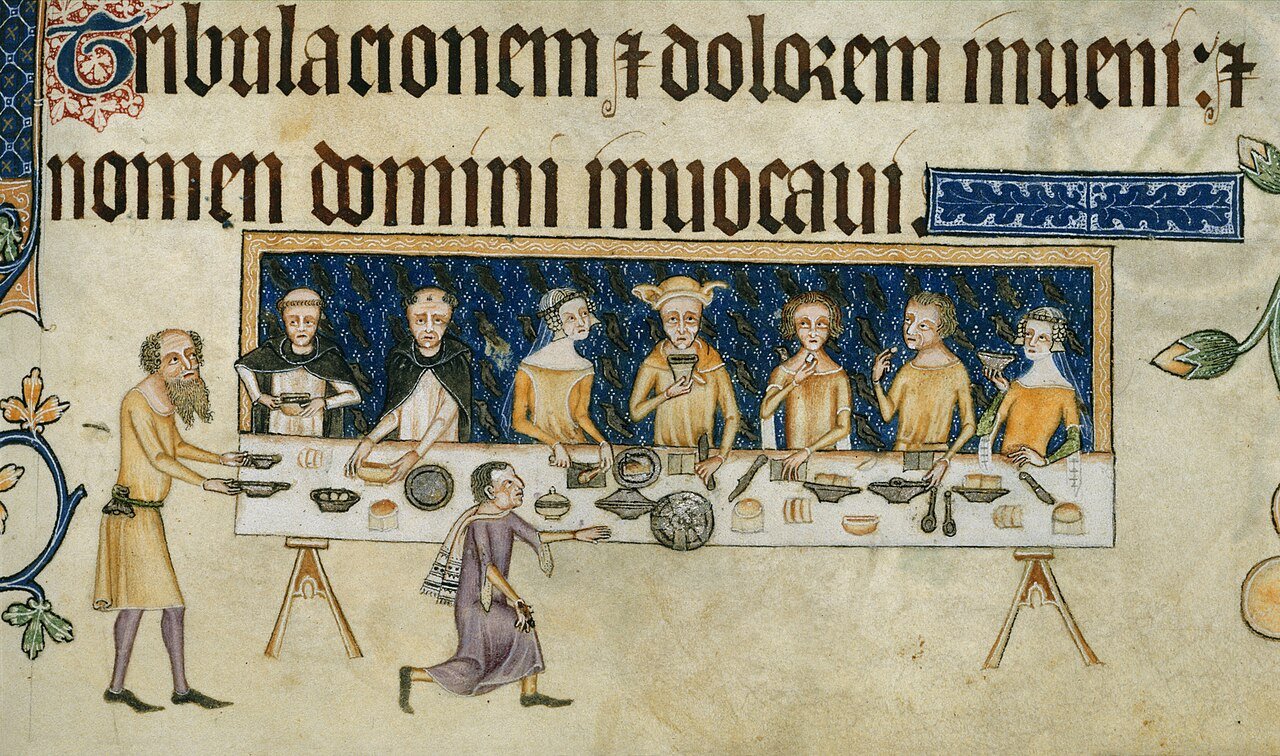
The people who ate heavily spiced food were exactly the people who never had to eat bad meat. Freedman’s research shows that the upper classes “ate what was rarest and most luxurious,” and that the big four, black pepper, cinnamon, ginger and saffron, were “a necessary show of prestige.” These same wealthy households could easily afford fresh meat, which, as CulinaryLore notes, was butchered daily. As our article on what medieval peasants ate explains, ordinary families rarely saw spices at all. A peasant with a piece of old bacon had salt, not saffron.
Selling rotten meat could put you in the pillory
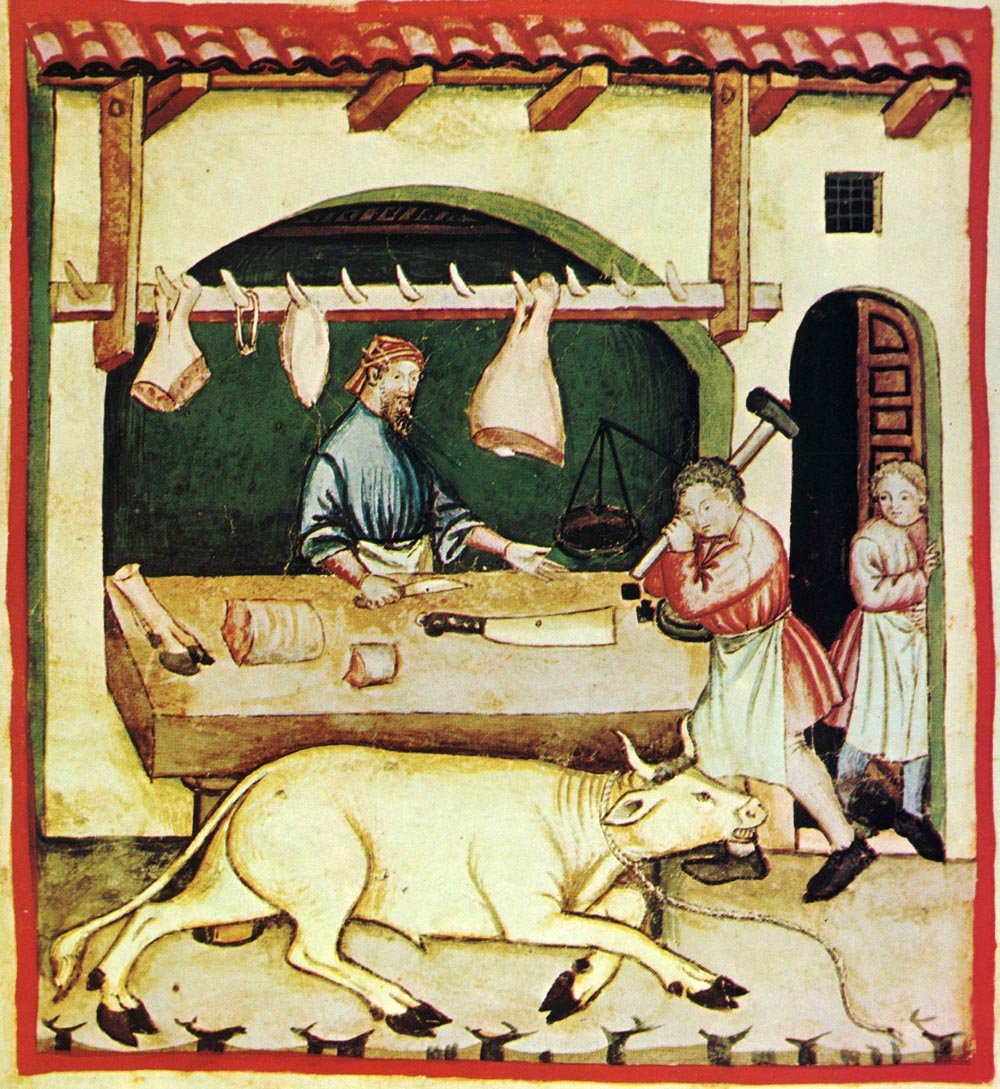
Medieval towns did not tolerate bad meat. Butchers were organised in guilds, and towns inspected what they sold. The London records collected in Riley’s Memorials of London give a vivid example from 1348. A man named John, son of John Gylessone, found a dead sow thrown out near the ditch outside Aldgate, skinned it and sold its flesh, cooked and raw. When he was caught selling “putrid and stinking meat,” he was sentenced to stand in the pillory at Cornhill while the rotten flesh was burnt beneath him. The woman who had bought the meat from him in good faith was set free.
Salt, smoke and fresh meat
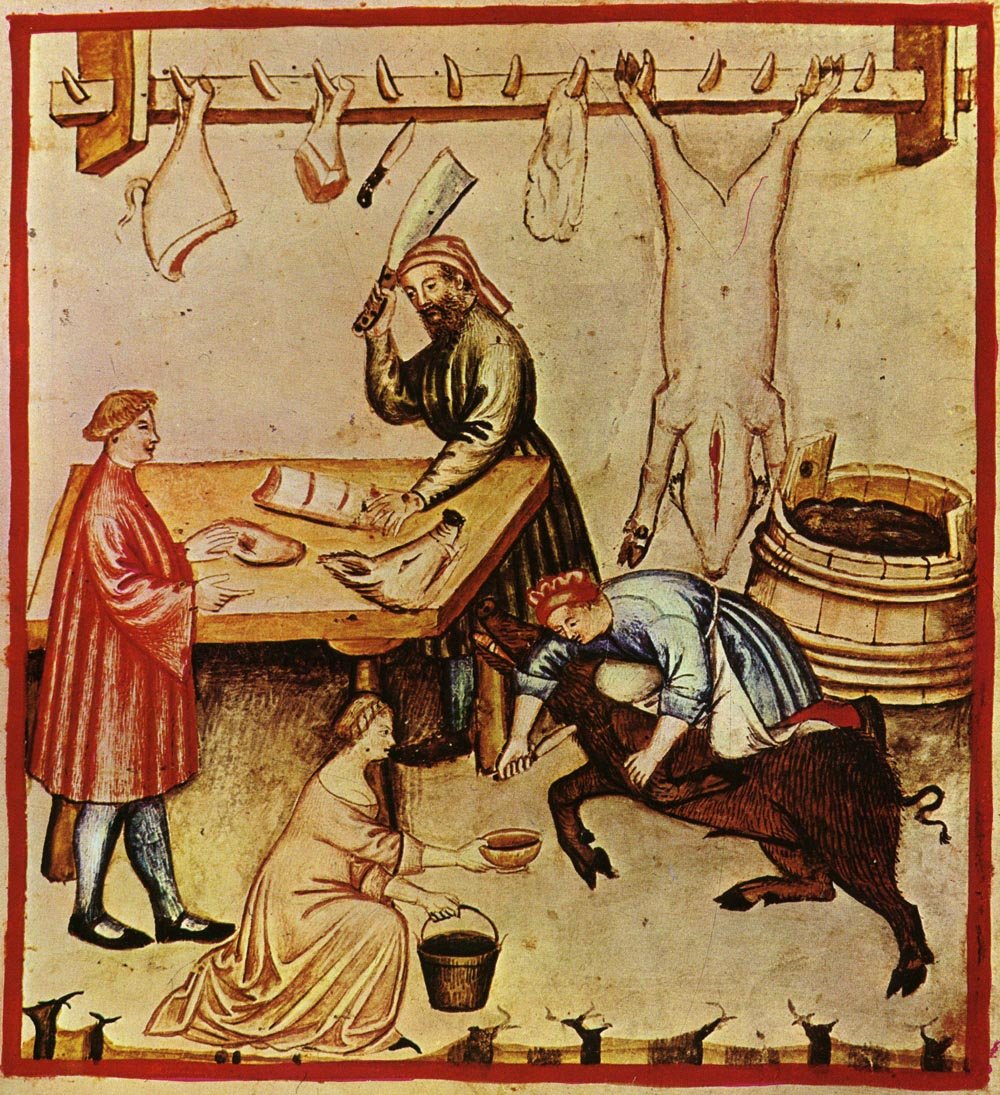
Medieval people also had good ways of keeping meat without fridges. CulinaryLore notes that drying, salting and smoking were well known, and people understood that cold, dry storage kept meat edible while warmth and damp made it rot. Animals were usually killed close to when they were eaten, and in towns butchers slaughtered fresh every day. Spices were even used together with salt in some preserving recipes. Rotten meat was not a normal part of medieval life, and it was certainly not something people tried to make tasty.
So why did people love medieval spices?
For three reasons, and none of them was rotten meat. The first was status: rare and expensive spices showed off a host’s wealth at great feasts such as the twelve days of medieval Christmas, just as an expensive wine does today. Freedman even suggests that meat was “a vehicle to show off the spices, not the other way around.” The second was health. Medieval doctors believed in the four humours, as you can read in our article on medieval medicine, and spices were thought to balance them. Spices even went into medieval tooth powders. The third was magic. Spices came from far away, and according to Freedman many people believed they came from the region of paradise itself.
Could medieval spices hide the taste anyway?
Even if someone had tried, it would not have worked. CulinaryLore quotes the historian Paul B. Newman: “masking an odor does not neutralize the biological consequences of consuming decayed food.” Spiced rotten meat would still make you very ill, and medieval people knew perfectly well that bad meat was dangerous. That is exactly why towns punished the butchers who sold it so harshly.
What do I think?
I believed this myth myself for years, because it sounds so logical. But once you see that a pound of saffron cost as much as five pigs, it becomes almost funny. It would be like pouring a bottle of expensive perfume over a burnt dinner instead of just cooking a new one. Medieval people were not stupid, and they certainly did not waste their money like that.
So, did medieval people use spices to hide rotten meat?
No. Medieval spices were far more expensive than meat, they were used mostly by the rich who had plenty of fresh food, and selling rotten meat could land a butcher in the pillory. People loved spices for their taste, for their supposed health benefits and above all as a sign of wealth. The rotten meat story is one of many medieval myths that say more about how we like to imagine the Middle Ages than about how people really lived.
Frequently asked questions
Did medieval people eat rotten meat?
Not normally. Meat was usually eaten fresh or preserved by salting, drying and smoking, and selling rotten meat was a crime that could be punished with the pillory.
How expensive were spices in the Middle Ages?
Medieval spices were very expensive. In 14th-century England, pepper cost around 1 to 3 shillings a pound and saffron 12 to 15 shillings, while a whole pig cost 2 to 3 shillings in 1338.
Why did medieval people use so many spices?
To show off their wealth, because they liked the taste, and because doctors believed spices helped balance the four humours of the body.
Who could afford spices in the Middle Ages?
Mostly nobles, rich churchmen and wealthy townspeople. Ordinary peasants rarely used imported spices and flavoured their food with local herbs and salt.
How did medieval people keep meat fresh?
By salting, smoking and drying it, keeping it cool and dry, and slaughtering animals close to when they were eaten.
Sources
- Corby Kummer, Yale Alumni Magazine, Posh spice, on Paul Freedman’s Out of the East (2008)
- University of California, Davis, List of prices of medieval items (after Christopher Dyer and others)
- H. T. Riley (ed.), Memorials of London and London Life, British History Online, Memorials: 1348
- Eric Troy, CulinaryLore, Spices Were Used to Mask the Taste of Bad Meat in the Middle Ages?