
The King in the Car Park: How Richard III Was Found
Most kings end up in a cathedral, a royal chapel or at the very least a grand stone tomb with a Latin inscription. Richard III ended up under a council car park in Leicester, a few feet below where office workers parked their hatchbacks. For more than five centuries nobody knew exactly where he was. Then, in 2012, a team of archaeologists, a very determined writer and a painted letter on the tarmac changed that. So pour yourself a cup of tea and let’s dig into the Richard III car park story, one of the strangest royal comebacks of all time.
Jump to a section:
Who was Richard III, in two minutes?
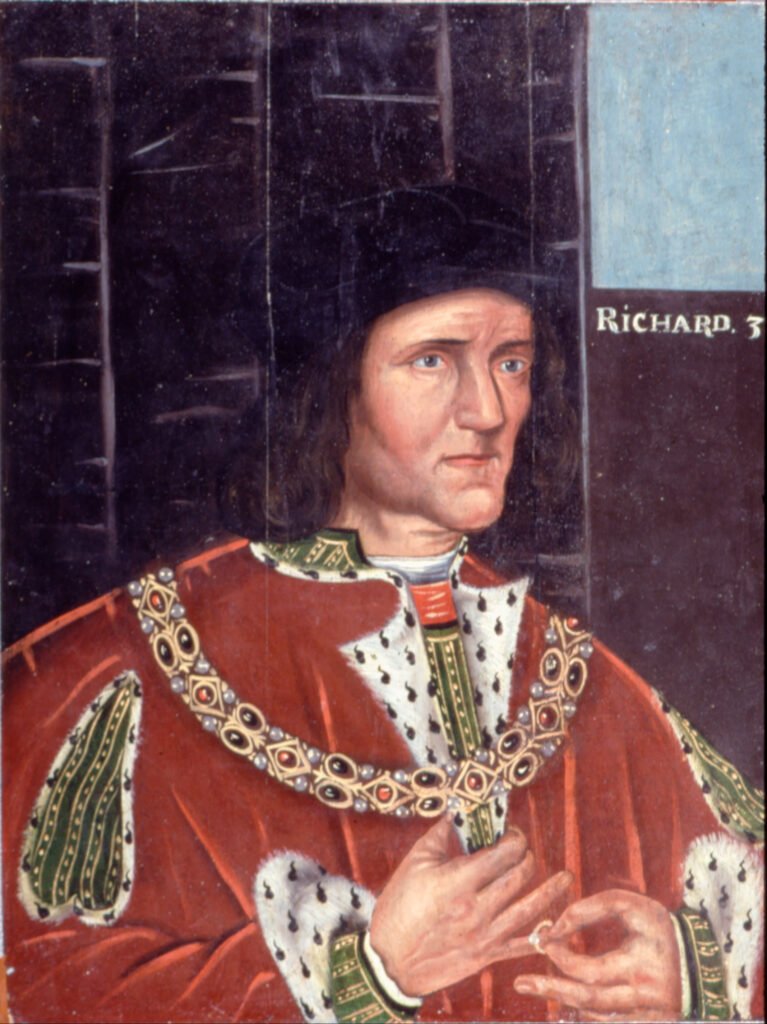
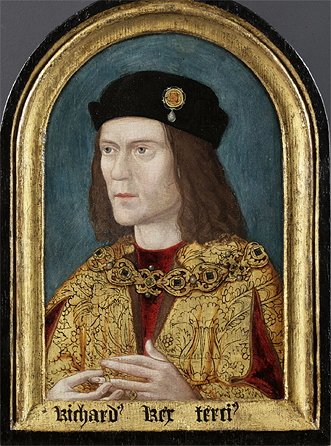
Richard was born on 2 October 1452 at Fotheringhay Castle in Northamptonshire, according to Britannica. He was the last king of England from the House of York, and the last of the long Plantagenet line.
He did not come to the throne in the usual way. In 1483 his young nephew, Edward V, should have been crowned. Instead, Richard took the crown for himself. Britannica’s word for this is blunt: he usurped it. Edward and his younger brother, the famous “Princes in the Tower”, were never seen in public again. What happened to them is still one of the great unsolved mysteries of English history, and scholars have never agreed on how much of the blame lands on Richard.
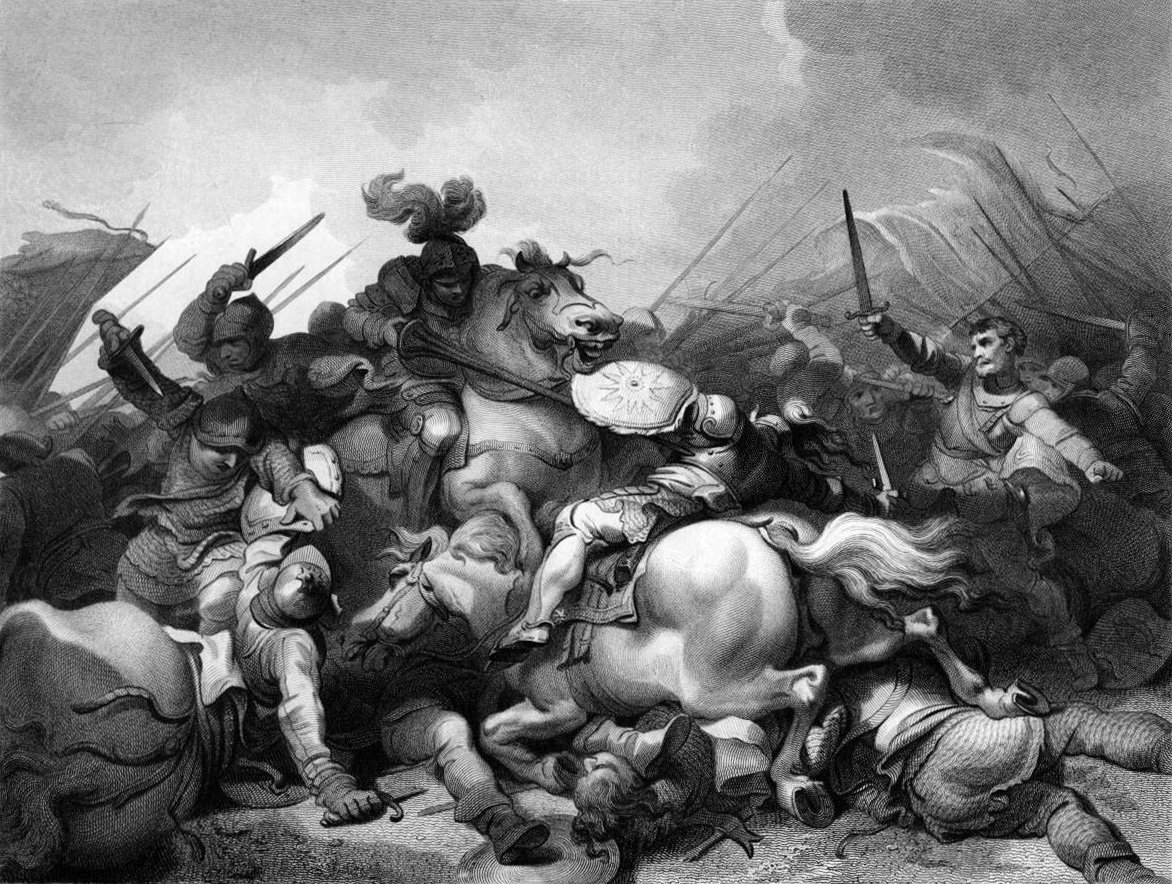
His reign was short. On 22 August 1485, near Market Bosworth in Leicestershire, he was defeated and killed by Henry Tudor, who became King Henry VII. Crowns changed hands this way surprisingly often, as the big piece on medieval kings shows in gory detail.
How did Richard III end up under a car park?
After the battle, Richard’s body was taken to Leicester and buried in the church of the Greyfriars, a friary in the town. It was not exactly a royal send-off.
Then the trail went cold. When Henry VIII shut down the monasteries in the 1530s, the friary disappeared. National Geographic explains that historians long assumed Richard’s bones had been dug up and dumped in the River Soar. Over the centuries the site was built over, and part of it ended up as a car park for a social services building: the future Richard III car park. A king of England, lost under the parking bays. You couldn’t make it up.
The Richard III car park and the woman who wouldn’t give up
Enter Philippa Langley, a woman on a mission to find the lost king. According to National Geographic, she visited the car park in 2004 and had a strange feeling that she was walking on his grave. On a later visit she noticed something that sounds like it came straight from a film script: one of the parking spaces had a large letter R painted on it.
Whatever that R was really for, it made a good omen, and Langley’s “Looking for Richard” project helped get the search off the ground. In August 2012, the University of Leicester began digging, working with the Richard III Society and Leicester City Council. The university itself calls it “one of the most ambitious archaeological projects ever attempted.” Considering that it involved digging trenches in a car park in search of a man who died in 1485, that seems fair.
What they found
Under the Richard III car park, the team located the remains of the Greyfriars church. Inside it lay a skeleton with a strongly curved spine and clear signs of a violent death. On 4 February 2013, the University of Leicester told the world: this was Richard III.
The curved spine was a major clue. National Geographic notes that it matched Richard’s known scoliosis, a condition that bends the spine sideways. So the old image of Richard’s twisted back had at least some basis in fact, even if later writers turned it into something monstrous.
The wounds were even more striking. A study published in The Lancet in 2014, led by Dr Jo Appleby of the University of Leicester and summarised by Medievalists.net, counted 11 injuries inflicted at or close to the moment of death. Nine were on his head. The blows that most likely killed him were two wounds to the base of the skull: one possibly from a sword or a staff weapon such as a halberd, the other from the tip of a bladed weapon. The skull injuries also suggest he had lost his helmet by the end. It was a brutal way to go, and a reminder of how dangerous battle was even for a king.
How DNA closed the case
A curved spine and battle wounds are convincing, but they are not proof. For that, the team turned to genetics.
They traced two living relatives on the female line, Michael Ibsen and Wendy Duldig. Live Science reports that Ibsen’s mitochondrial DNA was a perfect match to the skeleton, and Duldig’s differed by just one letter. The results, published in Nature Communications in December 2014, put the odds in favour of the skeleton being Richard at around 6.7 million to one.
The genes even hinted at what he looked like. According to Live Science, the young Richard was probably fair-haired with blue eyes. Not quite the dark, brooding villain of the stage.
There was one awkward surprise. Live Science reports that the Y chromosome of living men from Richard’s wider family, traced through the male line, did not match his. Somewhere along that line of fathers and sons there was at least one “break”, meaning a child whose real father was not the one in the records. Historians have been politely raising their eyebrows about it ever since.
A king’s funeral, 530 years late
Richard finally got the funeral he never had. On 26 March 2015, he was reburied in Leicester Cathedral, just across the road from the car park. CNN reported that the Archbishop of Canterbury led the prayers, and that the actor Benedict Cumberbatch, a distant relative of the king, read a poem written for the occasion by the Poet Laureate, Carol Ann Duffy.
There was a lovely detail, too. Michael Ibsen, whose DNA had helped identify the king, made the coffin himself, from English oak. CNN put the crowd lining the procession at roughly 35,000. Quite a turnout for a man who had spent five centuries beneath the tarmac.
Villain or victim of bad press?
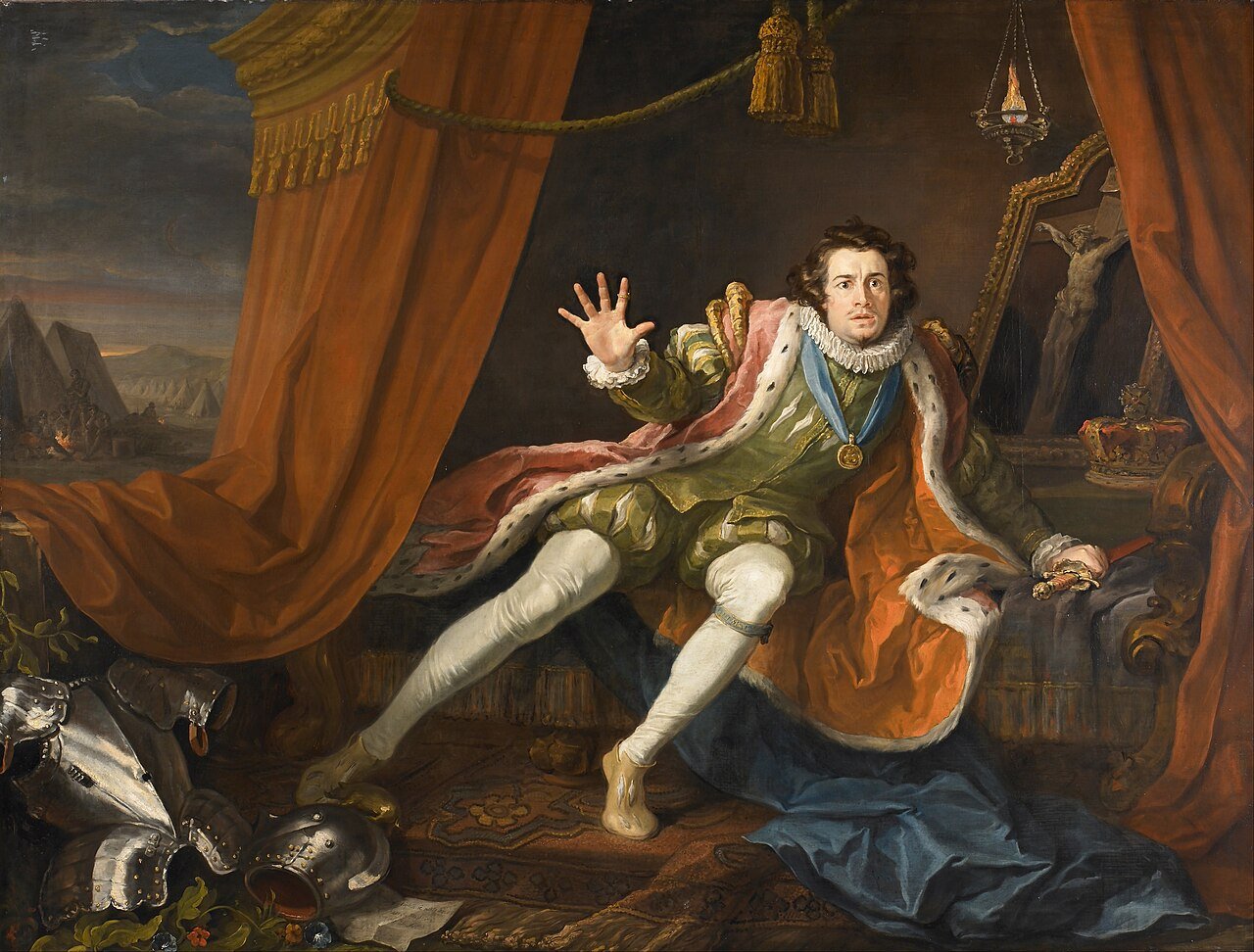
For centuries, Richard was the ultimate stage villain, largely thanks to the Tudors who replaced him and to Shakespeare’s play, which gave him a twisted body and a black heart. Britannica notes that for almost 500 years after his death he was usually painted as the worst of kings, but that modern scholars now take a more balanced view and see some of the old accusations as smears spread by his opponents.
Did he murder the princes? We still don’t know, and the Richard III car park can’t tell us. What the dig did show is that some of the old stories were exaggerated and some had a grain of truth. That’s history for you. It rarely sorts itself into neat heroes and villains. For more legends that grew up around the Middle Ages, dig into the collection of medieval myths on this site.
And the Richard III car park itself? In 2017, Atlas Obscura notes, the site was granted protected monument status, and a museum now stands where the dig took place. So if you are ever in Leicester, you can visit the most famous parking space in British history. Just don’t try to park in it.
Frequently asked questions
Where was Richard III found?
Beneath the Richard III car park, a council car park in Leicester, where the medieval Greyfriars church once stood, during an excavation that began in August 2012.
How did scientists prove the skeleton was Richard III?
Through a mix of evidence: the location, the curved spine, the battle wounds, radiocarbon dating and chemical analysis of his bones and teeth, and above all mitochondrial DNA that matched two living relatives descended through the female line from his sister, Anne of York.
How did Richard III die?
He fell fighting Henry Tudor’s army near Market Bosworth in 1485. His skeleton shows 11 wounds from around the time of death, and the fatal blows were most likely to the base of his skull.
Where is Richard III buried now?
In Leicester Cathedral, where he was reburied on 26 March 2015.
Sources
- University of Leicester, Richard III
- Encyclopaedia Britannica, Richard III
- Erin Blakemore, National Geographic, How did England’s lost king end up beneath a parking lot? (2023)
- Medievalists.net, Nine blows to the head killed Richard III, study finds (2014)
- Megan Gannon, Live Science, It’s really Richard: DNA confirms king’s remains (2014)
- CNN, King Richard III reburied in Leicester (2015)
- Atlas Obscura, King Richard III’s Car Park