
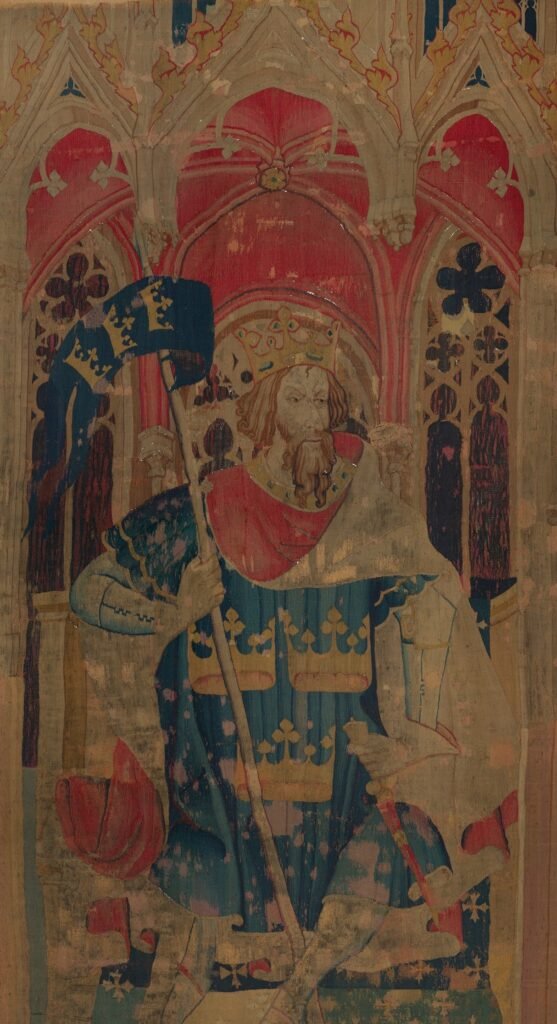
Was King Arthur Real? The Evidence Behind the Legend
Round Table, magic sword, a wizard on speed dial and a wife who may or may not be having an affair with your best knight. As CVs go, King Arthur’s is hard to beat. The trouble is that nobody can find his paperwork. So was King Arthur real, or is he the most successful fictional character ever to be mistaken for a historical one? Grab a cup of something warm. The answer involves a grumpy monk, a Welsh poem, a twelfth-century bestseller and a group of monks who dug up exactly what they hoped to find.
Jump to a section:
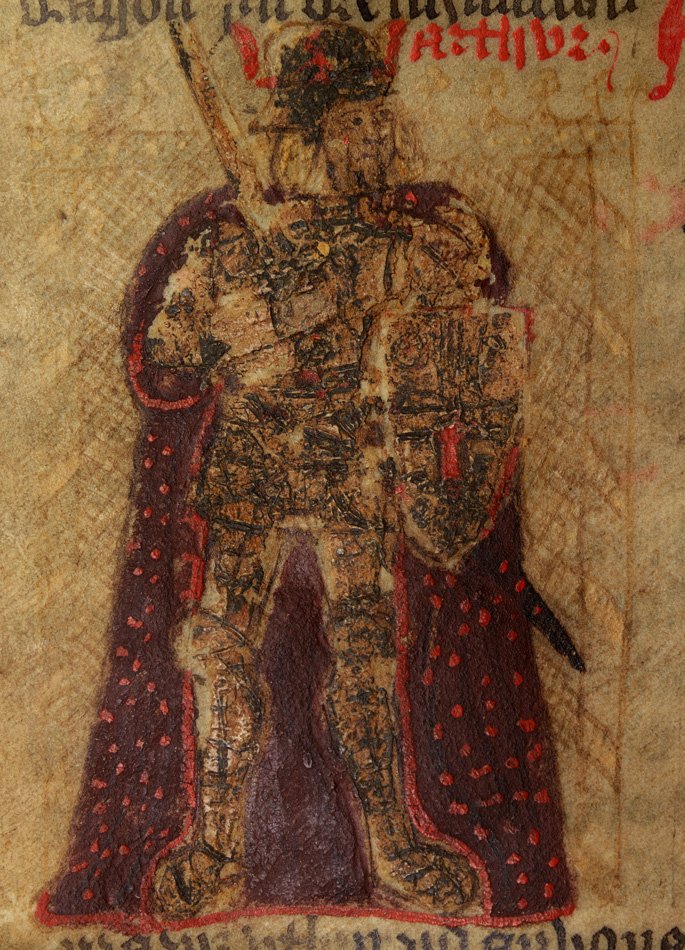
Was King Arthur real? The short answer
Nobody knows, and anyone who tells you otherwise with total confidence is selling something. Probably a book.
Encyclopaedia Britannica puts it carefully: nobody can be sure how the Arthur legends began, or whether they were based on a real person at all. Historic UK reaches the same place by a different road. There is very little hard evidence, historians disagree, and we may simply never know.
What we can do is something more fun. We can follow the trail of documents in the order they were written and watch Arthur grow, from a name in a poem into a king with a castle, a court and a dress code. Spoiler: he gets a lot bigger the further he gets from the time he supposedly lived.
Exhibit 1: the monk who never mentions him
If Arthur was real, he lived in the late 400s or early 500s, after the Romans had left Britain and the Saxons were moving in. Plenty of fighting, very little writing. Only one British author from those years has left us a substantial text: a monk called Gildas, who wrote a furious sermon known as On the Ruin and Conquest of Britain in the 500s.
Gildas tells us about a great British victory at a place called Mount Badon. Lovely. This is exactly the battle later legend gives to Arthur. So who does Gildas credit? Nobody. The only British war leader he names is Ambrosius Aurelianus, who led the fightback in the years before the battle. Of Arthur, not a word.
Now, in fairness to the Arthur fans, Gildas was not writing a history. He was writing a long and very angry telling-off for the rulers of his day, and he leaves out plenty of names. Silence is not proof. But if you were hoping for a nice contemporary witness, this is where your hopes get politely shown the door.
Exhibit 2: “but he was no Arthur”
The next clue is a single line of poetry. Y Gododdin is an old Welsh poem that honours warriors who fell in battle. In one verse, a fighter named Gwawrddur is praised for his courage, with one small catch: he was no Arthur.
Think about what that means. For the line to work, the audience must already have known Arthur as the gold standard of warriors, the person you compare everyone else to and find them lacking. It is the medieval version of saying “nice goal, but you’re no Messi”.
The problem is the date. According to Historic UK, the poem could have been composed at any point between the 600s and the 1000s. That is a window of four hundred years. A clue, yes. A smoking gun, no.
Exhibit 3: twelve battles and a very busy man
In the early 800s, roughly three hundred years after Arthur’s supposed lifetime, a Welsh compilation called the Historia Brittonum, or History of the Britons, finally gives him a proper job description. He leads the Britons against the Saxons and fights twelve battles, ending with Badon.
Three centuries is a long gap. Imagine writing the first account of a soldier from the 1700s using nothing but songs and stories you heard in the pub. You might get some things right. You would certainly get some things wrong.
Then come the Welsh annals, the Annales Cambriae, which add two dated entries. In 516, at the battle of Badon, Arthur is said to have carried the cross of Christ on his shoulders for three whole days and nights, and the Britons won. In 537 comes the battle of Camlann, where Arthur and someone called Medraut both fell. Medraut is the figure later storytellers turn into Mordred, the villain of the piece.
Precise dates feel reassuring, don’t they? Here’s the catch. The surviving annals were put together much later, in the 1100s and 1200s according to Historic UK, which is why many historians treat those early entries with caution.
Exhibit 4: the bestseller that changed everything
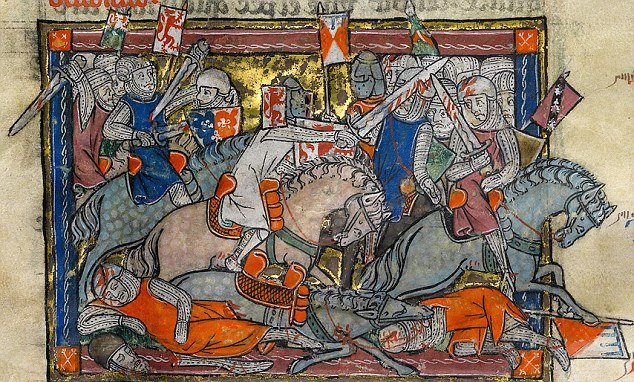
Up to this point Arthur is a war leader. A good one, apparently. Then, at some point in the late 1130s, a cleric based in Oxford named Geoffrey of Monmouth brought out a History of the Kings of Britain, and Arthur was promoted to superstar.
Geoffrey gave the world most of the story we know today. Arthur’s father Uther Pendragon, the wizard Merlin, a string of glorious foreign conquests, the treacherous Mordred. He also explained Arthur’s birth in a way that would not pass a modern film classification board. According to Geoffrey, Merlin used a magic potion to make Uther look exactly like Gorlois of Cornwall, so that Uther could spend the night with Gorlois’s wife at Tintagel. That night, Arthur was conceived.
Geoffrey said he was only translating an ancient book written in the British language. Britannica calls that claim a pure fabrication. People had doubts even then. Britannica notes that serious historians attacked the book from the start, and the chronicler William of Newburgh waved the whole thing away as fable.
Did anybody listen to him? Absolutely not. More than two hundred manuscripts of Geoffrey’s book survive, which for the Middle Ages is bestseller territory. Facts rarely win a fight with a good story, as you can see in our round-up of medieval myths that refuse to die.
Then the French got involved
Once Arthur hit the big time, other writers wanted a piece of him. The most important was Chrétien de Troyes, a French poet writing between about 1159 and 1190. World History Encyclopedia credits him with adding some of the most famous bits of the legend: the name Camelot for Arthur’s court, the quest for the Grail, and the love affair between Lancelot and Queen Guinevere.
Lancelot himself appears in no earlier Arthur story. Chrétien seems to have invented him. Which means the most famous knight of the Round Table is, technically, a French import who turned up about six centuries late.
The final polish came in England. Sir Thomas Malory, a fifteenth-century knight, retold the stories in English, and William Caxton printed the result at Westminster on 31 July 1485 as Le Morte Darthur. Only two copies of that first printing are known to exist today. Most modern versions of Arthur, from children’s books to blockbuster films, owe something to Malory. If you want to see how writers, painters and craftsmen of the period told stories like these, there is plenty more on medieval art and culture elsewhere on the site.
Exhibit 5: the grave the monks were lucky enough to find
Now for the best plot twist. In 1191, the monks of Glastonbury Abbey in Somerset made a startling announcement. Digging at the abbey, they had uncovered the burial place of Arthur and Guinevere.
And what a find it was. The researchers behind the Glastonbury Abbey archaeology project at the University of Reading describe the star exhibit: a lead cross, which in translation read “Here lies buried the renowned King Arthur, with Guinevere his second wife, in the Isle of Avalon”. Handy. Graves rarely come with such a clear label. The earliest account, by Gerald of Wales, adds a coffin made from a hollowed-out oak, huge bones showing ten or more wounds, and a woman’s yellow hair that crumbled to dust the moment a monk touched it. Dramatic stuff.
Suspiciously dramatic, you might say. The abbey had recently lost most of its buildings to a fire, and a famous royal grave was a superb way to attract visitors and their money. Atlas Obscura sums up the common view: it was probably a publicity stunt to raise interest and cash. It worked beautifully. In 1278 King Edward I came in person to watch the remains reburied in a black marble tomb. Edward was a man who knew the value of a good legend, as anyone who has read about medieval kings and their image problems will appreciate.
The tomb was destroyed after Henry VIII closed the monasteries, so nobody can test those bones today. Convenient.
The Arthur industry: castles, tables and royal fan clubs
Medieval rulers did not just read about Arthur. They wanted to own a piece of him.
In 1233 Richard, Earl of Cornwall, brother of King Henry III, swapped three of his manors for land that included Tintagel, and in the years that followed he built a castle there. English Heritage points out that the site was useless militarily. The most likely reason for building it was to place himself inside the Arthur story that Geoffrey had set there. It’s the medieval equivalent of buying the house from your favourite film.
Funnily enough, Tintagel really was important long before Geoffrey. Between about the 400s and 600s it was a major stronghold, probably home to the rulers of Cornwall, and digs there have turned up fragments of fine pottery shipped in from the Mediterranean. Real rulers, real trade. Just no name tag saying “Arthur”.
Then there is the Round Table at Winchester. It is a genuine medieval object, about 5.5 metres across and weighing around 1,200 kilograms. Tree-ring dating places the timber in the later 1200s, and the table was probably made around 1290 for a tournament held under Edward I, our Arthur fan from Glastonbury, to celebrate the betrothal of one of his daughters. Its famous paintwork came later still. Henry VIII ordered the paint job, with a Tudor rose in the middle and a king on a throne who is thought to be Henry himself, dressed up as Arthur. Subtle, Henry. Very subtle.
So, was there a real man behind the legend?
So, was King Arthur real? Here is where we land. There may have been a British war leader around the year 500 whose name was remembered in songs and stories. Many historians think that’s possible. Some think it’s likely. Others think Arthur was a figure of folklore from the very start, and that the “historical” details were added later to make him fit.
What we can say for sure is this:
- No document from Arthur’s own lifetime names him.
- The earliest detailed account was written about three hundred years later.
- Almost everything famous about him, from Merlin to Lancelot to the Grail, was added between the 1130s and the 1400s.
- Medieval monks, earls and kings had excellent reasons to keep the legend going, and they did.
In other words, King Arthur may or may not have existed, but the medieval King Arthur, the one with the knights and the castle and the sword, is a creation of storytellers. That doesn’t make him any less interesting. If anything, a hero invented and reinvented for a thousand years reveals more about the people who loved him than a single real warlord ever could. And if you fancy a story about real knights and real sieges, the story of medieval siege warfare has no wizards in it at all. Sorry, Merlin.
Frequently asked questions
Is there any proof that King Arthur existed?
No firm proof. No source from his supposed lifetime, around 500, mentions him. The earliest detailed account, the Historia Brittonum, dates from the early 800s.
Where does the King Arthur legend come from?
It grew from early Welsh poems and chronicles. Geoffrey of Monmouth turned it into a full story in the 1130s, French writers such as Chrétien de Troyes added Lancelot and the Grail, and Thomas Malory’s Le Morte Darthur of 1485 gave it its classic English form.
Was King Arthur buried at Glastonbury?
The monks of Glastonbury Abbey claimed in 1191 to have found his grave. Most historians treat the find as a medieval publicity stunt, and the tomb was later destroyed.
Is the Round Table at Winchester real?
It is a real medieval table, but it dates from the later 1200s, centuries after Arthur’s supposed lifetime. It was probably made while Edward I was king, and it was painted for Henry VIII.
Sources
- Encyclopaedia Britannica, King Arthur
- Encyclopaedia Britannica, Geoffrey of Monmouth
- Historic UK, Did King Arthur Exist?
- The Camelot Project, University of Rochester, Arthurian References in the Annales Cambriae
- Stanford University, Geoffrey of Monmouth (course notes on William of Newburgh’s criticism)
- Boydell & Brewer, The Historia Regum Britannie of Geoffrey of Monmouth
- World History Encyclopedia, Chrétien de Troyes
- The Morgan Library & Museum, Le Morte Darthur (Caxton, 1485)
- University of Reading, Glastonbury Abbey Archaeological Archive Project, Myths and legends
- Atlas Obscura, King Arthur’s Tomb
- English Heritage, Richard of Cornwall and Tintagel and Tintagel Castle: History and Legend
- Atlas Obscura, Winchester Round Table
- Winchester Studies, King Arthur’s Round Table: an archaeological investigation