
Eleanor of Aquitaine: Queen of Two Kingdoms
Most medieval queens got one shot at the top job. Eleanor of Aquitaine got two, in two rival kingdoms, and then spent her seventies running an empire while her sons squabbled over it. She went on crusade, divorced a king of France, married the future king of England eight weeks later, raised a rebellion against him, survived about fifteen years under lock and key and still outlived nearly all her children. If her life were a TV series, critics would call it far-fetched. Here is the real story, with the legends carefully labelled.
Jump to a section:
The richest teenager in Europe
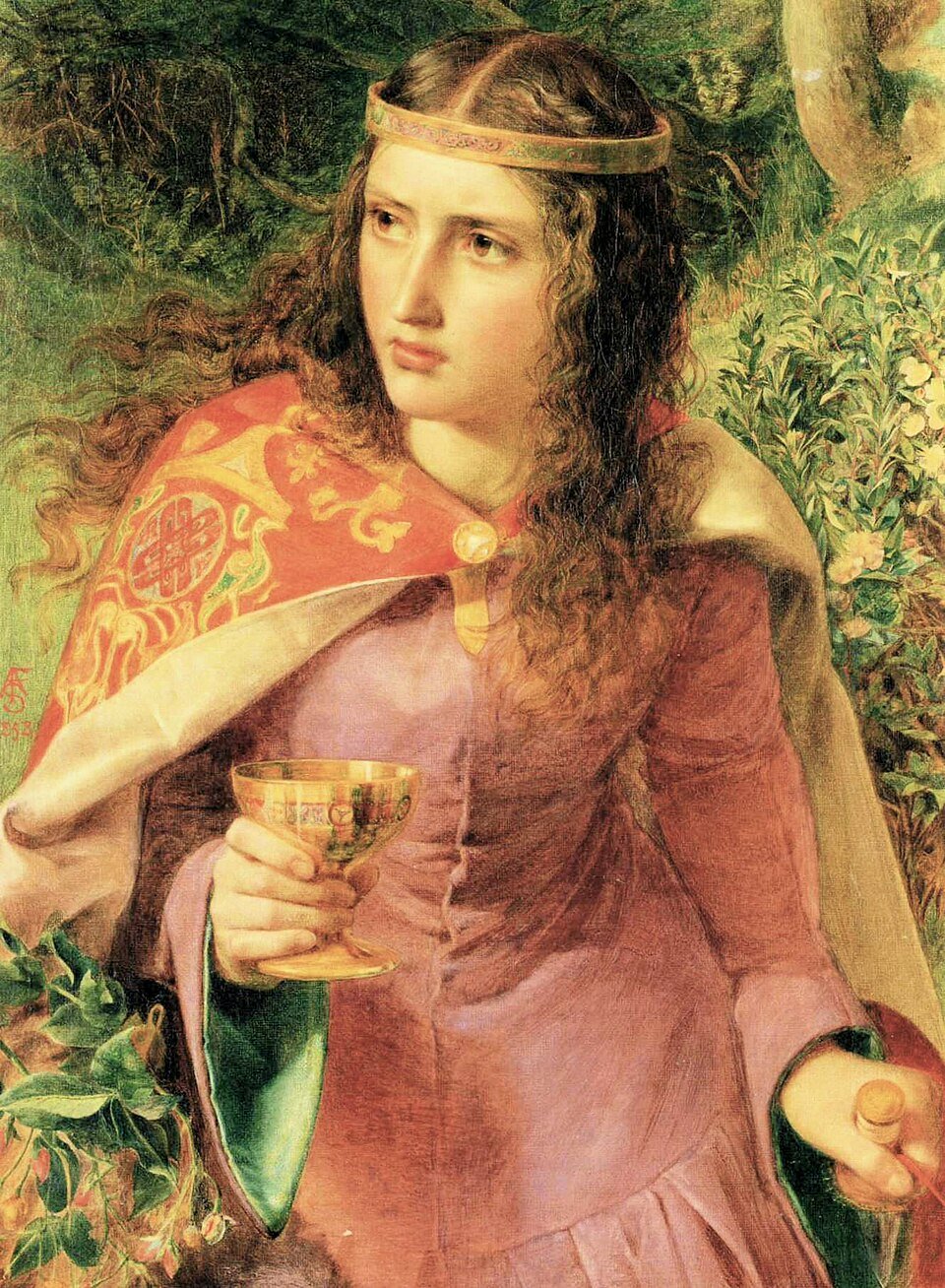
Eleanor was born around 1122 or 1124, probably in Bordeaux, into a family that liked a good song. Her grandfather, Duke William IX of Aquitaine, is remembered as one of the earliest troubadours, the poets who sang about love in the southern French language. Her father, William X, ruled a duchy that covered a large slice of what is now south-western France.
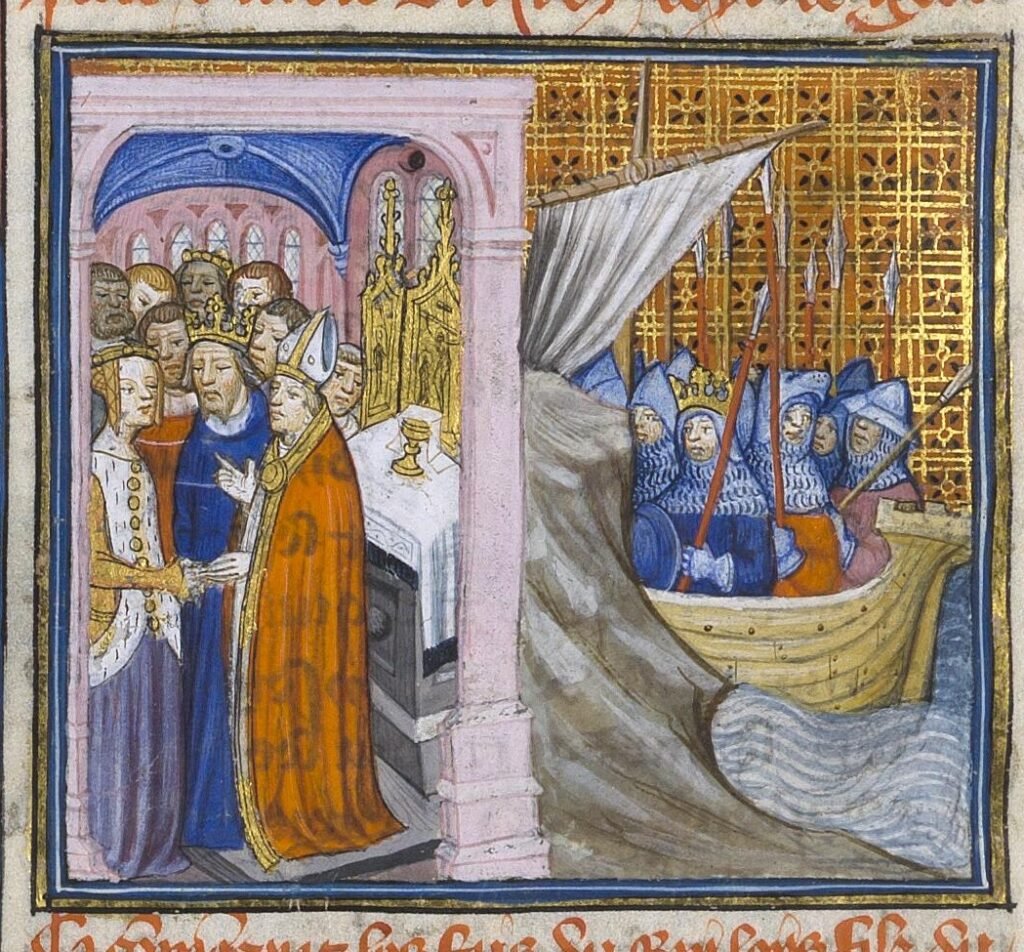
In the spring of 1137 he died on pilgrimage, on Good Friday, and his teenage daughter became Duchess of Aquitaine. That made her the most eligible young woman in Europe, and the King of France moved fast. On 25 July 1137, Eleanor married his son Louis in the cathedral at Bordeaux. Within days the old king was dead too, and the bride of a few days was suddenly Queen of France.
Eleanor of Aquitaine on crusade
Louis VII was pious, serious and, by most accounts, not much fun. Eleanor of Aquitaine was none of those things. In 1147 the couple set off on the Second Crusade, and Eleanor took the cross herself. The historian Joshua J. Mark notes that she travelled with around 300 ladies-in-waiting, and that writers have long complained she treated the expedition rather like a trip to a palace ball.
The crusade went badly. In the mountains of Asia Minor, at Mount Cadmus, Turkish forces ambushed the French army and caused heavy losses. Blame fell on Geoffrey de Rancon, who commanded the vanguard. He happened to be one of Eleanor’s vassals, so plenty of people blamed her as well. In Antioch, the couple stayed with Eleanor’s uncle, Prince Raymond, and the rumours really got going. Later chroniclers hinted at an affair between niece and uncle. There is no proof, but the marriage never really recovered. For the wider story of that disappointing expedition, read the Crusades explained.
Divorce, French style
The couple had two daughters but no son, which mattered enormously to a king. In March 1152, a church council at Beaugency ended the marriage. The official reason was consanguinity: Eleanor and Louis were too closely related. They were distant cousins, as half the nobility of Europe were, but this was the respectable way out of a royal marriage that wasn’t working. The daughters were declared legitimate and stayed with their father.
Eleanor didn’t waste time. On 18 May 1152, about eight weeks after the annulment, she married Henry, Duke of Normandy and Count of Anjou, in a quiet ceremony at Poitiers. He was around eleven years younger than her, energetic and ambitious. Two years later he became King Henry II of England. Eleanor’s lands went with her, so the King of France had just watched half his kingdom’s south walk across to his greatest rival. Awkward.
Queen of England and mother of kings
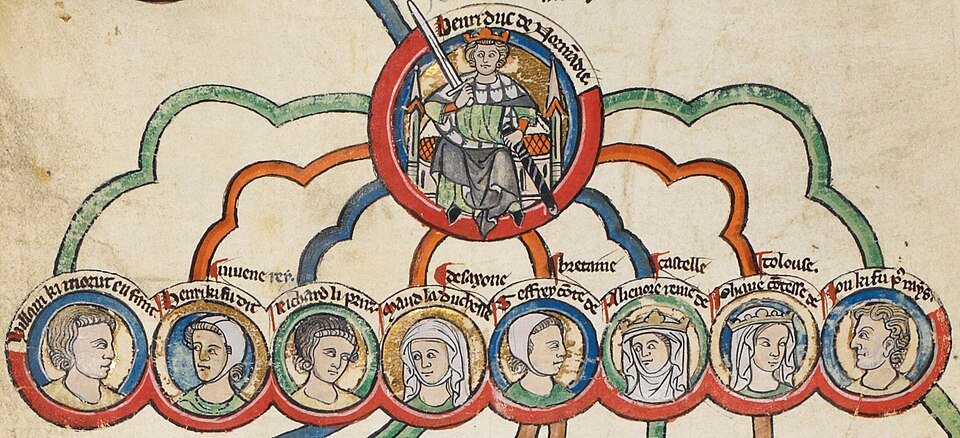
Henry and Eleanor had eight children, five sons and three daughters. Their household was never boring. The marriage gradually soured: Henry had a series of mistresses, the best known being Rosamund Clifford, and he kept a tight grip on Aquitaine, which Eleanor regarded as hers. From the late 1160s she lived mostly in Poitiers, ruling her own lands and keeping a lively court.
That court gave rise to one of the great romantic myths about her: the “courts of love”. A writer called Andreas Capellanus described noble ladies, Eleanor among them, judging lovers’ disputes like magistrates. It’s a lovely picture, but as World History Encyclopedia notes, scholars have repeatedly questioned whether these courts ever existed or were just a literary invention. Treat them as fiction until proven otherwise.
Rebellion and fifteen years under guard
In 1173, Henry’s eldest surviving son, also called Henry and known as the Young King, rebelled against his father. His brothers Richard and Geoffrey joined him, apparently with their mother’s encouragement. Many of the barons were furious with the king, and the murder of Thomas Becket in 1170 had not helped Henry’s reputation either.
Eleanor tried to reach her sons in France but was caught on the way. The Canterbury monk Gervase reported that she was dressed in men’s clothes at the time, which, if true, shows she knew exactly how much trouble she was in. The revolt collapsed in 1174, and Henry kept his wife a prisoner for the rest of his reign. For about fifteen years she was moved from one royal castle to another, occasionally allowed out for great family occasions but never free.
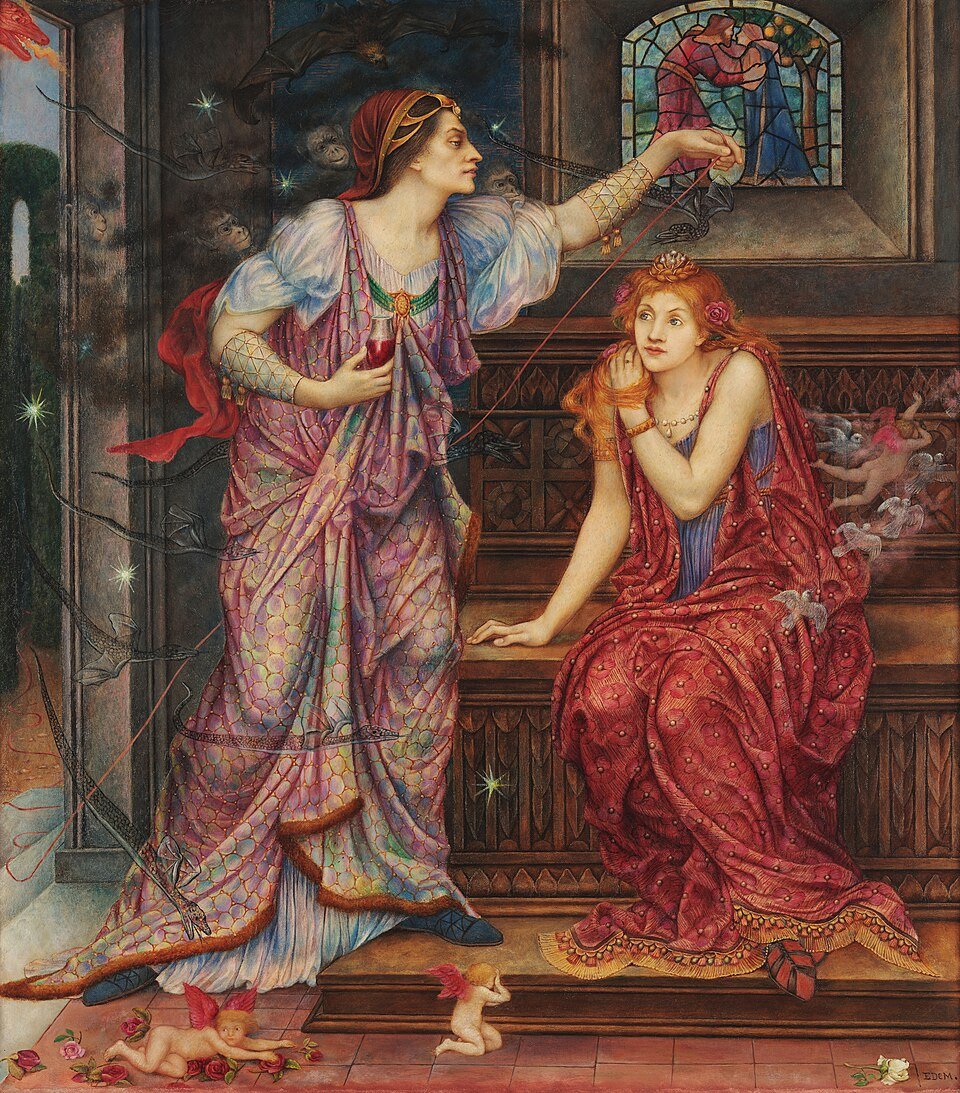
Later storytellers couldn’t resist making things even more dramatic. In ballads and plays, Eleanor tracks Rosamund through a maze at Woodstock and forces her to choose between a dagger and a cup of poison. It’s pure invention. Rosamund probably died at Godstow nunnery around 1176, while Eleanor was safely locked up elsewhere.
The queen mother takes charge
Henry II died in July 1189, and Eleanor was freed. Her favourite son, Richard the Lionheart, became king and almost immediately left for the Third Crusade. In his absence, his mother was one of the most powerful people in his lands, issuing orders and keeping a watchful eye on his restless brother, John.
Then, on his way home, Richard was captured in Austria and handed to the German emperor, Henry VI. The ransom demanded was colossal: 150,000 marks, which Wikipedia notes was two to three times the English crown’s yearly income. Eleanor of Aquitaine organised the fundraising, which taxed nearly everyone and stripped churches of their gold and silver. She then travelled to Germany herself, by now about seventy, and Richard was released on 4 February 1194.
She still wasn’t finished. When Richard died in 1199, she backed her youngest son, John, against her grandson Arthur. In the spring of 1200, when she was in her mid-to-late seventies, she crossed the Pyrenees to Castile to fetch one of her granddaughters as a bride for the heir to the French throne. She met two sisters and chose Blanche, who later ruled France as regent for her own son. Two years after that, Arthur besieged his grandmother in the castle of Mirebeau, and John rushed to rescue her. How that rescue went is part of the case for and against King John as England’s worst king.
Fontevraud and the legend
Eleanor of Aquitaine died on 1 April 1204, at around 80, and was buried at Fontevraud Abbey in the Loire Valley, near Henry II and Richard. Her painted stone effigy is still there. It shows her lying peacefully with an open book in her hands, the very picture of a quiet, reading queen. Given her career, it may be the most misleading portrait of her ever made.
She outlived all but two of her children, saw three of her sons crowned kings of England and left daughters and granddaughters married into the ruling families across Europe. To see how she fits among the rulers of her age, explore our overview of medieval kings and queens.
Frequently asked questions
Which countries was Eleanor of Aquitaine queen of?
First France, later England. She was queen of France from 1137 until her marriage to Louis VII was annulled in 1152, and queen of England from 1154, when her second husband became Henry II.
Did Eleanor really poison Rosamund Clifford?
No. The poison-and-dagger story appeared long after both women had died. Rosamund most likely died at Godstow nunnery while Eleanor was a prisoner.
How many children did she have?
Ten: two daughters with Louis VII, and five sons and three daughters with Henry II. Two of the sons, Richard and John, became kings of England.
Why was she imprisoned?
Because she supported her sons’ rebellion against their father in 1173–74. Henry II kept her in custody until he died in 1189.
Sources
- Wikipedia, Eleanor of Aquitaine
- Joshua J. Mark, World History Encyclopedia, Eleanor of Aquitaine (2019)
- Wikipedia, Revolt of 1173–1174
- Wikipedia, Richard I of England
- Wikipedia, Blanche of Castile
- Wikipedia, Rosamund Clifford