
Undermining: How Medieval Miners Brought Down Castle Walls
Some medieval sieges were loud: crashing boulders, splintering gates, a lot of shouting. The really dangerous attack was the one you couldn’t hear. While the defenders watched the army in front of them, a team of diggers was quietly burrowing towards their foundations like very determined moles. Medieval siege mining was slow, dirty and terrifying for everyone involved, and when it worked, an entire tower could simply drop into a hole. Grab a shovel and a candle, and mind your head.
Jump to a section:
What was medieval siege mining?
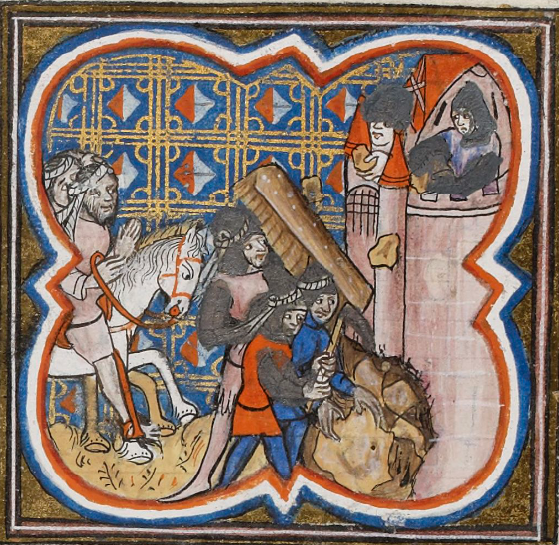
Forget gold and coal. In a siege, a “mine” was a tunnel dug under an enemy wall to make it fall down. The idea was simple. Diggers cut a passage beneath the foundations and held up its roof with timber props. When the gallery was wide enough, they stuffed it with brushwood and anything else that burned, set it alight and ran. Once the props turned to ash, the gallery’s roof dropped, and the stonework sitting on top of it lost its footing.
Today we call this sapping or undermining, and the people who did it sappers or miners. Before explosives, as Wikipedia’s summary of the technique puts it, the enemy’s walls collapsed “when the sap’s supports were removed”. No gunpowder required, just patience, muscle and a lot of firewood.
The trick was older than any castle. The Greek historian Herodotus tells how Persian troops spent nine months tunnelling under the walls of Barca, in Libya, during the 6th century BC. A local blacksmith found their tunnels with a bronze shield: he laid it against the ground all around the inside of the walls and listened. Where the earth was solid, the shield stayed silent. Where diggers had hollowed it out, the bronze rang. The townspeople dug down, met the Persians head-on and killed them. History’s first metal detector, sort of.
How did a siege mine actually work?
Digging under a wall while archers shoot at you from the top of it is nobody’s idea of a career. So the miners started at a safe distance, or worked inside a roofed wooden shed pushed up to the wall. English writers called this shelter a “cat”, presumably because it crept up on its prey. At Bedford in 1224, the miners worked under the protection of one.
Underground, the work went like this:
- Dig. Miners cut a gallery towards and then beneath the target, usually a tower or a corner, where the masonry carried the most weight.
- Prop. As they went, they braced the roof with wooden posts and beams, so the whole thing didn’t collapse on top of them before it was meant to.
- Fill. When the chamber under the wall was big enough, they packed it with fuel: brushwood, straw, timber and, at Rochester, pig fat.
- Fire. They lit it and got out fast. The props burned through, the roof fell in, and the wall above slumped into the gap.
The result wasn’t always a neat hole. Sometimes a whole tower leaned and crashed down; sometimes the masonry merely cracked and sagged. Either way, it opened a breach for the assault troops waiting outside, which was the whole point.
Forty pigs and a king in a hurry
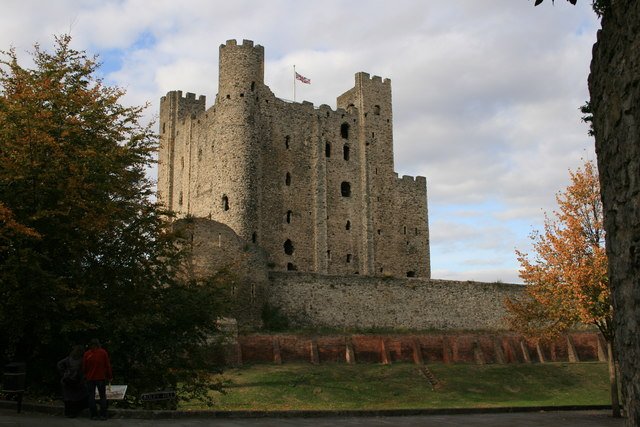
The most famous case of medieval siege mining in England comes from 1215, when King John trapped a band of rebel barons in Rochester Castle. His miners tunnelled under the south-east corner of the great stone keep, and the king wanted a fire hot enough to finish the job. On 25 November 1215 he sent an order to Hubert de Burgh, his justiciar, who was at Dover. In the Magna Carta Project’s translation, John asked for “forty of the fattest bacon pigs from those least worth eating”, to be sent “by day and night”. The grease was meant to make the mine burn fiercely.
It worked. Down went a whole corner of the keep, although the stubborn rebels held out behind the internal wall until hunger beat them. That miserable autumn gets its own chapter in the story of whether King John was really England’s worst king. And if you visit Rochester today, look at the keep’s corners. Three are square. The fourth is round, because, as English Heritage explains, the south-east turret had to be rebuilt in the 1220s after the original square tower collapsed in the siege. It’s a scar you can still photograph.
Bedford, 1224: miners against a castle
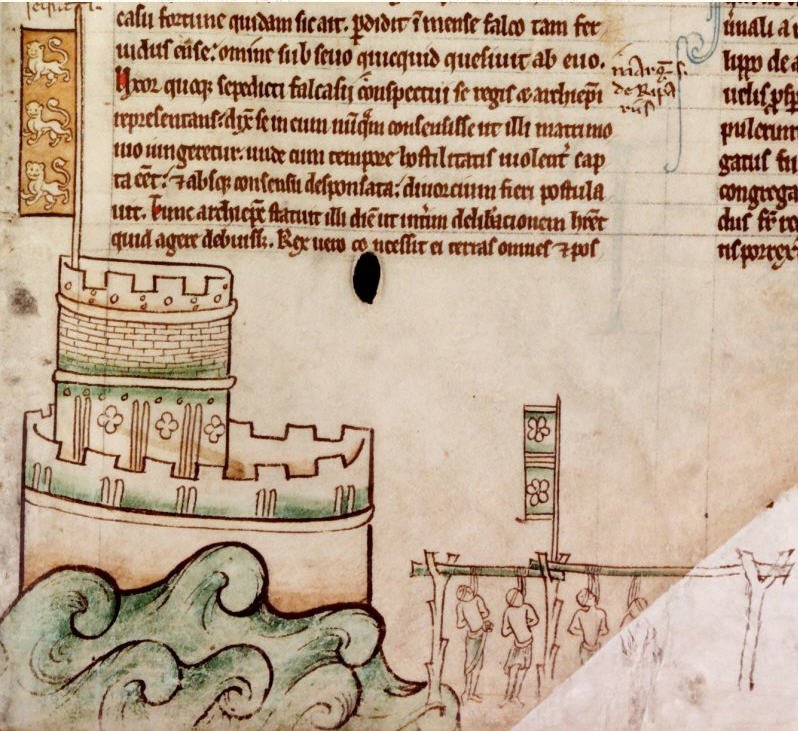
Nine years later, John’s son Henry III, then a teenager, laid siege to Bedford Castle, held by the men of a powerful and unruly baron, Falkes de Bréauté. Bedfordshire Archives says the siege began on 20 June 1224 and dragged on for about eight weeks. The attackers broke through the outer defences, then mined under a stretch of wall, filled the tunnel with burning bundles of sticks and brought part of it down. Finally, they went for the keep itself. A fire set under its walls cracked the stones and filled the tower with smoke, and the garrison gave up.
Surrender didn’t save them. Falkes’s brother William, who commanded the castle, was hanged along with many of his men. Afterwards the castle was deliberately wrecked so that it could never be used against the king again. Medieval siege mining could end a siege, but it did not necessarily end it kindly.
Specialists in the dark
Good miners were valuable, and kings knew exactly where to find them. In England, the answer was often the Forest of Dean in Gloucestershire, with its iron and coal workings. In his 1858 history of the forest, H. G. Nicholls collected royal orders summoning its men to war. In 1310 the king wanted “one hundred archers and twelve miners”. A few years later, the keeper of the forest had to bring “twenty of the strongest miners in his bailiwick” to Newcastle upon Tyne. One imagines a lot of nervous flexing.
The same was true elsewhere. When the Ottoman sultan Mehmed II besieged Constantinople in 1453, many of his sappers were, according to the historian Roger Crowley, miners of German origin sent from the silver-mining town of Novo Brdo by the Serbian ruler. Skilled underground labour was an international business, and medieval siege mining was a job for professionals, not for any soldier handed a spade.
Fighting back underground
Defenders weren’t helpless. If they suspected a mine, they could dig a tunnel of their own, a countermine, aimed at the enemy’s gallery. When the two broke through to each other, the fighting happened in the dark, in a space barely tall enough to stand in. Defenders also tried smoke, fire and flooding, or simply knocked the props out and let the tunnel collapse on the people inside.
Constantinople in 1453 saw some of the fiercest underground fighting of the Middle Ages. Crowley, as summarised by Wikipedia, describes how the Byzantines intercepted the first enemy tunnel on the night of 16 May, guided by an engineer called Johannes Grant, who was probably Scottish. They destroyed others over the following days with Greek fire and hand-to-hand combat. On 23 May, two captured Ottoman officers were tortured into revealing where all the remaining tunnels were. Every one was destroyed. The great walls finally fell to cannon and a final assault on 29 May, but not to miners.
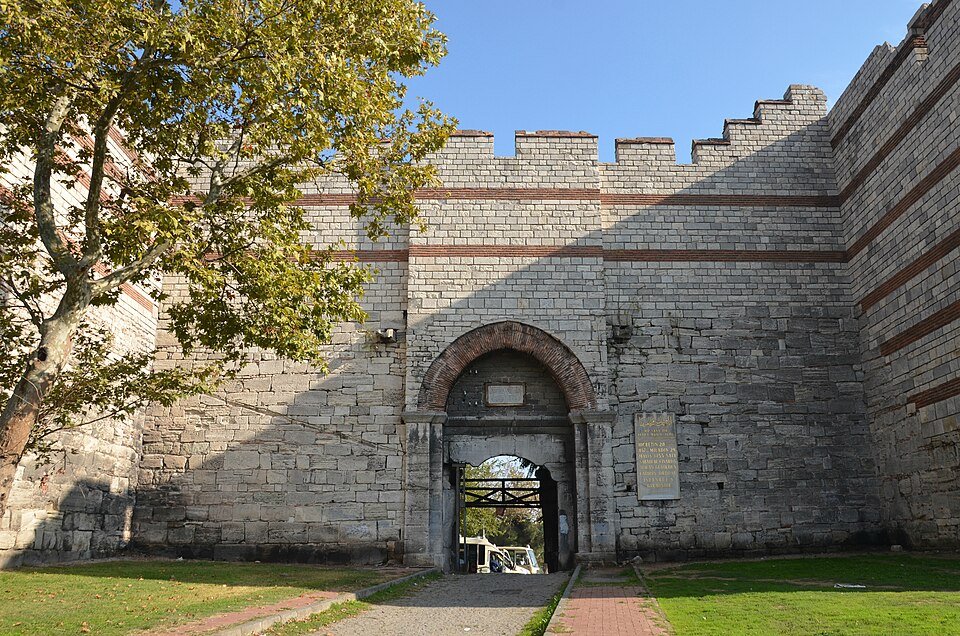
Builders fought medieval siege mining too, long before the first spade went in. A castle on solid rock or behind a wide, water-filled moat was very hard to dig under. There is a reason so many of the strongest fortresses perch on cliffs.
When mining won the day
In the Crusader states, mining was often decisive. In April 1285 the Mamluk sultan Qalawun besieged Margat, a huge clifftop fortress in Syria held by the Knights Hospitaller. After more than a month, his sappers fired their mines and brought down one of the castle’s main towers. The defenders then found how many more tunnels ran beneath them, and some accounts say they were actually invited to go and see them. Realising what was coming, they surrendered. Qalawun let them leave with everything they could carry.
Six years later, the Mamluks did the same thing on a bigger scale at Acre, the last great Crusader city. Tower after tower was undermined until the defences gave way, and the city fell on 18 May 1291, although the Templars’ seaside fortress held out for another ten days. To see how that ended two centuries of war, read the Crusades explained.
From fire to gunpowder
Then came the bang. Around 1500, engineers began packing tunnels with gunpowder instead of firewood. A gunpowder mine didn’t just topple a wall; it blew it apart. The military historian John Rickard describes how the Spanish engineer Pedro Navarro spent three weeks tunnelling through the rock under the Castel dell’Ovo at Naples. On 26 June 1503 the mine went off, wrecking the chapel and killing the governor and his council. The survivors surrendered immediately. It’s a key moment in the larger story of how gunpowder ended the age of castles.
Medieval siege mining was the unglamorous side of war: no shining armour, no banners, just mud, smoke and men with picks in the dark. Yet it brought down more walls than many a mighty machine. For the full range of ways to crack a fortress, from starving it out to climbing over the top, explore medieval siege warfare.
Frequently asked questions
Did medieval sappers use explosives?
Not at first. Until the late 1400s, medieval siege mining relied on fire: the miners burned the wooden props holding up their tunnel. Gunpowder mines only became common around 1500.
Was a siege mine a quick job?
Rarely. It varied with the soil, the rock and the distance. A mine could take days or weeks, which is why defenders often had time to notice and dig a countermine.
Why did miners aim for corners and towers?
Because they carried a lot of weight and were hard to repair quickly. Bring down a corner and the walls on either side lose their support too, as Rochester’s rebuilt round tower still shows.
How could defenders tell they were being undermined?
By looking and listening. Fresh spoil heaps, a suspicious shed against the wall or the faint sound of digging could all give miners away. Herodotus even describes a bronze shield used as a listening device.
Sources
- Herodotus, Histories, book 4, 200, Lexundria (G. C. Macaulay translation)
- Wikipedia, Sapping
- The Magna Carta Project, John and the siege of Rochester, week seven
- English Heritage, Description of Rochester Castle
- Bedfordshire Archives, Bedford Castle
- H. G. Nicholls, The Forest of Dean: An Historical and Descriptive Account (1858), Project Gutenberg
- Wikipedia, Zagan Pasha, citing Roger Crowley, 1453: The Holy War for Constantinople (2005)
- Wikipedia, Siege of Margat
- Wikipedia, Margat
- Wikipedia, Siege of Acre (1291)
- John Rickard, History of War, Pedro Navarro, count of Oliveto, c.1460–1528