
When Forgiveness Was for Sale
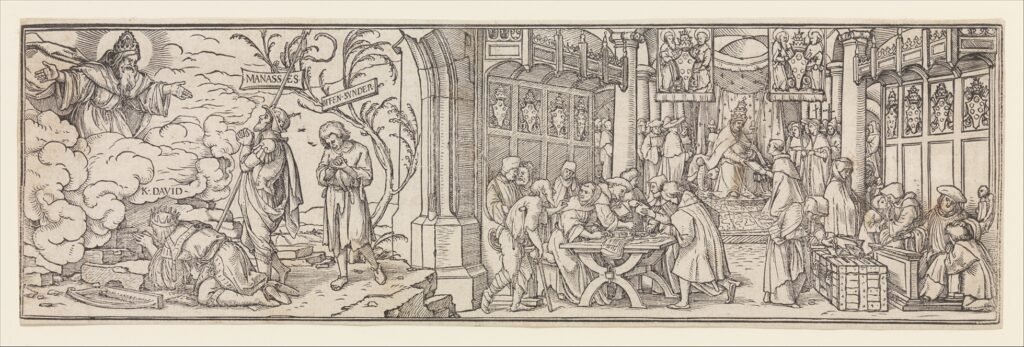
Picture a travelling salesman arriving in your village. His pitch is simple: hand over some coins and you’ll spend less time suffering after you die. Throw in a few more and your late grandmother gets out early too. It sounds like a scam from a bad comedy, but for centuries something close to it was part of ordinary religious life in western Europe. Medieval indulgences began as a serious idea about sin and forgiveness, grew into a money machine, inspired the earliest dated printing in Europe and finally helped split the Western Church in two. Here’s how forgiveness ended up with a price tag.
Jump to a section:
What were indulgences, exactly?
Medieval theology made a distinction that’s easy to miss. When you confessed a sin and were absolved, the guilt was wiped away, but a debt of punishment remained. You paid it off with penance in this life, or in purgatory after death. An indulgence, as Encyclopaedia Britannica puts it, cancelled some or all of that leftover punishment for a sin that had already been forgiven. It was never meant to be a ticket out of hell, and in theory it only worked for someone who was truly sorry.
Early on, these pardons shortened the penance a sinner owed in exchange for good works such as fasting, prayer, almsgiving or a gift towards a church. You can probably see where this is heading. Once “a gift towards a church” counted as a good work, the line between charity and shopping got very blurry.
Crusades, Jubilees and the “treasury of merit”
The big moment came in 1095. When Pope Urban II launched the First Crusade at Clermont, in France, one of the council’s canons promised a plenary indulgence, meaning the cancellation of all penance due for sin, to those who went to help Christians in the East. Later popes made the same offer for later crusades, and the idea spread fast.
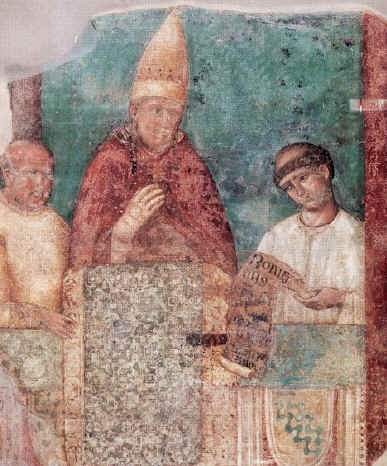
Boniface VIII went further in 1300, proclaiming Rome’s first Holy Year, or Jubilee. Anyone who visited Rome’s two great apostolic churches, St Peter’s and St Paul’s Outside the Walls, enough times during the year could earn a full indulgence: 30 visits for Romans and 15 for pilgrims from elsewhere. Rome was, as one account puts it, swamped with visitors. Dante, who seems to have been among them, later remembered the crowds in his Divine Comedy.
In 1343 Pope Clement VI set out the theory behind it all. According to the 19th-century church historian Philip Schaff, the Church claimed access to a “treasury of merits”: the boundless merits of Christ plus the extra good deeds of Mary and the saints, which it could hand out using the authority Christ gave to St Peter. Think of it as a heavenly bank account that the pope could draw on. The trouble with bank accounts is that people start asking about withdrawals.
When forgiveness went on sale
The Church knew there was a problem early on. In 1215 the Fourth Lateran Council complained, in its 62nd canon, that careless grants of pardon were bringing “the keys of the church” into contempt. It capped what bishops could offer, a year’s remission for consecrating a basilica and forty days on its anniversary, banned the sale of ancient relics and told churches to ignore collectors who couldn’t show genuine letters from the pope or the local bishop.
It didn’t stick. Pardons became a favourite way to fund cathedrals, bridges, hospitals and wars. In 1476 Pope Sixtus IV went further: Schaff notes that his bull for the church of Saintes allowed people who paid towards the building to win relief for souls already in purgatory. Now you could buy help for your dead relatives, not just for yourself.
The professional sellers, known in England as pardoners, earned a terrible reputation. Geoffrey Chaucer’s Pardoner in The Canterbury Tales is a brilliant satire. He carries a pillowcase that he claims is the Virgin Mary’s veil, a scrap of the sail from St Peter’s fishing boat and, best of all, “pigges bones” in a glass jar, which he passes off as holy relics. With these, Chaucer says, he could make more money in a single day than a poor country parson earned in two months. In his own prologue the Pardoner even boasts of making a hundred marks a year, while preaching sermons against greed.
Printed pardons: an unexpected first
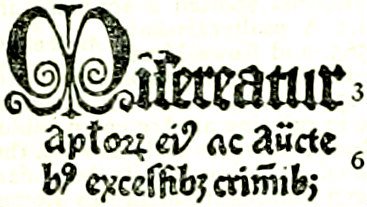
Here’s a twist that delights book historians. While Johannes Gutenberg was still working on his famous Bible, his workshop in Mainz was also printing pardons. The University of Washington’s Information School explains that a series from 1454, sold to raise money for defending Cyprus from the Turks, includes the oldest surviving dated piece of printing from the West. They were forms with blank spaces for the buyer’s name, the date and the seller, a bit like a modern receipt. Print runs often reached the thousands, and in one case at least 190,000 copies were made. The Church was, quite literally, one of the printing press’s first big customers.
The critics: from Prague to Wittenberg
Not everyone kept quiet. In 1412 John XXIII, one of the rival popes of the Great Schism, needed money for a war with Naples and authorised public sales of pardons. In Prague, the preacher Jan Hus attacked the campaign and called for the sellers to leave the city. Three young men who protested in church were executed, Hus was excommunicated, and in 1415 he was burned at the stake at the Council of Constance.
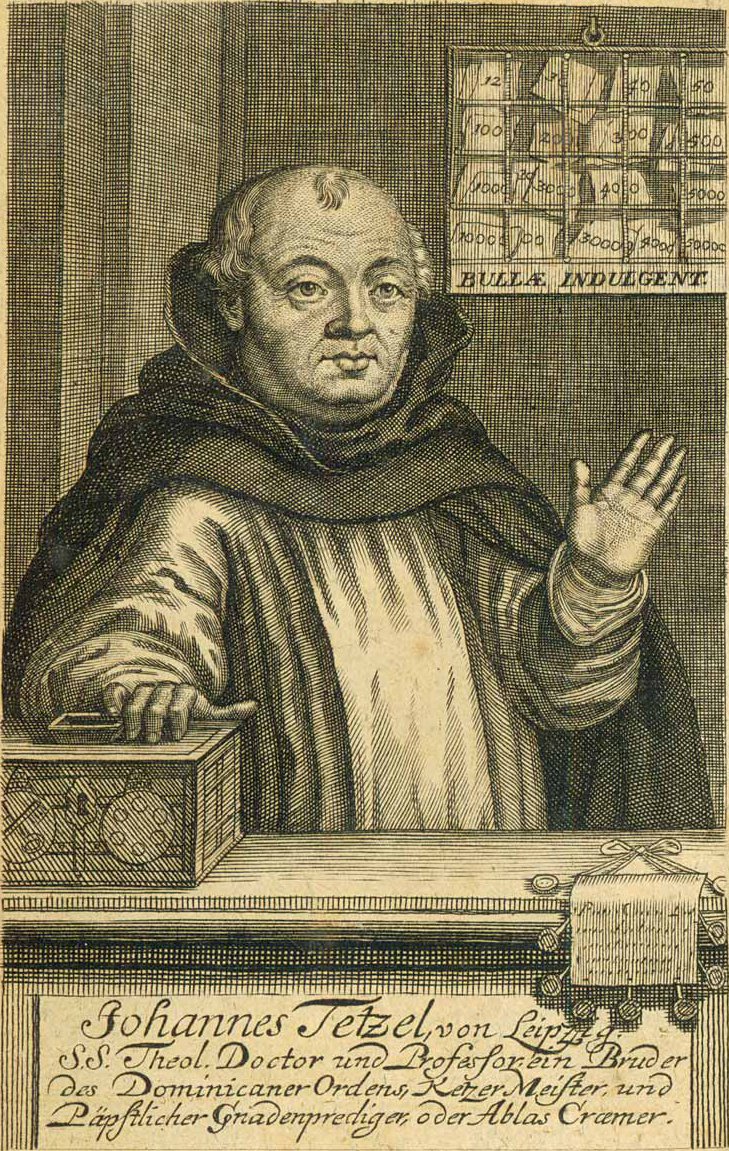
A century later the explosion finally came. Albrecht of Brandenburg had borrowed heavily from the banker Jacob Fugger to pay for his church offices. Pope Leo X allowed an indulgence campaign in Germany, with the money split, according to Christian History magazine, between repaying Fugger and rebuilding St Peter’s Basilica in Rome. The chief salesman was a Dominican friar, Johann Tetzel, a born showman who travelled from town to town and is remembered for a catchy rhyme about coins dropping into a chest and souls leaping out of purgatory.
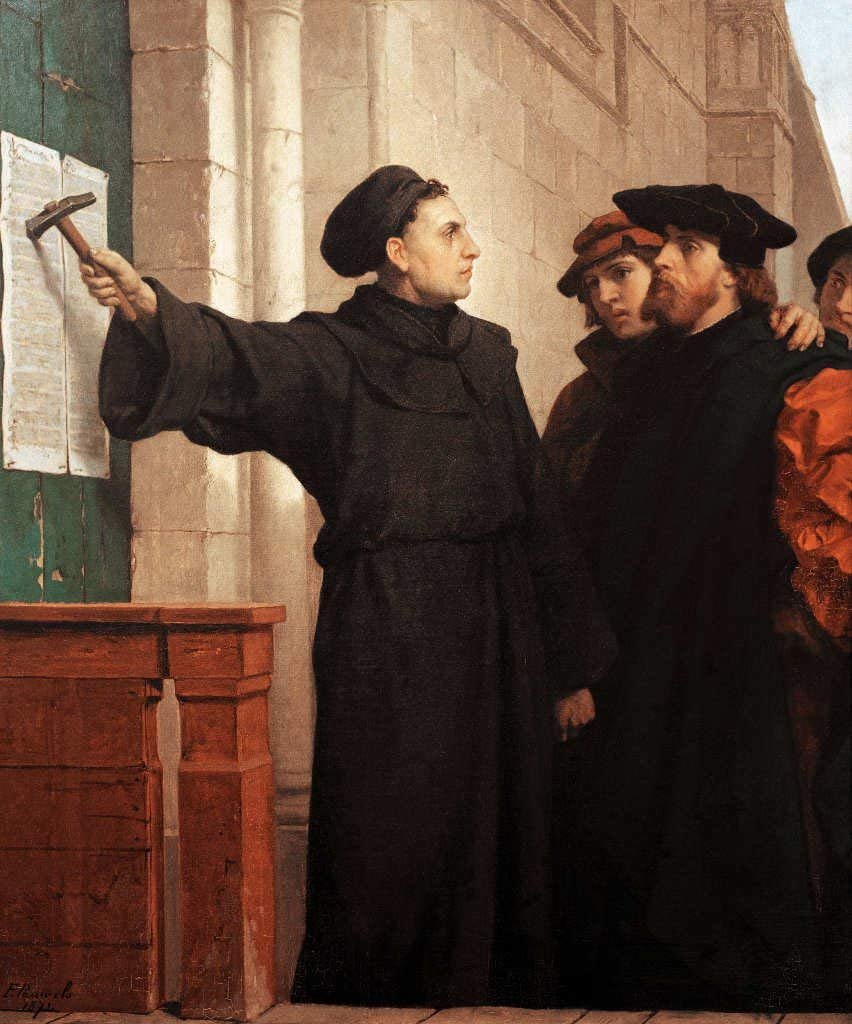
A monk and professor in Wittenberg named Martin Luther was not amused. On 31 October 1517 he produced his Ninety-five Theses, which Britannica describes as “concerned with the question of indulgences”. Tradition says he nailed them to the door of the castle church. Whatever exactly he did with them, they spread across Germany within weeks, helped along by the same printing presses that had churned out indulgences, and the Protestant Reformation was under way.
Did the Church stop selling indulgences?
Yes, although the idea itself survived. In the early 1560s the Council of Trent, in Britannica’s words, ended the abuses but not the doctrine. Then in 1567 Pope Pius V cancelled every grant of indulgences that involved fees or any other money changing hands. So the selling died, but the indulgence itself didn’t.
In fact, the Catholic Church still grants them today. For the Jubilee of 2025, the Vatican’s Apostolic Penitentiary set out how believers could gain a plenary indulgence: by going to confession, receiving Communion, praying for the pope’s intentions and turning away from all sin, alongside acts such as a pilgrimage or works of charity. No coins required. Tetzel would have been horrified.
The whole system makes much more sense once you see how closely they were tied to crusading, pilgrimage and the everyday life of the Church. Find out how they began with the Crusades, why medieval pilgrims walked across Europe in search of relics and pardons, and how religion shaped everyday life in the medieval Church.
Frequently asked questions
Could an indulgence forgive a sin you hadn’t committed yet?
Not according to official teaching. An indulgence only dealt with punishment for sins already confessed and forgiven. Critics such as Luther complained that some sellers claimed otherwise, which shows how far practice had drifted from theory.
What did a medieval indulgence physically look like?
Often it was a letter or certificate. After the 1450s many were printed forms, with gaps where the buyer’s name and the date would be written in by hand.
Were all pardoners frauds?
No. Many were licensed collectors raising money for genuine causes. But enough of them exaggerated, sold fake relics or kept the cash that the Church itself tried to rein them in, and writers like Chaucer turned them into figures of fun.
Why did indulgences upset Luther so much?
He believed they encouraged people to trust in a piece of paper rather than in true repentance and faith in God’s mercy. Money flowing from Germany to Rome for St Peter’s Basilica made the issue even more explosive.
Sources
- Encyclopaedia Britannica, Indulgence summary
- Encyclopaedia Britannica, Ninety-five Theses
- Encyclopaedia Britannica, Council of Clermont
- Opera Romana Pellegrinaggi, The Jubilee: a story that began in 1300
- Philip Schaff, History of the Christian Church, vol. VI, § 80, The Sale of Indulgences
- Fourth Lateran Council (1215), canons in English, Documenta Catholica Omnia (canon 62)
- Geoffrey Chaucer, The Canterbury Tales, General Prologue, lines 623–714 (Towson University edition)
- Geoffrey Chaucer, The Pardoner’s Prologue and Tale
- University of Washington Information School, Gutenberg Indulgence, 1454
- Kenyon College, Jan Hus
- Randy Petersen, Christian History, Selling Forgiveness: How Money Sparked the Protestant Reformation
- Hawaii Catholic Herald, When did we stop paying for indulgences? (2016)
- National Catholic Register / CNA, How to Obtain a Plenary Indulgence During the 2025 Jubilee