
Did Medieval People Think the Earth Was Flat?
Here’s a “fact” you’ve probably heard since primary school: in the Middle Ages, everybody believed the Earth was flat, sailors were terrified of tumbling off the edge, and then brave Christopher Columbus set sail and proved them all wrong. It’s a great story. It has heroes, villains and a dramatic cliff edge. There’s just one tiny problem. It isn’t true. The flat earth myth is not a medieval belief at all, but a much more recent invention. Let’s find out who really thought what, and who cooked up the legend.
Jump to a section:
The flat earth myth in one sentence
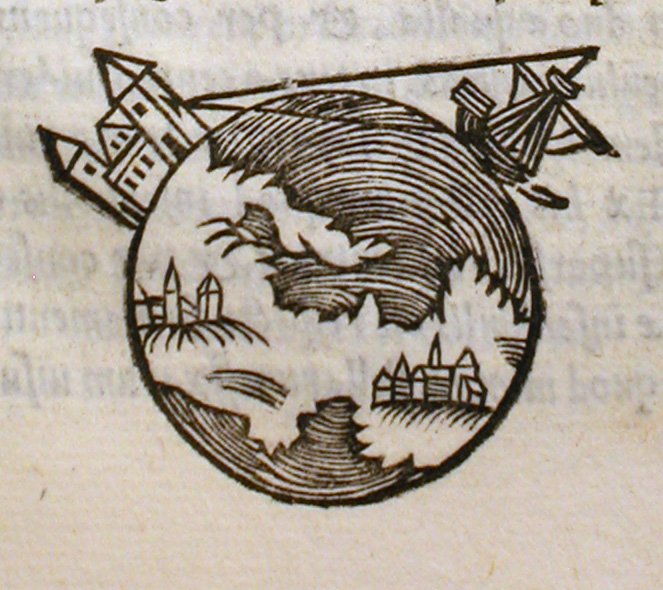
Educated people in medieval Europe knew perfectly well that the Earth was a sphere. As the historian Jeffrey Burton Russell puts it, quoted by History.com, from the third century BC onwards no educated person in Western civilisation believed it was flat. That’s not a typo. We’re talking about more than 1,700 years before Columbus.
The Greeks got there first
The round Earth was old news long before the Middle Ages began. The Public Medievalist explains that the idea goes back at least to the sixth century BC, and that Pythagoras was probably the first to suggest it, more for philosophical reasons than scientific ones. Aristotle and Eratosthenes later added hard evidence.
History.com notes that Greek thinkers worked this out by watching the sun rise and set and by studying shadows. That knowledge never vanished. It was copied, translated and taught throughout the medieval period, including in Latin translations of Greek and Arabic science.
What medieval scholars actually wrote
If the flat earth myth were true, you’d expect medieval writers to describe a flat world. Instead, they keep describing a ball. A few highlights:
- Bede, the English monk who lived from about 673 to 735, wrote a book on calculating time. According to The Public Medievalist, he called the Earth an “orb” and said it was not flat like a shield or a wheel but more like a ball, using the changing length of the days through the year as evidence. In an essay republished by Medievalists.net, the scientist Stephen Jay Gould adds that Bede saw even the tallest mountains as a barely noticeable ripple on a vast globe.
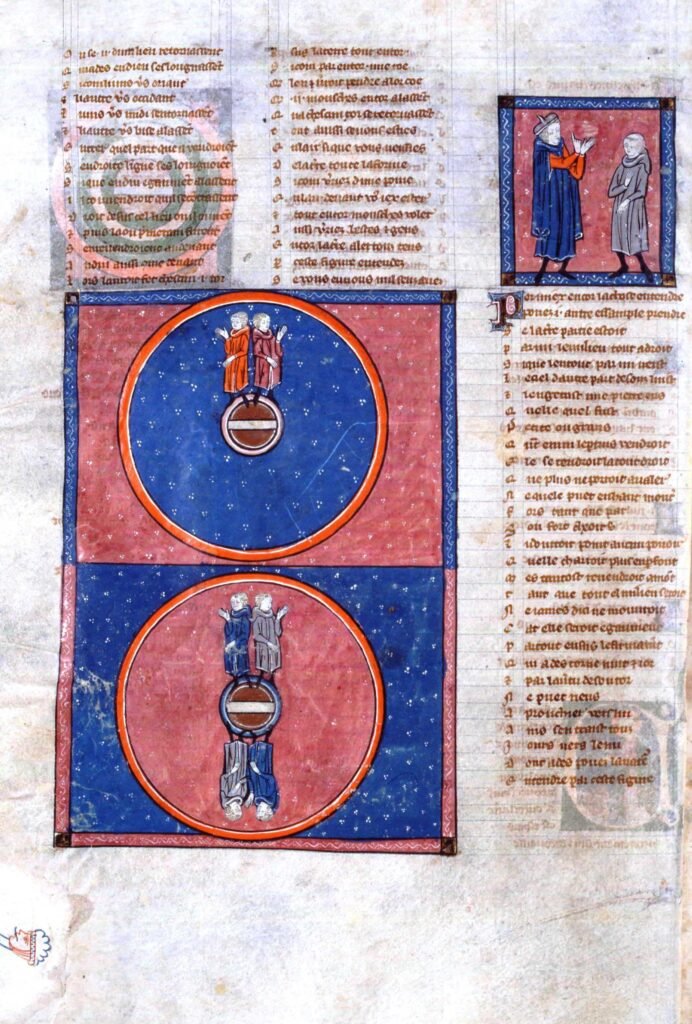
- Hildegard of Bingen, the 12th-century German abbess, included a clear picture of a round Earth in one of her visionary books, as Sea Lion Press points out.
- Roger Bacon, the 13th-century English scholar, insisted the planet was round and believed people could travel to the lands on its other side.
- Dante, in his Divine Comedy, and the author of The Travels of Sir John Mandeville both described a spherical Earth. Mandeville even explained that people on the other side don’t fall off.
Notice anything? Bede was a monk, and Hildegard was a nun. These ideas weren’t being smuggled past the Church. They were coming from inside it.
The round-Earth textbook every student used
Now for the clincher. In the 1200s, a scholar known as Johannes de Sacrobosco, or John of Holywood, wrote a short astronomy book called On the Sphere while he was at the University of Paris. The University of Michigan’s history of astronomy pages explain that in medieval teaching, the ancient astronomer Ptolemy’s Almagest gave way to simpler beginners’ manuals such as this one, and they call Sacrobosco the most popular astronomy writer of the Middle Ages.
It was a medieval bestseller. The book survives in many handwritten copies and was printed again and again once printing arrived, including in Venice in 1478. The Royal Astronomical Society, which owns an edition printed in 1485, puts it simply: the students who used this book certainly didn’t think the Earth was flat. So, for centuries, a round Earth was literally on the syllabus.
So who did think the Earth was flat?
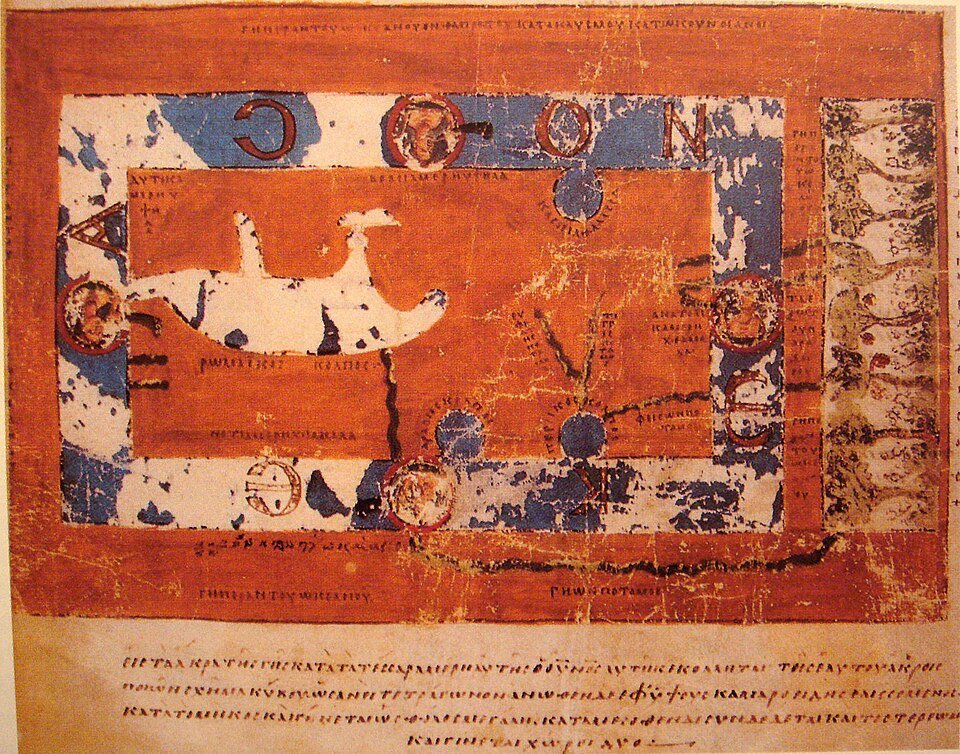
To be fair, there were a handful. The historian Pablo de Felipe identifies Lactantius, who lived from about 250 to 325, as the one Latin-writing author in the West known to have argued against a round Earth. In the Greek-speaking East, a writer called Cosmas Indicopleustes described the universe as a sort of giant box in his Christian Topography, written around 550.
But they were outliers, and their own contemporaries knew it. De Felipe notes that the Christian scholar John Philoponus mocked Cosmas’s ideas, and that Photius, the 9th-century patriarch of Constantinople, later gave his book a critical review. Even Augustine, one of the most influential Christian thinkers of all, doubted that anyone living on the far side of the globe could be descended from Adam, but he never questioned that it was a globe. And according to de Felipe, the medieval Church never issued any official statement on the shape of the Earth.
Wait, what about those flat medieval maps?
Good question. Many medieval maps show the world as a neat circle divided by a T shape, with Asia at the top and Europe and Africa below. These are known as T-O maps, and one famous type comes from the writings of Isidore of Seville in the 600s.
They look flat, but they were never meant to be road maps. The Public Medievalist explains that such maps were conceptual, a way of showing how the known world was arranged and what it meant, rather than charts for navigators. Think of them like a modern London Underground map: brilliantly useful, but nobody expects the Thames to look like that.
Rulers have long held the world in their hands, quite literally. The Royal Collection notes that the British coronation orb, made in 1661, symbolises the Christian world with its cross mounted on a globe, while its jewelled bands split it into the three continents known in medieval times. A globe, not a pancake.
Where did the flat earth myth come from?
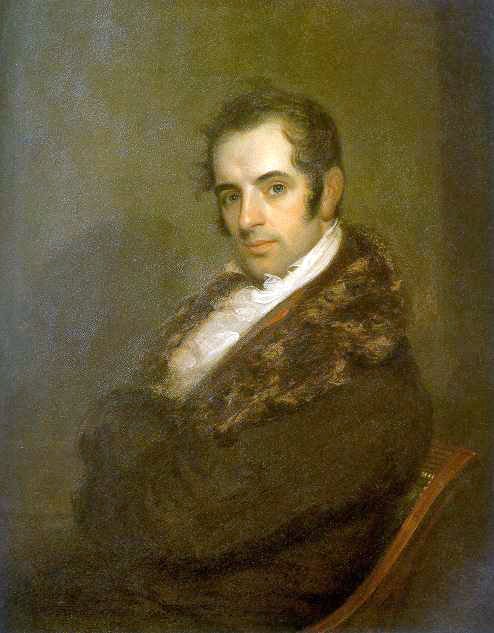
Every flat earth myth needs a villain, so meet the culprit. Washington Irving, the American author best known for The Legend of Sleepy Hollow, brought out a life of Columbus in 1828. History.com explains that Irving mixed real history with invented scenes, including one in which a learned geographer mocks Columbus and asks whether anyone could really believe in people walking around “with their heels upward, and their head hanging down”. It was dramatic, readable and largely made up.
Other writers piled in. History.com and de Felipe both name the French scholar Antoine-Jean Letronne as one of the culprits, and de Felipe explains that Letronne’s essay on the early Church Fathers’ views of the cosmos was wrongly treated as the final word on the subject. Later in the 1800s, writers such as John William Draper and Andrew Dickson White popularised the notion that religion and science had always been at war, and the flat Earth made a perfect example. Simple, memorable, and wrong.
De Felipe adds one more twist. Cosmas’s box-shaped universe was rediscovered and republished in 1706, and the editor’s introduction wrongly suggested that the early Christian writers had generally agreed with him. A rare oddball suddenly looked like the official line.
What Columbus was really arguing about
So if everyone knew the Earth was round, why did Columbus have such a hard time getting funding? Because the argument was about size, not shape.
History.com explains that Columbus mistakenly believed the Earth was far smaller than it really is, which made sailing west to Asia look like a reasonable trip. His critics thought Asia was far too distant to reach that way, and they were right. In a funny twist, de Felipe notes that Columbus learned the Earth was a sphere partly from the books of Pierre d’Ailly, a churchman.
The real flat-earthers came later
Here’s the irony. Actual flat-earth movements are a modern invention too. The Public Medievalist traces them to Samuel Birley Rowbotham, whose flat-Earth writings were first published in 1849. In 1893, an American named Orlando Ferguson produced a “Map of the Square and Stationary Earth”, complete with a claim that four hundred Bible passages condemned the “Globe Theory”. Medieval monks would have been baffled.
Historians fought back against the flat earth myth long ago. De Felipe notes that scholars have been knocking it down since at least 1923, and in 1991 Jeffrey Burton Russell published a whole book on it, Inventing the Flat Earth. Yet the legend sails on. If you enjoy watching history’s favourite fibs fall apart, the site’s main collection of medieval myths knocks down several more, from horned helmets to chastity belts.
Frequently asked questions
Did medieval people think the Earth was flat?
No. Educated medieval Europeans knew the Earth was a sphere, an idea inherited from ancient Greek thinkers and taught in medieval universities.
Who started the flat earth myth?
It was popularised in the 1800s, above all by Washington Irving’s 1828 biography of Columbus, and later by writers who claimed religion and science had always been in conflict.
Was Columbus the one who proved the Earth was round?
No. That was already known. His mistake was thinking the planet was far smaller than it really is, so that Asia seemed close enough to reach by sailing west.
Did anyone in the Middle Ages believe in a flat Earth?
Very few. Lactantius and Cosmas Indicopleustes, both writing before the Middle Ages were well under way, are the best-known examples, and their views were rejected or mocked by other scholars.
Sources
- Erin Blakemore, History.com, Christopher Columbus Never Set Out to Prove the Earth Was Round (2017, updated 2025)
- Shiloh Carroll, The Public Medievalist, Getting to the Bottom of the Flat Earth (2019)
- Pablo de Felipe, The modern myth of the medieval flat earth (2017)
- Stephen Jay Gould, via Medievalists.net, The Late Birth of a Flat Earth
- Joe Belanger, Sea Lion Press, The Earth is Round? (2024)
- University of Michigan, Johannes de Sacrobosco
- Royal Astronomical Society, Treasures of the RAS: The Sphere by John of Holywood
- Royal Collection Trust, The Sovereign’s Orb